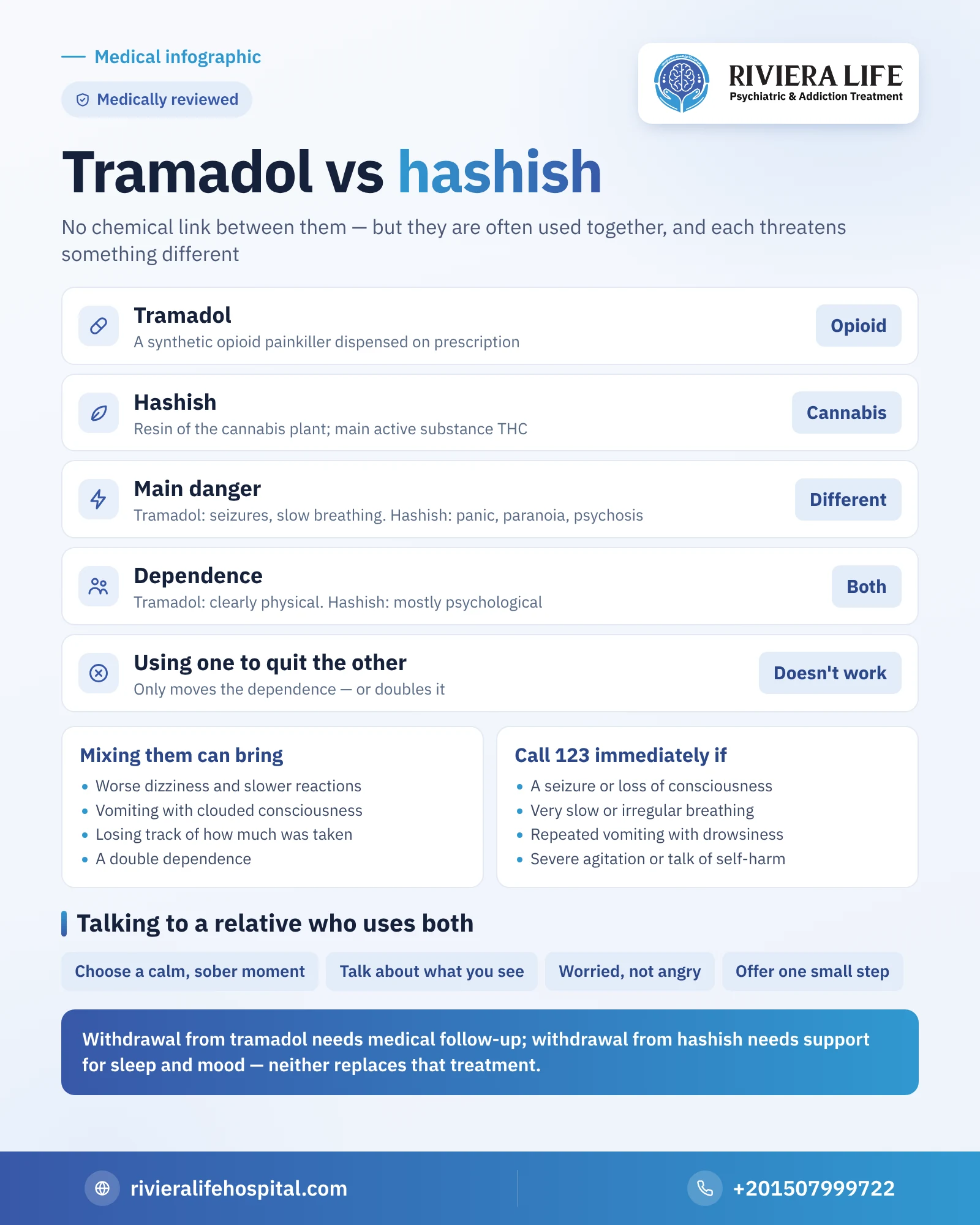
The difference between tramadol and hashish starts with where each one comes from: tramadol is a synthetic opioid painkiller dispensed on prescription, while hashish is extracted from the cannabis plant and its main active substance is THC; there is no chemical relationship between them. The first slows the body, numbs pain and threatens seizures and depressed breathing; the second changes perception, mood and memory, and is more closely linked to anxiety, paranoia and psychosis.
Even so, in Egypt they often come together in a single sitting, or a person moves between them believing one treats the other. This article explains how they differ in effect, harms, addiction and withdrawal, why neither works as a substitute for the other, and what risks mixing them adds.
Tramadol vs hashish in a table
| Point of comparison | Tramadol | Hashish |
|---|---|---|
| Origin | A manufactured medicine | Resin of the cannabis plant |
| Family | Opioids | Cannabinoids |
| Main effect | Pain relief, calm and sometimes false energy | Relaxation and changes in perception and sense of time |
| Most serious danger | Seizures, depressed breathing and serotonin syndrome | Panic attacks, paranoia and psychosis in those predisposed |
| Physical dependence | Clear with regular use | Milder; psychological dependence is the more prominent |
| Withdrawal | Aches, sweating, insomnia, anxiety and diarrhea | Irritability, disturbed sleep and loss of appetite |
How does each one affect the brain?
Tramadol works on opioid receptors, relieving pain and giving a feeling of comfort, while at the same time raising serotonin and noradrenaline. That is why some workers in Egypt describe it as something that “wakes you up” and gives energy for work — a temporary feeling that hides tiredness rather than treating it.
Hashish binds to cannabinoid receptors spread through the areas of the brain responsible for memory, attention, motor coordination and reward. The result is relaxation, changes in how colors, sounds and time are perceived, slower thinking and an increased appetite. The concentration of the active substance in much of the hashish circulating worldwide has risen compared with previous decades, which increases the likelihood of acute psychological effects.
Their effect on concentration, work and driving
Both slow reactions, but in different ways. Tramadol causes drowsiness and dizziness, and at first it may give a false sense of alertness that makes a driver think he is at his best. Hashish impairs the judgment of distance and time and the ability to split attention between more than one thing — essential driving skills. At work and in study, regular hashish use is linked to weaker short-term memory and lower motivation, while tramadol is linked to energy that swings from one day to the next depending on whether a tablet is available.
Which is more dangerous: tramadol or hashish?
The question itself is misleading, because each one threatens something different. Tramadol is more dangerous to the body in the moment: a seizure that can come without warning, or depressed breathing if it is mixed with sedatives, pregabalin or alcohol. Hashish is less dangerous in this respect, but more dangerous to mental health in certain groups, especially teenagers and people with a family history of psychosis, as our article on hashish addiction and paranoia explains.
You will find the harms of hashish set out in our article on the harmful effects of hashish on the brain and body, and those of tramadol in our article on the harmful effects of tramadol. What matters here is that “lighter” is not a medical description of either.
Do tramadol and hashish cause addiction?
Yes, both do. Tramadol causes clear physical dependence within weeks of regular use, so the tablet becomes a daily necessity to avoid tiredness and anxiety. Hashish causes what doctors call cannabis use disorder, which is more common than many people think, especially for those who started young or use it daily. The difference is that hashish addiction usually shows itself psychologically and behaviorally: being unable to sleep or relax without it, spending more and more, and losing interest in other things.
Differences in withdrawal symptoms
Tramadol withdrawal resembles withdrawal from other opioids: muscle and bone aches, sweating and chills, diarrhea, severe insomnia, anxiety and irritability, and in some people it adds serotonin-related symptoms such as tingling and perceptual disturbance. Our article on tramadol withdrawal symptoms sets out its stages.
Hashish withdrawal is physically milder and includes irritability and quick temper, disturbed sleep and unpleasant dreams, loss of appetite, anxiety and a strong urge to go back. It usually starts within a few days and eases gradually over weeks, as our article on hashish withdrawal symptoms explains.
What happens when tramadol and hashish are mixed?
The mix is common at sittings, and it is one of the things doctors see most in addiction treatment units in Egypt. The risks here come from effects piling up:
- Stronger dizziness and drowsiness and slower reactions, which multiply the risk of road and workplace accidents.
- Nausea and vomiting with clouded consciousness — a combination that can lead to inhaling vomit.
- Difficulty judging the amount: hashish changes the sense of time, so the person takes another tablet before the first has taken effect.
- Anxiety or panic attacks in some people, which push them to take an extra tablet “to calm down”.
- A double dependence that makes stopping harder, because withdrawal from each substance pushes toward the other.
The risk rises sharply if pregabalin, sedatives or alcohol are added to the mix, because together with tramadol they multiply depressed breathing. Our comparison of pregabalin vs tramadol explains this part.
Can one be used to get off the other?
Some young people turn to hashish to ease tramadol withdrawal, or to tramadol to escape the sluggishness of hashish. The result is usually that the dependence moves from one substance to another, or the person becomes dependent on both. Tramadol withdrawal needs medical follow-up and medication to ease the symptoms, and hashish withdrawal needs support for sleep and mood; neither substance can take the place of that treatment.
How to talk to a relative who uses both
Many families hear lines like “hashish isn’t a drug” or “tramadol is a medicine from the pharmacy”. Getting into an argument about which is lighter rarely helps; it is more useful to talk about what you see with your own eyes: sleeping at odd times, irritability when a tablet is late, money going missing, or withdrawing from home and old friends.
Choose a time when they are sober and calm, and avoid talking in front of others. Tell them you are worried about them, not angry with them, and offer one small, specific step, such as a single confidential consultation to assess the situation. Don’t threaten what you won’t carry out, because empty threats cost you your credibility. Our article on how to deal with someone addicted to hashish offers broader steps for this conversation.
When is it an emergency?
Call an ambulance immediately (123 in Egypt) if you see
After using tramadol with hashish or with any other substance.
- A seizure or loss of consciousness
- Very slow or irregular breathing
- Repeated vomiting with severe drowsiness
- Severe agitation, hallucinations, or talk of self-harm
The legal position in Egypt
Hashish is a narcotic substance whose possession and use are criminalized under Egyptian law. Tramadol is listed in the schedules of controlled substances, so it is dispensed only with a prescription and under regulations, and possessing it outside that framework is an offense punishable by law. In other words, the phrase “a medicine from the pharmacy” does not protect someone who buys strips on the street. On the other hand, the law allows someone who comes forward on their own to ask for treatment to be treated, and specialist hospitals are bound to keep their patients’ information confidential.
How does treatment differ?
Treatment for tramadol usually begins with safe withdrawal under medical supervision, followed by psychotherapy and relapse prevention, as described in our article on tramadol addiction treatment. Treatment for hashish focuses more on behavioral therapy and on monitoring sleep, anxiety and any psychotic symptoms. Someone using both needs one plan that deals with the two substances together. At Riviera Life the team assesses the whole situation in confidence in a free first consultation, and determines whether it needs an inpatient stay or outpatient follow-up.
Read also
- Tramadol: the complete guide
- Hashish: the complete guide
- Hashish addiction treatment
- Tramadol vs morphine
Questions many people ask
Each has a different danger. Tramadol is more physically dangerous because of seizures and depressed breathing, while hashish is more psychologically dangerous for teenagers and people prone to psychosis. Neither can fairly be called “light”.
It may mask some anxiety temporarily, but it does not treat withdrawal and adds a new dependence. Tramadol withdrawal is managed medically, with medication and a follow-up plan.
It increases dizziness, drowsiness and slow reactions, makes it harder to judge the amount, and can cause vomiting with clouded consciousness; the risk rises sharply if pregabalin or alcohol is added.
Yes, it causes cannabis use disorder, but the dependence is more psychological and behavioral than physical, whereas tramadol causes clear physical dependence.
Yes. Tramadol usually needs safe withdrawal under medical supervision, while hashish relies more on behavioral therapy and monitoring sleep and mood. Someone using both needs a plan that deals with them together.