The short answer
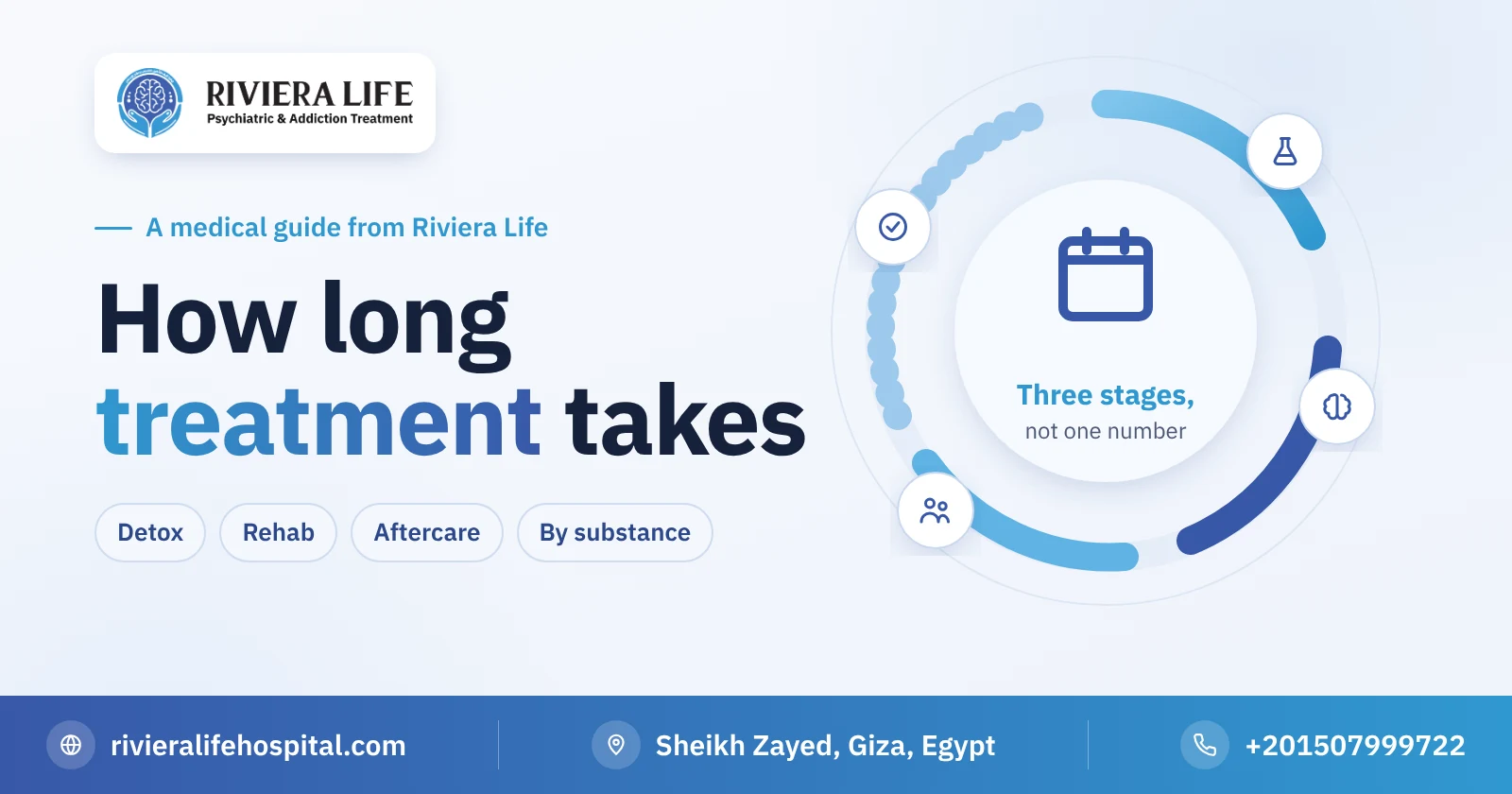
The length of addiction treatment isn’t a single number, because it is made up of successive stages. Detox usually takes from days to two weeks, extending to weeks or months with sedatives that are withdrawn gradually. Rehabilitation follows, with the best-known programs lasting between 28 days and three months. Then comes aftercare for at least six months to a year. Research from the US National Institute on Drug Abuse indicates that most patients need at least three months of treatment for drug use to decrease clearly or stop, and that results improve the longer people stay in treatment.
- DetoxUsually days to two weeks
- RehabilitationFrom 28 days to 3 months
- Follow-upAt least 6 to 12 months
“How many days will my son stay in rehab?” is one of the first questions in any call. It is a legitimate question, as the family is thinking about work, study, cost and absence from home. The problem is that the quick answer is usually misleading: whoever promises you a cure in a week is selling you detox alone as complete treatment, and whoever refuses to give you any estimate leaves you in the dark. This article explains how the length of addiction treatment is actually calculated, what lengthens or shortens it, and what the recovery rates you hear about mean.
The length of addiction treatment is the sum of three stages
1. Detox: getting rid of the substance safely
This is the stage in which the body stops the substance under medical supervision that eases withdrawal symptoms and prevents their complications. Its length varies with the substance, as the following table shows. It must be understood as the beginning of treatment, not all of it; a patient who leaves straight after detox without rehabilitation usually returns quickly, because no one has yet touched the craving, habits and triggers. The details of this stage are in our 7-day detox program.
2. Rehabilitation: treating what lies behind the substance
Here the patient learns why they were using, how to deal with craving and pressure without a substance, any accompanying depression or anxiety is treated, and their relationship with their family is rebuilt. The length usually ranges between four weeks and three months in full residency, and may extend over a longer period with fewer hours a day in half residency or outpatient care.
3. Aftercare: the months that decide the outcome
After discharge the real test begins: returning to home, the street and friends. Regular follow-up sessions, tests, support groups and a clear relapse prevention plan, for at least six months to a year, and longer in severe cases. Read about our aftercare program.
Detox duration by type of substance
| Substance | Approximate duration of acute withdrawal | Note |
|---|---|---|
| Alcohol | 5 to 7 days | Can be medically dangerous, and isn’t withdrawn at home after long use |
| Heroin, tramadol and most opioids | 5 to 10 days | Milder symptoms such as insomnia and lethargy remain for weeks afterward |
| Benzodiazepines (sedatives) | Weeks to months | Withdrawn gradually; stopping suddenly is dangerous |
| Pregabalin | One to two weeks with gradual withdrawal | May take longer with high doses |
| Ice, captagon and cocaine | Days to two weeks for the acute crash | Mood and sleep need longer weeks |
| Hashish and bango | One to two weeks | Insomnia and irritability are the most troubling |
| Strox, voodoo and shadow | Days to two weeks | May need close psychiatric follow-up |
These are approximate figures for guidance, and the doctor sets the actual length after assessment. You will find the timeline for each substance in our guide to drug withdrawal symptoms.
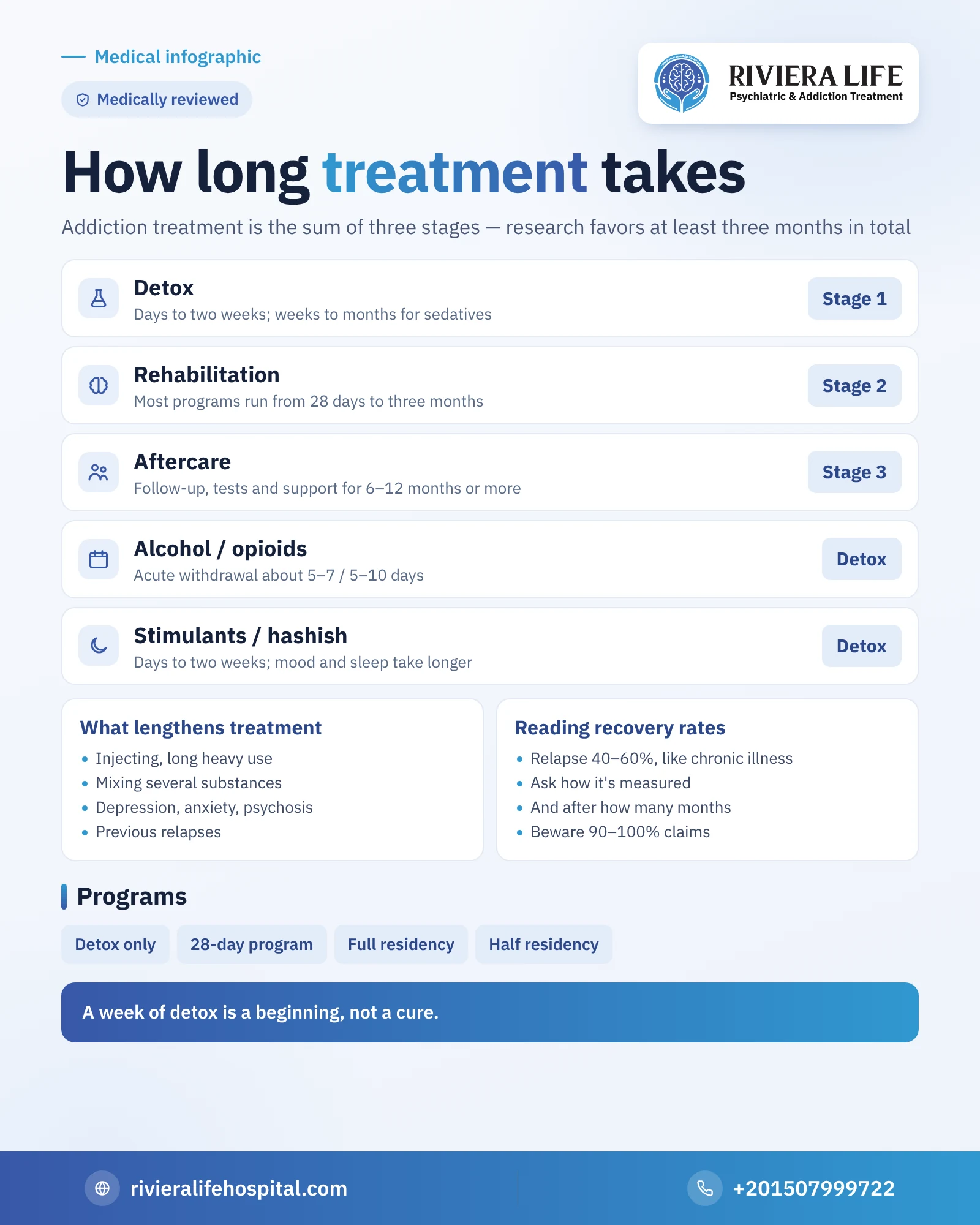
How long is addiction treatment in hospital or rehab?
It depends on the type of program the doctor chooses with the patient:
- Detox only: one to two weeks, suitable for someone who will complete rehabilitation as an outpatient with a clear plan.
- The 28-day program: combines detox and the start of rehabilitation, suitable for moderate cases with serious follow-up afterward.
- Full residency for two to three months: for severe cases, repeated relapses, an accompanying psychiatric disorder, or an unsafe home environment.
- Half residency: intensive day treatment for weeks or months, returning home at night.
What lengthens or shortens treatment?
- The type of substance and how it is used; injecting usually needs longer treatment.
- How long the addiction has lasted and the daily amount.
- Mixing more than one substance, which is common in Egypt.
- The presence of depression, anxiety, psychosis or a personality disorder, where dual diagnosis is needed.
- The number of previous relapses.
- Physical condition, such as liver or heart disease or infection.
- Family support and the stability of home and work.
- The patient’s own motivation, which changes and is built during treatment.
Why isn’t a week enough?
Addiction changes the brain’s reward and decision-making circuits, and these circuits need months to regain their balance even after the last trace of the substance has left the blood, as our article when does the body return to normal after quitting drugs explains. That is why doctors describe addiction as a chronic disorder, treated with the logic of chronic illnesses: intensive treatment at first, then longer follow-up at lower intensity. Short treatment isn’t useless, but it only works if a real follow-up program comes after it.
Addiction recovery rates: how should you read the figures?
Research from the US National Institute on Drug Abuse states that the relapse rate among people recovering from addiction ranges between 40 and 60 percent, close to the rates at which symptoms return in other chronic illnesses such as high blood pressure and asthma. Relapse, then, doesn’t mean treatment has failed, but that the plan needs adjusting or resuming. And when you hear a center announce a cure rate of 90 or 100 percent, ask: how is it measured? After how many months? Are those who left the program halfway counted? Honest figures come with a clear definition and a set follow-up period. Read also about our relapse treatment program.
When can the patient return to work or study?
Many patients return gradually during the first weeks of aftercare, and some continue working throughout a half-residency or outpatient program. The decision depends on the patient’s stability, the nature of their work, and whether there are triggers in the work environment itself. What matters most is that returning doesn’t come at the expense of follow-up sessions in the first months.
How can Riviera Life help you?
Treatment at Riviera Life begins with an assessment that identifies the substance, the severity of dependence and the psychological and physical condition, then the team proposes the right program and duration clearly before admission, with a follow-up plan after discharge. The first consultation is free and confidential on +201507999722.
Read also
- The stages of addiction recovery
- The cost of addiction treatment in Egypt
- Why addiction treatment fails and how to avoid it
- Addiction treatment: the complete guide
Questions many people ask
A week may be enough to detox from some substances, but it isn't enough to treat the addiction itself. Without rehabilitation and follow-up afterward, the risk of relapse rises a great deal.
Research indicates that most patients need at least three months of treatment across its different stages, inside and outside hospital, for results to improve clearly.
Usually yes, because withdrawal is arranged according to the most dangerous substance, withdrawal timelines may differ, and rehabilitation needs to deal with more than one pattern of use.
With voluntary admission they have the right to ask to leave, but the team explains the risks and tries to agree an alternative follow-up plan so treatment isn't cut off completely.
Not necessarily. Relapse is a possible part of the course of a chronic illness, and usually means the plan needs adjusting or resuming; often it is the follow-up period after discharge that needs strengthening.