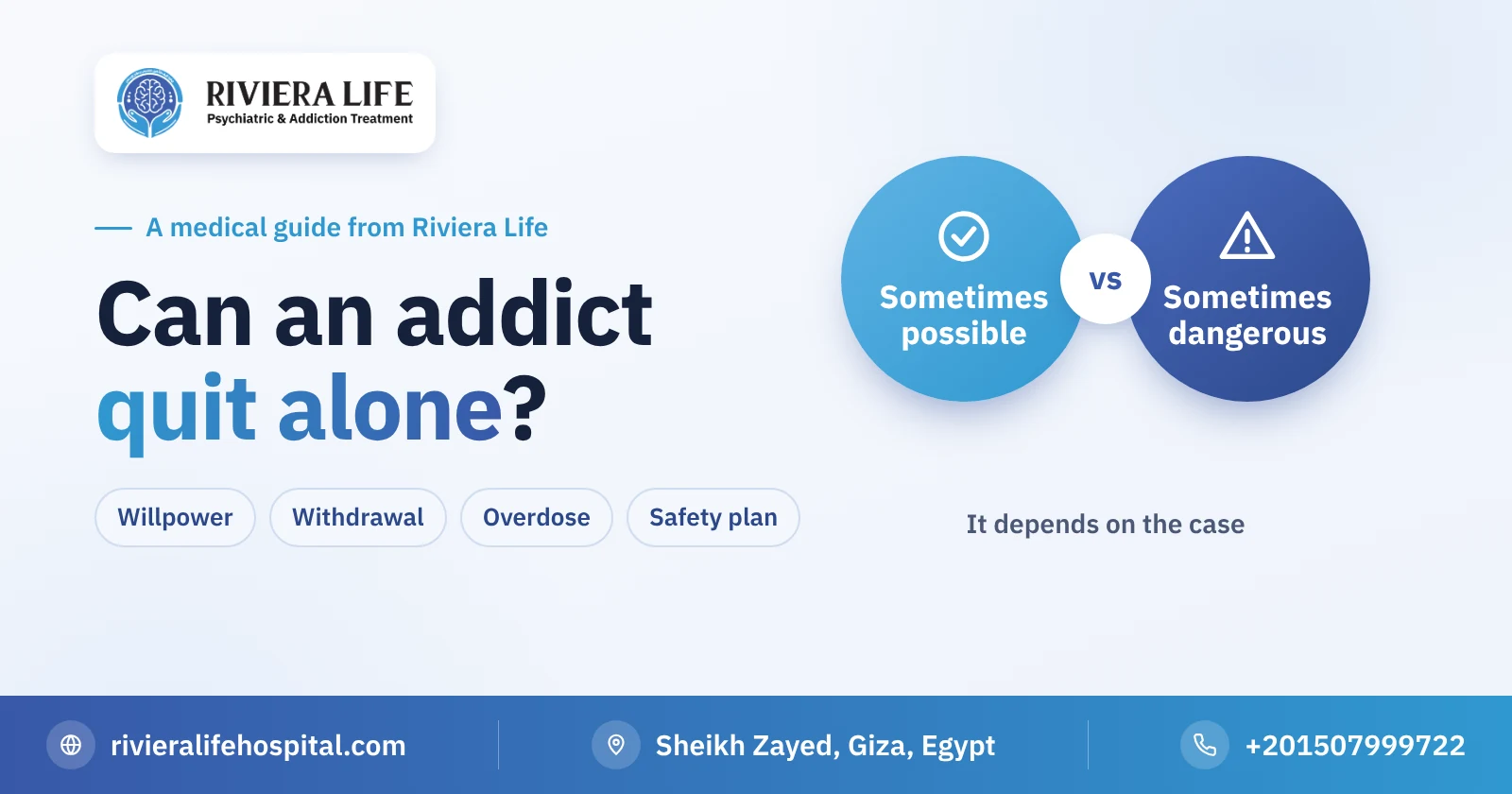
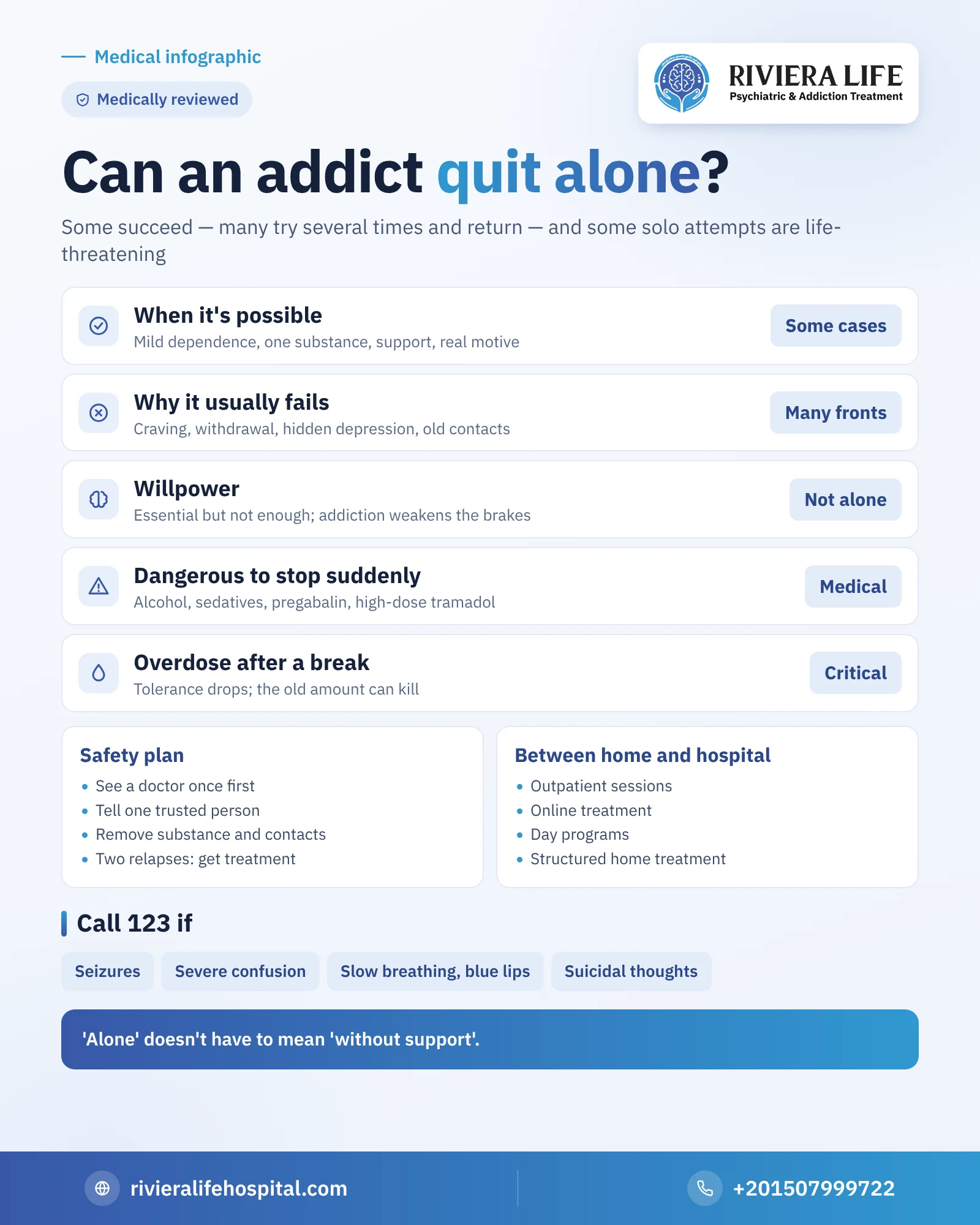
Can a drug addict quit on his own? The honest answer: some people really succeed, especially when dependence is mild and the support around them is strong, but many try alone several times and then return, and some solo attempts may be dangerous to life. The difference isn’t made by strength of character alone, but by the type of substance, the severity of dependence, the psychological state and the surrounding environment. In this article we help you assess your situation or that of someone you love: when a solo attempt is possible, when it is a gamble, and the safety plan that is indispensable if you decide to try.
Does anyone really succeed in quitting drugs alone?
Yes. Population studies indicate that a not-small number of people get past a substance problem without a formal treatment program, and their cases are usually milder, and they have work, family and a strong reason to change. But this picture has another side: those who reach hospitals are usually those who tried stopping alone more than once and couldn’t keep going.
So the more precise question isn’t “is it possible?” but “is it possible in my case, and at what price?”.
What makes quitting alone possible for some?
- Mild dependence and a relatively short period of use.
- One substance without mixing, and not one of the substances with dangerous withdrawal.
- No severe depression or anxiety or another psychiatric disorder.
- A life with work or study and supportive relationships.
- The ability to stay away from places and people linked to use.
- A real inner motive, not just a response to family pressure.
Note that these conditions relate to circumstances more than to strength of character. Two young men with the same determination may see one succeed and the other fail, because the first uses hashish at weekends and lives with a close-knit family, while the second uses tramadol daily with pregabalin and spends his day with friends who use.
Why do most solo attempts fail?
Because the patient is fighting on many fronts at the same time. There is the brain that has got used to the substance and now demands it with a craving like hunger, there are withdrawal symptoms that make the first days harsh, there is the depression or anxiety the substance was covering that suddenly appears, and there are the old friends and the dealer’s number in the phone. It only takes a night of insomnia together with a family argument and a message from an old friend for weeks of effort to collapse.
And another, less obvious problem: someone trying alone usually has no plan for after the first days. He thinks the end of the physical symptoms means the end of the battle, while the craving may return weeks later with unexpected force.
“If he had willpower he’d stop”: is willpower alone enough?
This sentence is among the most hurtful to patients and their families. Willpower is necessary, as no treatment succeeds without the patient’s wish, but it isn’t enough on its own. Addiction weakens the part of the brain responsible for braking and weighing consequences, meaning it weakens the very tool we ask the patient to use. Willpower doesn’t prevent a seizure during sedative withdrawal, and doesn’t treat depression that needs medicine. The closest comparison: a diabetic needs willpower to stick to his diet, but he also needs a doctor. To understand what goes on in the patient’s mind, read How does a drug addict think?.
When is stopping suddenly without a doctor dangerous to life?
- Alcohol, sedatives and pregabalin: stopping suddenly after long use or large amounts may cause seizures and delirium.
- Tramadol in large amounts: may be linked to seizures.
- Stimulants such as ice and Captagon: the crash after stopping may carry acute depression and suicidal thoughts.
- Mixing more than one substance: makes withdrawal unpredictable and hard for anyone to handle at home.
You can learn what sets apart the withdrawal of each family of substances in our guide to drug withdrawal symptoms.
Call an ambulance on 123 immediately if you see
If stopping has already begun and these signs appear, don't continue the attempt alone.
- Seizures or loss of consciousness
- Severe confusion or hallucinations
- Very slow breathing or blue lips after returning to use
- Chest pain or severe palpitations
- Suicidal thoughts or an attempt at self-harm
The risk of overdose after a period of abstinence
This is information that may save a life: after days or weeks of stopping, the body’s tolerance to the substance drops, especially opioids such as heroin and tramadol. If the person relapses and returns to his old amount, he may have an overdose that depresses his breathing. Many overdoses happen exactly at this time, after a solo attempt to stop. The same danger exists with alcohol and sedatives if the person returns to them in large amounts after a break, especially if he mixes them with other substances. That is why it helps for the family to know the role of naloxone in rescuing from an opioid overdose.
A quick test: does your situation allow an attempt without a program?
If your answer is “yes” to any of these questions, a solo attempt isn’t the safe option, and you need a medical assessment first:
- Do you use alcohol, sedatives or pregabalin daily or in large amounts?
- Do you mix more than one substance?
- Have you had seizures or hallucinations during a previous attempt to stop?
- Do you feel severe depression or have thoughts of harming yourself?
- Have you tried stopping alone more than once and quickly returned?
- Does someone who uses live with you, or is the substance easily available to you?
If you decide to try: an indispensable safety plan
- Consult a doctor before starting, even once, to assess whether stopping suddenly is safe or needs gradual reduction.
- Tell at least one person you trust, and agree with him that he checks on you daily.
- Get rid of the substance and equipment, and delete the numbers of those you used to buy from.
- Write a list of the situations that trigger your craving, and a practical alternative for each.
- Join a support group, such as twelve-step program groups.
- Keep the emergency number and the number of a specialist hospital within reach.
- Agree with yourself in advance: if you relapse twice, this is the time to seek structured treatment.
“Alone” doesn’t mean “without support”: options between home and hospital
Many refuse help because they imagine the only alternative is a long stay in hospital. The truth is that there are degrees: outpatient follow-up with regular sessions, online addiction treatment in complete confidentiality, or day programs. The difference between trying to stop alone at home and structured home treatment is explained in our article on addiction treatment at home.
How does the family deal with a son who says “I’ll stop on my own”?
Don’t mock his promise and don’t believe it unconditionally. Tell him you respect his wish, and ask that the attempt be with a clear plan and a set period, with one visit to a doctor to make sure stopping is safe. And agree in advance on what will happen if the attempt doesn’t succeed. This approach preserves his dignity and opens the door to treatment without a clash. For more details on persuasion, see how to help an addict and convince him of treatment.
How can Riviera Life help you?
If you want to try by yourself, at least start with a safe step: a free, confidential consultation with an addiction consultant at Riviera Life, in which he tells you frankly whether your case allows stopping without a stay, and what you need to succeed. Contact is around the clock on +201507999722.
Read also
- Drug addiction: definition, signs and treatment
- Herbal treatment of drug addiction: the truth and the risks
- Relapse treatment program
- Aftercare program after treatment
- Involuntary addiction treatment: when is it justified and how is it done safely and legally?
Questions many people ask
Willpower is an essential condition but usually isn't enough, because addiction weakens the brain's braking centers, and willpower doesn't prevent withdrawal complications or treat accompanying depression.
Alcohol, sedatives and pregabalin after long or heavy use, because of the possibility of seizures and delirium, as well as mixing several substances. These need assessment and medical supervision.
Because craving, triggers and psychological causes remain after the physical symptoms go, and someone trying alone usually has no plan to face them.
It can be very dangerous with opioids, because tolerance drops after a break, and returning to the old amount may cause an overdose.
Respect his wish and ask for a clear plan, a set period and one visit to a doctor to make sure it is safe, and agree in advance to turn to structured treatment if the attempt doesn't succeed.