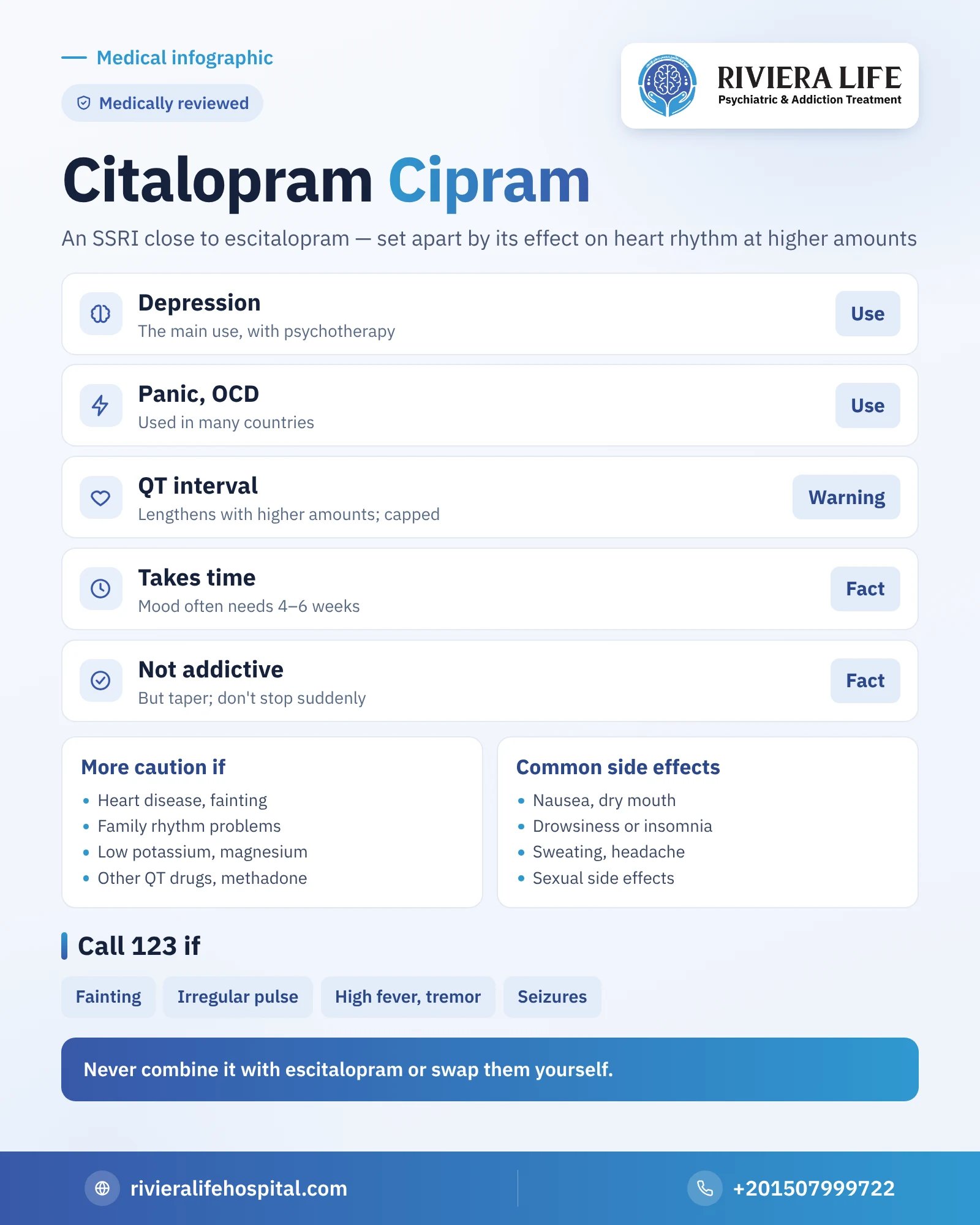
Citalopram is an antidepressant from the selective serotonin reuptake inhibitor class, known worldwide as Cipram or Celexa. The psychiatrist prescribes it for depression, and in some countries for panic disorder and OCD. It works much like its sibling escitalopram, but it has something that sets it apart in one matter in particular: its effect on heart rhythm when the amount increases, which led regulators to set a clear cap for it. Here we explain what the patient and family need to know, without giving any dose; starting, adjusting and stopping are with the psychiatrist only.
What is citalopram?
Citalopram works in the usual way for its class: it stops serotonin from returning to the nerve cell so it stays available longer, and after weeks the circuits responsible for mood and fear adapt. It doesn’t affect other transmitters much, so its side effects mostly involve digestion, sleep and sex. To see its place among the other types, see the article on antidepressants. Brand names in Egypt vary between the original and local equivalents, so read the name of the active ingredient on the box and ask the pharmacist what is available.
What is citalopram used for?
- Depression: the main use, alongside psychotherapy whenever possible. The full plan is in depression treatment.
- Panic disorder: in many countries it is used to reduce the frequency of attacks; you will find what distinguishes an attack from a heart attack in panic attacks.
- OCD and anxiety: some doctors use it within local guidelines or by individual decision.
Citalopram or escitalopram: what is the difference?
This is the most frequently repeated question about the medicine. The citalopram molecule comes in two mirror-image forms, like the right and left hand. One of them carries most of the therapeutic effect, and was later separated to become an independent medicine, escitalopram (Cipralex). The result is that the two medicines are very close in uses and side effects, and escitalopram needs a smaller amount because every molecule in it is active. Some doctors may prefer escitalopram because some patients tolerate it more easily, while citalopram remains a good and cheap option for others. The important thing is that they aren’t combined, and one isn’t swapped for the other except by the doctor’s decision. For a detailed read on the other sibling: escitalopram.
The heart rhythm warning: why was a cap set?
On the ECG there is an interval called QT that reflects the time the heart muscle takes to prepare for its next beat. Citalopram was observed to lengthen it slightly, and the higher the amount the greater the effect. In rare cases this may lead to a dangerous rhythm disturbance appearing as severe palpitations or fainting. That is why drug regulators set an upper limit for the daily amount, and lowered it for older people and those with risk factors, and the doctor keeps to it. What matters most for the patient is knowing that the majority aren’t affected, but caution increases in these cases:
- Heart disease or a slow heartbeat, or a history of unexplained fainting.
- Early sudden death or rhythm disturbance in the family.
- Low potassium or magnesium, as with repeated vomiting and diarrhea.
- Other medicines that lengthen QT, such as some antipsychotics, some antibiotics and methadone.
- Liver diseases that slow the body’s elimination of the medicine.
- Older age.
In these cases the doctor may request an ECG and a salts test before or during treatment, and may choose another medicine with less effect on the heart. If you feel unusual palpitations, severe dizziness or you faint, contact your doctor immediately.
When does it start working, and how do you follow it?
Citalopram isn’t like a painkiller that works after an hour. Sleep, appetite or tension may improve within two weeks, but mood usually needs about four to six weeks to change clearly, and may take longer in some patients. It helps to record three things each week in a small notebook: your mood from one to ten, your sleep, and any new side effect. These notes help the doctor at the next visit more than the phrase “I don’t know if it’s working”. And if your thoughts get worse or thoughts of self-harm appear at any time, don’t wait for the appointment.
Common side effects
- Nausea and dry mouth, more noticeable in the first weeks.
- Drowsiness or insomnia, which may vary from one patient to another.
- Sweating, slight tremor and headache.
- Digestive upset, diarrhea or constipation.
- Reduced sexual desire, delayed ejaculation or difficulty reaching orgasm.
Most physical effects recede within two to four weeks. Sexual effects, however, may remain and need a direct conversation with the doctor instead of silently stopping.
Other warnings
- Suicidal thoughts in young people: a warning covering all antidepressants for those under about twenty-four. If a worrying change appears, contact the doctor immediately, or the mental health hotline 16328 or the ambulance on 123.
- Low sodium: happens more in older people, with signs of tiredness, confusion, headache and falls.
- Bleeding: more likely with blood thinners, aspirin and anti-inflammatory painkillers.
- Bipolar disorder: it may reveal a manic episode in those predisposed.
- Pregnancy and breastfeeding: the doctor weighs the risk of untreated depression against the risk of the medicine, and it isn’t stopped suddenly.
Overdose and dangerous interactions
An overdose of citalopram differs from others in its class in that its main danger is to the heart, alongside symptoms of excess serotonin. The danger increases with alcohol and other medicines. And serotonin syndrome appears when it is combined with tramadol, other antidepressants, triptans or St John’s wort; its details are in serotonin syndrome.
Call an ambulance on 123 immediately if you see
After taking an excess amount of citalopram, or when it is combined with a medicine that affects the heart or raises serotonin:
- Fainting, severe palpitations or an irregular pulse
- Chest pain or severe shortness of breath
- High temperature with heavy sweating and tremor
- Seizures or loss of consciousness
- Severe agitation, confusion or hallucinations
Citalopram, alcohol and drugs
Alcohol increases drowsiness and dizziness and blocks the treatment’s effect on mood. Tramadol combines the risk of seizures with serotonin syndrome. Someone receiving methadone as part of addiction treatment needs careful follow-up, because both lengthen QT. Stimulants and cocaine strain the heart. And if depression and substance use come together, it is more effective to assess them together, as in depression and addiction.
Pregnancy, breastfeeding and older people
There is no single answer that suits everyone. In pregnancy the doctor weighs the risk of untreated depression to mother and baby against the possibilities of the medicine, and passing symptoms may appear in the newborn if it was used near delivery. For older people the doctor starts with greater caution, because the heart, sodium and falls are all more sensitive in them, and the cap on the amount is lower for them. And don’t change anything yourself on discovering a pregnancy; call your doctor first.
Is it addictive? And how is it stopped?
Citalopram doesn’t cause addiction; there is no high, no craving and no need to raise the amount. But stopping suddenly may cause dizziness, nausea, irritability, insomnia and a feeling of electric shocks in the head. That is why the doctor reduces it gradually after a sufficient period of stability. To tell discontinuation symptoms from the illness returning, read antidepressant withdrawal symptoms.
If you are taking citalopram and the heart question worries you, or you haven’t felt a difference, or you are thinking of switching or stopping, book your free first consultation with a consultant psychiatrist at Riviera Life, and we will review the whole plan in complete confidentiality.
More from the psychiatric medications guide
- Psychiatric medications: their types and what each family treats
- Escitalopram (Cipralex)
- The best medication for depression and anxiety: how does the doctor choose?
- Antidepressants: their types and how they work
Questions many people ask
Escitalopram is the active form separated from the citalopram molecule, so they are close in use and effects. They aren't combined, and one isn't swapped for the other except by the doctor's decision.
Because it lengthens the QT interval on the ECG the higher the amount, and in rare cases may cause a dangerous rhythm disturbance. That is why the doctor keeps to a lower cap for older people and those with risk factors.
Not everyone needs one. The doctor requests it when there is heart disease, a family history of rhythm disturbance, low salts, other medicines that affect the heart, or in older people.
It may cause drowsiness in some patients and insomnia in others. If drowsiness is troublesome, discuss the timing of the medicine with the doctor rather than changing it yourself.
It doesn't cause addiction or a high. But stopping it suddenly may cause dizziness, nausea and insomnia, so it is reduced gradually under the doctor's supervision.