There is no single “addict’s face” you can recognize at first glance. The characteristics and outward appearance of a drug user differ according to the type of substance, the length of use, and whether you see them under the influence or after it has worn off. But there are recurring physical features that show in the eyes, face, skin, weight, teeth and hands, and they differ between sedatives, stimulants and hashish. In this article we describe outward appearance only, with a table comparing the drug families, and we point out the illnesses that can produce the same features.
Why isn’t appearance alone enough to judge?
Many users, especially in the first months or with substances taken intermittently, look completely normal: they go to work, take care of their clothes, and nothing shows on them. On the other hand, someone who uses nothing may look exhausted, pale and thin because of illness, grief or late nights. So treat physical features as one piece of a bigger picture that includes behavior, money and the home — aspects we cover in our article on how to know if someone at home is addicted to drugs.
The eyes: the first thing to change
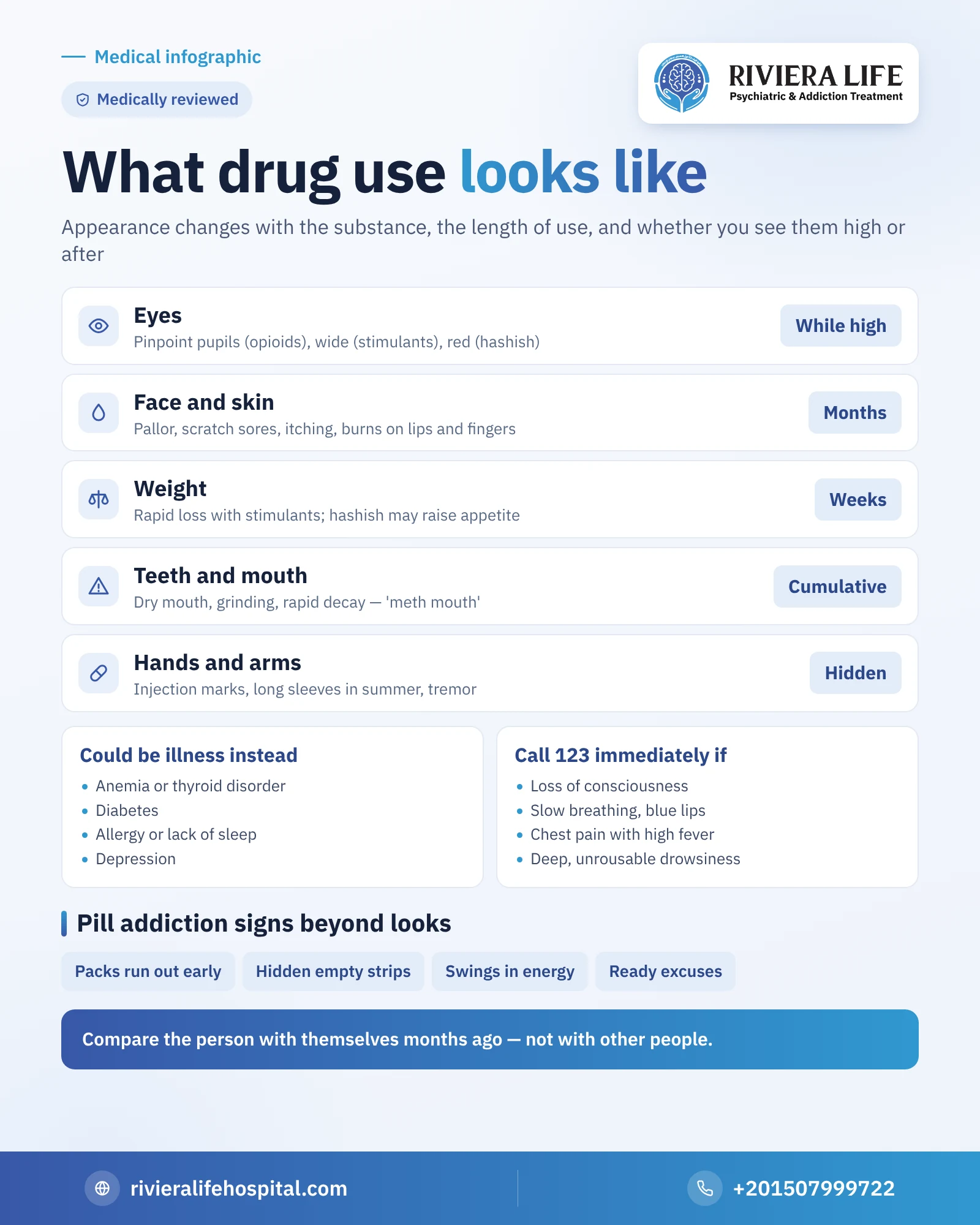
The eye is one of the clearest places where the effect of a substance shows while it is active, because pupil size is controlled directly by the nervous system:
- Very narrow, pinpoint pupils: characteristic of opioids such as heroin, tramadol and morphine, and they stay narrow even in dim light.
- Wide pupils: appear with stimulants such as ice, cocaine and Captagon, and with hallucinogens, and the person may seem to be “staring”.
- Red eyes and heavy eyelids: a common sign of hashish and bango, often accompanied by frequent use of eye drops.
- Glassy eyes and a lost gaze: with sedatives, pregabalin and large doses of various substances.
- Dark circles and puffiness: the result of chronic lack of sleep, and a non-specific sign.
The face and skin
With continued use, the skin starts to reveal what is happening inside the body. The face may become pale or grayish because of poor nutrition and lack of sleep. With stimulants, especially methamphetamine known as ice or shabu, spots and many small wounds may appear on the face and arms from repeated scratching and picking, as some users feel something crawling under the skin.
Opioids can cause itching and redness, especially on the nose and face. Repeatedly snorting powders may leave redness around the nostrils, a constant runny nose and repeated nosebleeds. And substances smoked in metal or glass implements may leave small burns or cracks on the lips and fingertips.
Weight and the body
Noticeable weight loss over weeks or months is one of the things that most catches a family’s attention, and it is common with stimulants that suppress appetite, and with opioids in advanced stages because of neglect and poor eating. On the other hand, hashish can strongly increase appetite while it is active, so the user doesn’t necessarily lose weight. Over time you may notice weak muscles, a slack body, and slow movement — or the opposite: constant, nervous movement that never settles.
Teeth and mouth
The mouth tells a long story about drug use. With stimulants the mouth dries, and pressure on the teeth and grinding increase, so wear, rapid decay and fractures appear — the picture sometimes known as “meth mouth”. With opioids saliva also decreases and the craving for sweets grows, so decay accelerates. And users often neglect dental hygiene and visits to the dentist, so the problem gets worse. You may also notice unusual breath odor, or sores at the corners of the lips.
Hands and arms
- Injection marks: small dots, bruises or dark lines along the veins, usually on the arms, and sometimes on the hands, feet or neck to hide them.
- Always wearing long sleeves: even in the heat of summer, which is striking if it isn’t their habit.
- Small burns: on the fingers, especially the thumb and index finger, from lighters and hot implements.
- Tremor in the hands: which may appear with withdrawal or with stimulants.
Voice, movement and gait
Some features aren’t visible in a still picture but in movement. Sedatives and opioids make the voice low and heavy and the gait slow and unsteady, and the person may doze off while sitting or mid-conversation and then wake suddenly. Stimulants make speech fast and pouring, jumping between topics, with restless movement of the feet and hands, a clenched jaw and constant chewing. And synthetic cannabinoids can cause sudden freezing in a strange posture for minutes.
General appearance and hygiene
The change in care for appearance is gradual: clothes not changed for days, neglected hair, an obvious body odor, or a strange smell of smoke clinging to clothes. The opposite can happen in some people: excessive use of perfume and mints to hide smells. What matters here is comparing the person with themselves months ago, not with others.
The characteristics of drug users by type of substance: a comparison table
| Drug family | Eyes | Face and body | Movement and speech |
|---|---|---|---|
| Opioids (heroin, tramadol, morphine) | Very narrow pupils and heavy eyelids | Pallor, itching, thinness over time | Drowsiness, dozing off and slow speech |
| Stimulants (ice, cocaine, Captagon) | Wide pupils and an alert stare | Rapid thinness, scratch wounds, dental damage | Fast speech, restless movement and a clenched jaw |
| Hashish and bango | Redness and heavy eyelids | Often no clear changes; increased appetite | Slow responses and sometimes laughing for no reason |
| Sedatives and pregabalin | A glassy, lost gaze | Slackness and visible tiredness | Slurred speech and staggering as if drunk |
| Synthetic cannabinoids (strox, voodoo) | Redness and staring, or a blank look | Sweating and pallor | Sudden freezing or unexpected agitation |
Each substance has a more precise picture in its own symptoms article, and remember that mixing more than one substance is very common, so appearances get mixed too.
How they look while high differs from how they look after months
While under the influence, you see acute signs that pass within hours: the pupils, the redness, the slurred speech, drowsiness or excess energy. After months of regular use, cumulative signs appear that don’t disappear when a dose wears off: thinness, dental damage, skin marks and neglect. That is why a person may look “normal” in the morning, while a photo from a year ago shows how much they have changed.
How do you recognize someone addicted to pills? Signs beyond appearance
Someone addicted to pills is harder to detect than others, because the pill looks like medicine, there is no smoke or smell to give it away, and they may have had a medical prescription at the beginning. So observation relies on behavior more than appearance:
- Packs running out before they should, then insistent requests for more, or moving between several pharmacies or doctors.
- Empty strips or pills hidden in pockets, the car and desk drawers.
- Clear swings between periods of drowsiness and slowness and periods of excess energy and irritability, depending on the type of pill.
- Sweating, anxiety, tremor, yawning and body aches if a pill is late, which improve straight after taking it.
- Ready-made justifications — “for the pain”, “to sleep” or “to focus at work” — with the amount increasing over time.
- Repeated requests for money and a decline at work or study, with denial when asked.
Don’t judge from a single sign, as tiredness from study or work can resemble some of them. The evidence is when signs repeat and gather together with a constant search for the pill and constant justification of it. The picture differs from one pill to another; the full picture for each substance is in tramadol addiction symptoms, pregabalin addiction symptoms and Captagon addiction symptoms. Sleeping pills have their own article, sleeping pill addiction.
Illnesses that can produce the same features
Before reaching any conclusion, remember that pallor and weight loss can come from anemia, a thyroid disorder or diabetes; that red eyes can be allergy or lack of sleep; that wide pupils can happen with some medicines and eye drops; and that neglect and withdrawal are signs of depression. A medical assessment is what tells them apart, and a drug test is part of it, not a substitute.
What should you do if you notice these features?
Don’t confront them with “you look like an addict”. A phrase like that wounds and pushes them into denial. Write down what you notice, link it to what is happening at home, then move to a conversation. If the person you are worried about is your teenage son, start with our article on how to know if my son is addicted to drugs, and if the picture becomes clear and you need to persuade him to get treatment, you will find the way in how to help someone addicted and persuade them to get treatment. Loss of consciousness, slow breathing with blue lips, or chest pain with a high temperature are emergencies that call for an ambulance on 123 immediately.
How can Riviera Life help you?
If the features worry you and you don’t know whether it is drugs or another illness, a confidential medical assessment settles the matter without accusation. Consultants in psychiatry and addiction treatment at Riviera Life in Sheikh Zayed examine the case physically and psychologically, and the first consultation is free: +201507999722.
Read also
- How to know if someone at home is addicted to drugs
- How do I know if my son is addicted to drugs?
- How to recognize someone addicted to cocaine
- How a hashish user behaves at home
Questions many people ask
It depends on the substance: opioids narrow the pupils sharply, stimulants widen them, and hashish causes redness and heavy eyelids. The eyes alone aren't enough to judge.
Yes, especially in the early stages or with intermittent use, which is why appearance alone isn't relied on, but the whole picture and a medical assessment.
Because of dry mouth and teeth grinding with stimulants, a craving for sweets with opioids, and neglecting hygiene and dental visits.
It can be, especially with stimulants, but it is also a sign of illnesses such as diabetes, thyroid disorders and depression, so it needs a medical examination.
While high, temporary signs appear such as pupil changes and slurred speech; after months, cumulative signs appear such as thinness, dental damage, skin marks and neglect.
Signs of the acute effect appear for hours and then pass: a change in pupil size, dizziness, nausea, slurred speech, drowsiness or hyperactivity, and a sudden change in behavior. These aren't signs of addiction, but a warning worth a conversation, and any deep drowsiness or slow breathing calls for an ambulance on 123.