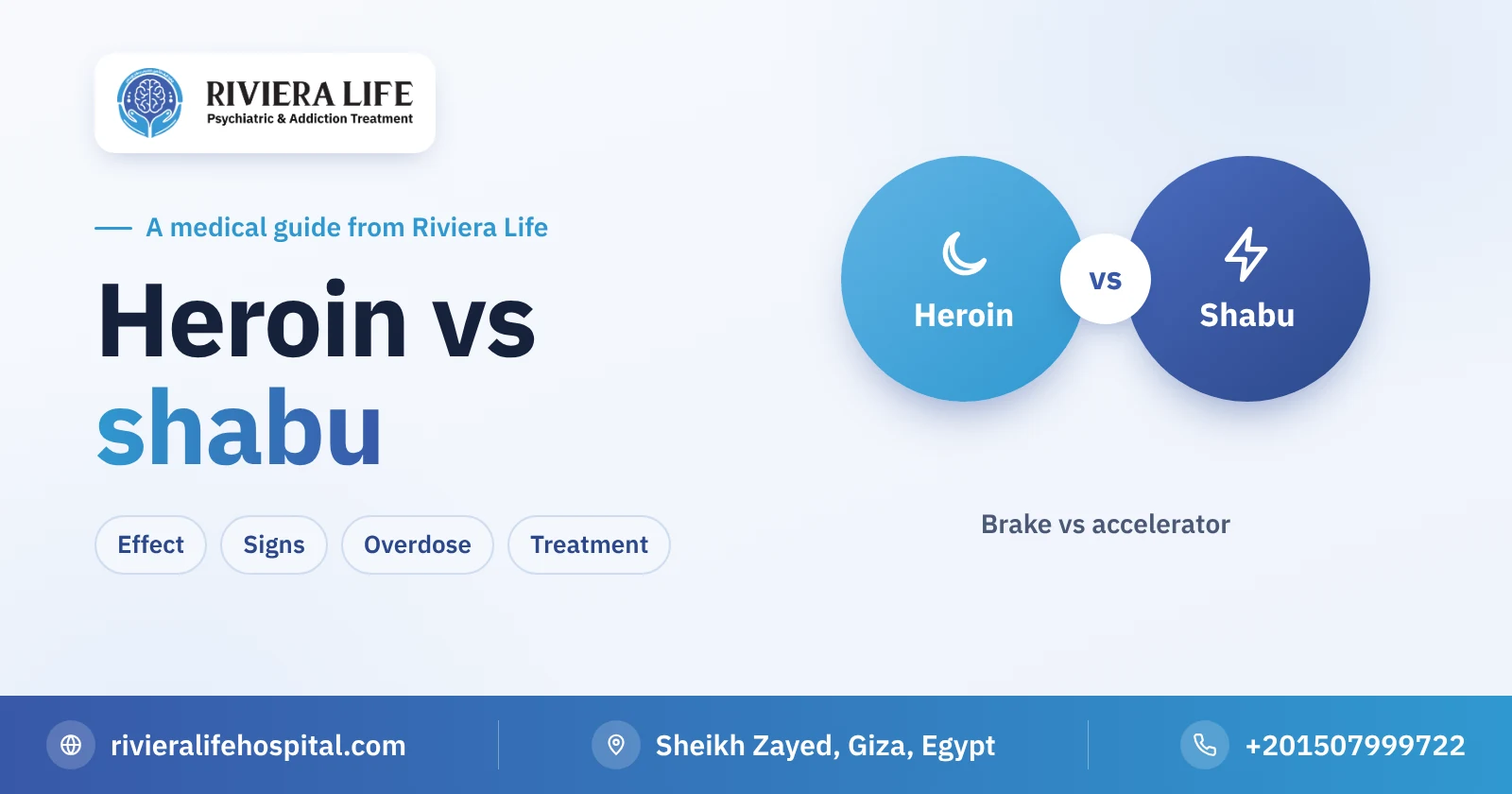
The difference between heroin and shabu is that heroin is an opioid depressant that calms the nervous system and slows breathing, while shabu is a common name for crystal methamphetamine, a strong stimulant that speeds up the heart and brain and drives away sleep for long hours. That is why their signs come out opposite: drowsiness and narrow pupils with heroin, and staying awake and dilated pupils with shabu. The overdose of each also differs: the first usually kills by stopped breathing, the second by heat, the heart and the brain. Treatment differs too, as approved medicines exist for heroin addiction and none like them exist for shabu. This is a comparison to help the family understand, not to diagnose.
The difference between heroin and shabu in brief
| Comparison | Heroin | Shabu |
|---|---|---|
| Family | An opioid depressant derived from morphine | A synthetic stimulant from the amphetamine family |
| Common form | A white or brown powder | Crystals that look like glass or ice |
| Dominant feeling | Warmth and relaxation then drowsiness | Euphoria, energy and staying awake for long hours |
| Pupil of the eye | Very narrow | Dilated |
| Form of overdose | Slowed or stopped breathing and loss of consciousness | Severe heat, heart disturbance, seizures and strokes |
| Withdrawal | Pains, diarrhea, sweating, vomiting and urgent craving | Exhaustion, long sleep, depression and urgent craving |
| Treatment medicines | Approved medicines for withdrawal and relapse prevention | No approved medicine; treatment is mainly psychological and behavioral |
What is heroin and what is shabu?
Heroin is an opioid substance made from morphine extracted from the poppy plant, and it is used by snorting, smoking or injection. It is among the strongest substances causing physical dependence, and is known in Egypt by several popular names. The full picture of it is on the heroin page.
Shabu, however, is the name widespread in Egypt and the Gulf for crystal methamphetamine, also called ice or crystal. It is a substance made entirely in illicit labs, usually smoked, and its effect is much longer than most other stimulants. The methamphetamine page presents its details, while the article on the difference between methamphetamine and amphetamine distinguishes it from its closest substance.
How does each work in the brain?
After it is converted in the body, heroin binds to opioid receptors in the brain and spinal cord, so it suppresses pain and gives a surge of relief, then slows the breathing centers in the brainstem. This last point is the secret of its danger.
Shabu pushes nerve cells to release enormous amounts of dopamine and prevents its reuptake, so the brain stays in a state of excessive arousal for hours. With repetition the dopamine cells themselves may be damaged, so the person finds it hard to feel ordinary pleasure for a long time after stopping. In other words, heroin presses on the brakes, and shabu presses the accelerator all the way down.
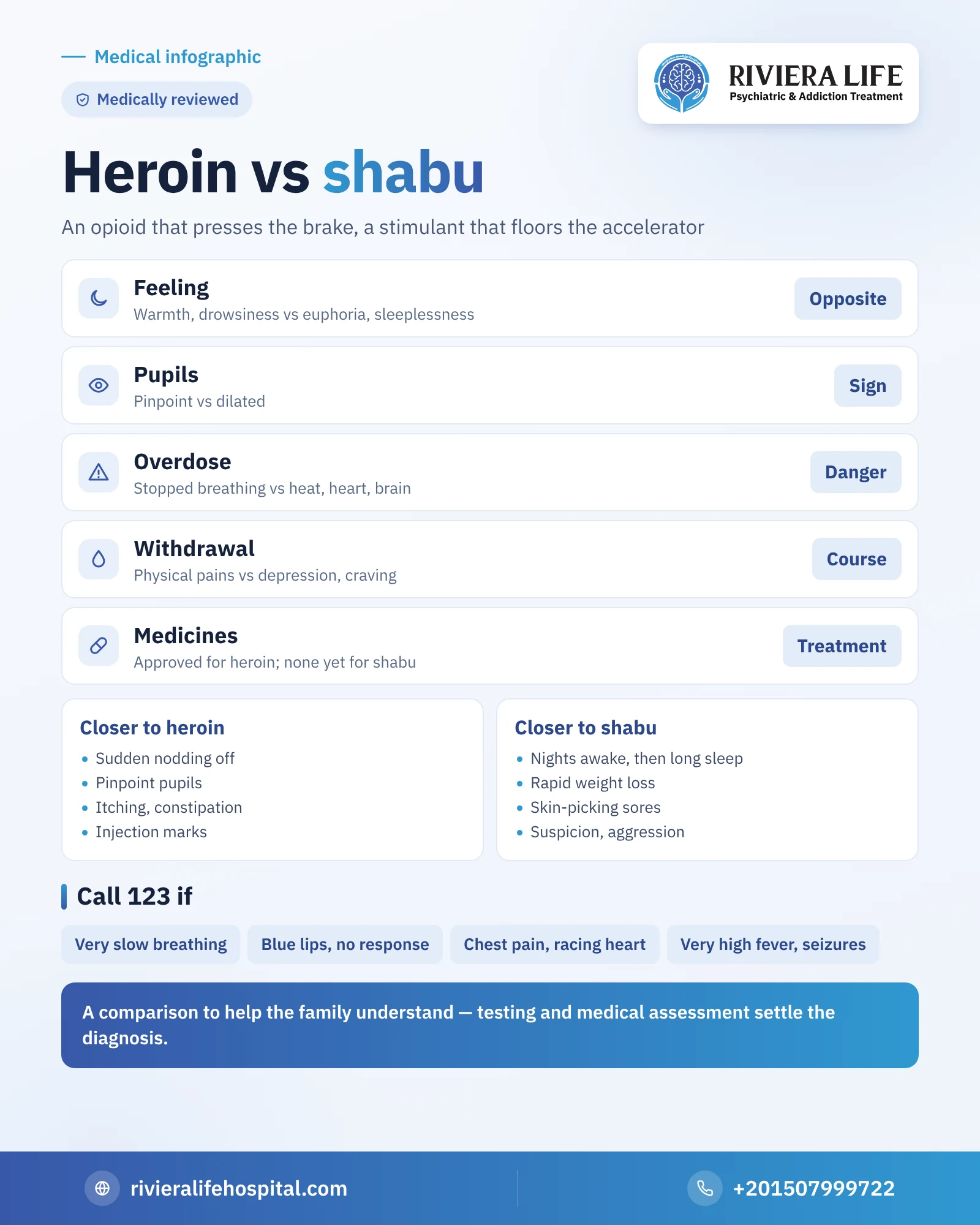
Signs the family sees
Signs closer to heroin
- Sudden drowsiness and “nodding off” while sitting or talking.
- Very narrow pupils even in dim light.
- Itching, constipation and slowness in movement and speech.
- Injection marks on the arms or constantly wearing long sleeves.
Signs closer to shabu
- Staying awake for consecutive nights then sleeping very long.
- Loss of appetite and rapid thinness.
- Repetitive aimless movements and scratching the skin until sores appear.
- Suspicion, aggression and sometimes hallucinations or ideas of being followed.
The details of each picture are in the articles on heroin addiction symptoms and ice addiction symptoms.
Harms: two different paths of damage
The harms of heroin are often linked to the method of use and lifestyle: shared injection transmits viral hepatitis and HIV, and may cause abscesses and infections of the heart valves. Over time lung problems, chronic constipation and hormonal disturbance appear. The details are in the article on the harms of heroin.
The harms of shabu, however, hit the heart and vessels directly: high blood pressure, irregular pulse, weakness of the heart muscle and the risk of stroke even in young people. Added to this are severe dental problems, skin sores, weight loss and decline of memory and concentration. The article on the harms of ice explains them.
Mind and behavior
Heroin pulls the person inward: isolation, blunting, depression, and life revolving around the next dose. Shabu pushes them violently outward: tension, aggression and impulsivity, and it may reach a psychosis resembling schizophrenia with auditory hallucinations and delusions of being followed, and these symptoms may persist or return in some of those recovering. That is why incidents of violence inside the home are linked more with shabu, while incidents of sudden death are linked more with heroin.
Overdose: two different pictures
A heroin overdose is usually silent: drowsiness that turns into loss of consciousness, slow or intermittent breathing, blue lips, and pupils like pinheads. There is an emergency antidote for it, naloxone, given by paramedics or medical staff, and explained in the article on naloxone.
A shabu overdose is loud: very high temperature, chest pain, severe palpitations, and agitation or acute psychosis, and it may end in seizures, a stroke or a brain hemorrhage. It has no specific antidote, so saving the person relies on cooling, calming and treating the heart in hospital.
Call an ambulance on 123 immediately if there appear
Signs differ by substance, and may come together if heroin is mixed with shabu. Stay with the person until help arrives.
- Very slow or intermittent breathing or stopped breathing
- Blue lips or nails with no response to calling
- Chest pain or a very fast, irregular heartbeat
- Very high temperature with agitation or severe confusion
- Seizures or sudden weakness in half of the body or difficulty speaking
Addiction and dependence
Heroin builds strong and rapid physical dependence, so the person needs increasing amounts, and the absence of the dose becomes physically painful. Shabu builds an overwhelming psychological craving, and changes the brain’s reward circuits until everything else becomes dull. The result is the same in both cases: loss of control and continuing despite harm, but the road to treatment differs.
Some people use the two substances at different times or together: shabu for staying up and activity, then heroin “to come down” and sleep. This pattern creates a double dependence that is hard to untangle, and makes the symptoms overlapping and confusing to the family, so it doesn’t know whether what it sees is the effect of one substance or the withdrawal of another. In this case in particular, medical assessment and testing become necessary before any plan.
Withdrawal: what should the family expect?
Heroin withdrawal begins within hours of the last dose: yawning, tears and a runny nose, then bone and muscle pains, diarrhea, vomiting, chills and insomnia. It is very painful but rarely life-threatening on its own if medically monitored. The details are in the article on heroin withdrawal symptoms.
Shabu withdrawal is calmer physically and harsher psychologically: long sleep, hunger and exhaustion, then depression, anxiety and urgent craving that may extend for weeks, and suicidal thoughts may appear that need close follow-up. The stages are in the article on ice withdrawal symptoms.
Treatment: where does it differ?
For heroin there are approved medicines from which the doctor chooses: medicines that ease withdrawal and reduce craving, and others that block the effect of opioids to prevent relapse, always used within a psychological and behavioral program. The details are in the article on heroin addiction treatment.
For shabu there is so far no approved medicine that treats the addiction itself, so treatment relies on cognitive behavioral therapy and motivation programs, treating psychosis or depression if they appear, and organizing sleep and nutrition. The article on ice addiction treatment explains its stages. At Riviera Life the consultants in psychiatry and addiction treatment set a plan that suits the substance the patient actually uses, with round-the-clock medical supervision and in complete confidentiality.
And because shabu doesn’t yet have an approved substitute medicine like the one heroin has, read what actually exists in medicines for treating shabu.
Which is more dangerous?
Both substances are dangerous in different ways. Heroin is more linked to sudden death from overdose, especially after a period of abstinence when tolerance falls. Shabu is more linked to psychosis, violence and damage to the heart and brain over the long term. And whoever combines them carries both dangers together, because the stimulant hides the effect of the depressant and then wears off before it. To compare heroin with another stimulant see the article on the difference between cocaine and heroin.
When do you ask for help?
If you notice signs of either substance in a member of your family, don’t wait until you are sure of its type. Medical assessment determines the substance, the degree of dependence and the suitable treatment plan. The first consultation at Riviera Life is free and available around the clock via +201507999722, and the hospital is in Sheikh Zayed, Giza.
More from the heroin guide
- Heroin: the complete guide
- Methamphetamine (shabu): the complete guide
- The difference between cocaine and heroin
- Heroin addiction treatment
- The difference between heroin and morphine: origin, effect, danger and treatment
- The difference between heroin and captagon: sleeplessness, drowsiness, danger and treatment
- The difference between heroin and opium: from the poppy to the powder and the ladder of strength
- The difference between heroin and hash: which is more dangerous, and is hash a gateway to heroin?
Questions many people ask
No. Shabu is a common name for crystal methamphetamine, which is a stimulant, while heroin is an opioid depressant derived from morphine, and their effects are almost opposite.
With heroin drowsiness, narrow pupils and constipation dominate, and with shabu staying awake, dilated pupils, thinness and suspicion dominate, but testing and medical assessment are what settle the matter.
There is so far no approved medicine for methamphetamine addiction, and treatment relies on behavioral psychotherapy and treating psychiatric symptoms, while approved medicines exist for opioid addiction.
Naloxone is an antagonist to opioids only, so it doesn't treat shabu poisoning, but paramedics may use it if there is a possibility the person took an opioid with it.
Heroin withdrawal is more severe physically with its pains, diarrhea and vomiting, and shabu withdrawal is harder psychologically with depression and urgent craving, and both need medical follow-up.