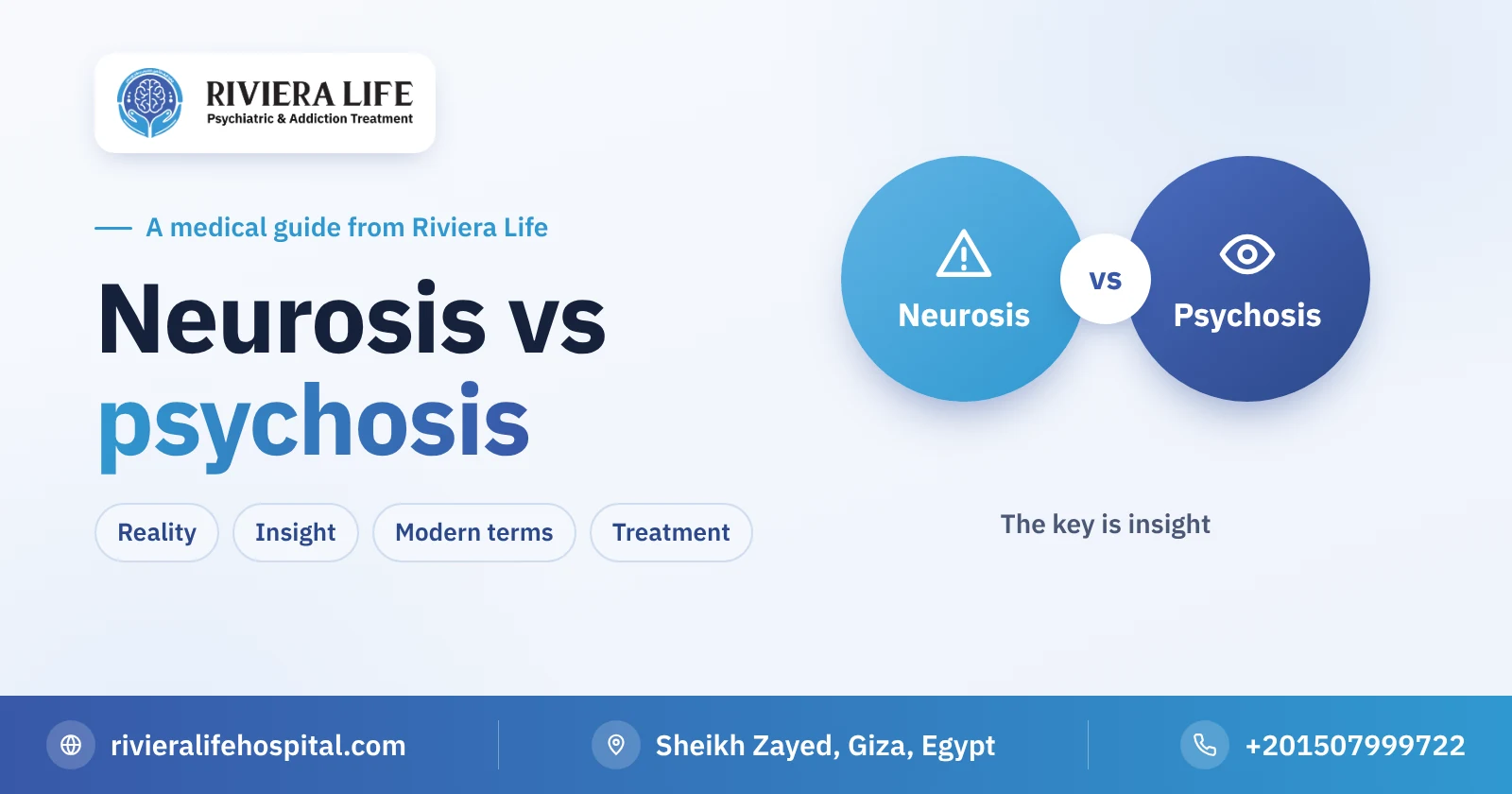
The difference between neurosis and psychosis is the difference between two old expressions people use to distinguish two types of psychological disorder. In the popular sense, neurosis means anxiety, tension, obsessions and exaggerated fear, while the person remains aware of his reality and that he is suffering. Psychosis, on the other hand, means a partial loss of contact with reality, such as hearing voices or holding on to strange convictions that others don’t see. The most important difference, then, is “insight”: does the person know that what he feels is a problem? Even so, modern medicine no longer uses the word “neurosis” as a diagnosis, and here we explain why, and what remains of this division.
Where did the division come from?
The term “neurosis” appeared in medicine centuries ago, and in the twentieth century it became a broad classification for anxiety disorders, obsessions, hysteria and some mild depression. In contrast, “psychosis” came to describe the severe conditions in which a person’s link with reality is disturbed. This division remained in use for a long time in books and public conversation, and that is why it has stayed in people’s minds.
What does medicine say today?
Modern classifications, such as the American diagnostic manual and the International Classification of Diseases, abandoned the word “neurosis” because it was broad and vague. More precise terms took its place: generalized anxiety disorder, panic, phobia, obsessive-compulsive disorder, post-traumatic stress disorder and others. The term “psychosis” remained in the sense of describing psychotic symptoms, which may appear in different disorders. So the old division has become a popular simplification more than a diagnosis. A similar discussion of popular labels is in our article on the difference between psychological and mental illness.
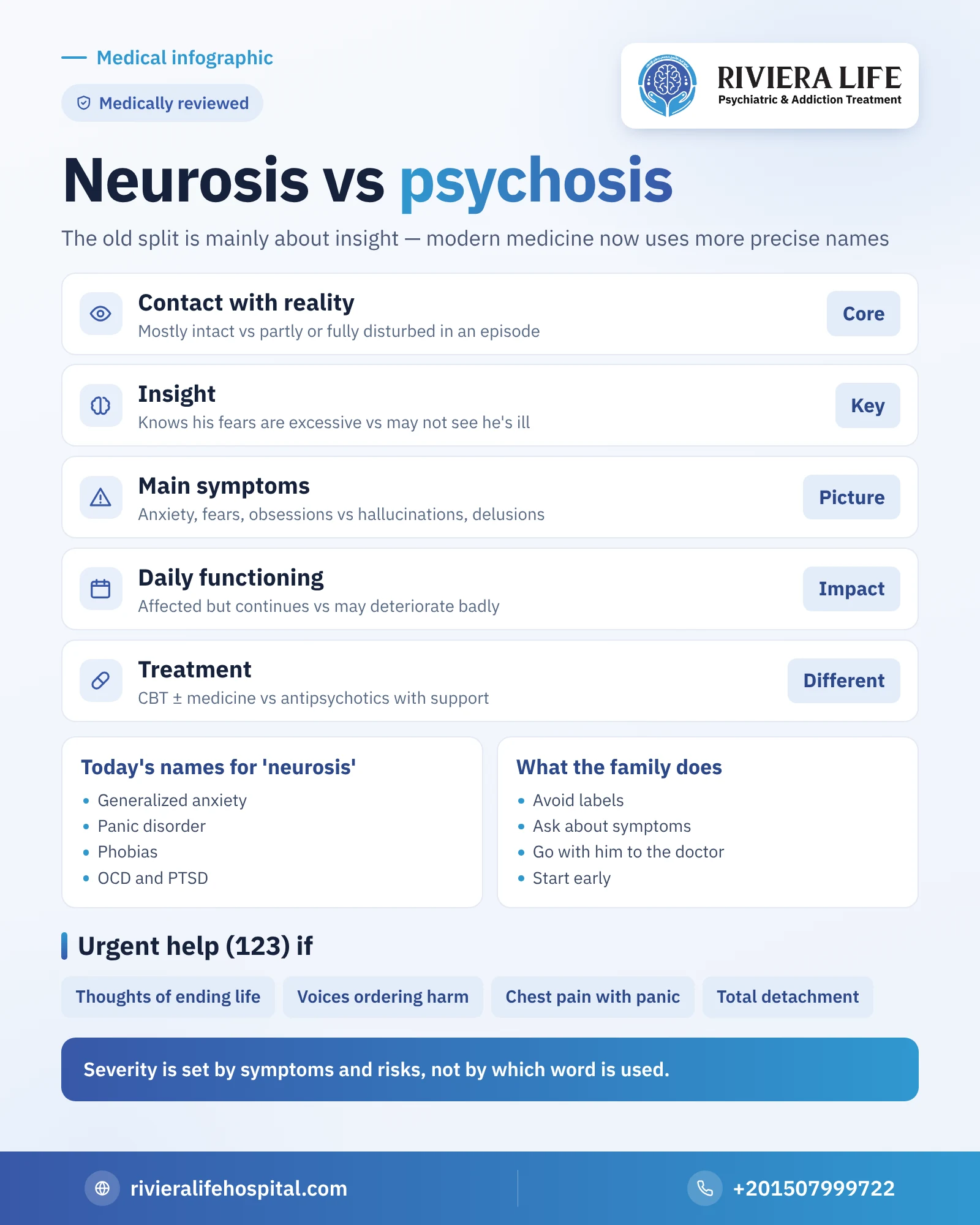
The difference between neurosis and psychosis in a table
| Point of comparison | Neurosis (in the popular sense) | Psychosis |
|---|---|---|
| Contact with reality | Mostly intact | Partly or fully disturbed during the episode |
| Insight | Realizes his feelings are exaggerated or disturbing | May not realize he is ill |
| Main symptoms | Anxiety, fears, obsessions, panic attacks and tension | Hallucinations, delusions and disorganized speech |
| Daily functioning | Affected but usually continues | May deteriorate severely during the episode |
| Modern term | Anxiety, obsessive and phobic disorders and others | Schizophrenia, brief psychosis, delusional disorder and psychotic mood disorders |
| Usual treatment | Cognitive behavioral therapy, and a medicine may be added | Antipsychotics with psychological and social support |
How does a person live each condition?
An example of what is called neurosis
A man checks that the door is locked dozens of times, knows perfectly well that this is excessive, but can’t stop and suffers from it. Or a woman with panic attacks who knows the danger isn’t real but her body is screaming. The suffering here is severe, and reality is intact. To read more: anxiety symptoms and panic attacks.
An example of psychosis
A young man becomes convinced that passers-by are watching him and talking about him, and hears a voice commenting on his actions, and accepts no other explanation. Here reality itself has been disturbed, and it is hard for him to see that there is an illness involved. To read more: paranoia and hallucination symptoms.
Blurred boundaries between the two
Reality is less tidy than the table. Severe obsessive-compulsive disorder can sometimes reach the point of weak insight, and the relationship between obsessions and psychosis is explained in our article on OCD and psychosis. A person may have severe depression with delusions of guilt, as in psychotic depression. And severe anxiety may be accompanied by brief psychotic symptoms with stress, lack of sleep or drugs. That is why it isn’t right to put oneself or others in a single box, as diagnosis is the doctor’s responsibility after a full assessment.
Is one more dangerous than the other?
It isn’t right to judge like that. Psychosis changes perception and may expose the person to dangerous decisions, but it is treatable, and many people recover well with early intervention. What is called neurosis may seem milder, but it can destroy quality of life, and may be linked to depression, thoughts of self-harm and the use of sedatives and alcohol for relief. Severity is determined by the person’s symptoms and risks, not by the label.
Treating each of them
Anxiety, obsessions and phobias respond in many cases to cognitive behavioral therapy, and the doctor may prescribe medicines such as antidepressants from a particular group when needed, with details in anxiety treatment. Psychosis usually relies on antipsychotics with psychotherapy, family support and early intervention, which you will find in psychosis treatment. In both cases the medicine isn’t adjusted or stopped without the doctor, and sedatives or drugs aren’t used as self-treatment.
When should you seek help?
- If anxiety or obsessions have affected sleep, work and relationships for weeks.
- If voices, fixed suspicions or a sudden change in thinking and behavior appear.
- If you have turned to alcohol or sedatives to relieve tension.
- If thoughts of ending life appear.
Seek urgent help immediately if you see
Call an ambulance on 123 or go to the nearest emergency department if any of these appear:
- Thoughts or plans to end life, and you can call the mental health hotline on 16328
- Voices ordering harm to oneself or others
- Severe panic with chest pain or difficulty breathing that doesn’t go away
- Severe confusion or complete detachment from reality
Is the term still useful?
It has limited use. It works as a word that brings the idea closer to people: there are disorders in which the person stays aware of his reality and suffers from them, and disorders in which this awareness is disturbed. But it does harm if used as a stigma or a diagnosis. The word “neurotic” in everyday speech sometimes means a quick-tempered person, and that isn’t an illness. A doctor today doesn’t write “neurosis” in your file, but identifies a specific disorder and treats it with what suits it. So if you hear the term from an older doctor or therapist, ask him for the modern name of what he means.
Where do depression and addiction fit in this division?
Depression doesn’t fit easily into either box, as it may be mild or severe, with or without delusions. The same goes for addiction, which is a separate disorder, but it may cause psychotic symptoms such as suspicion and hallucinations, and may start as an attempt to calm anxiety. Someone with severe anxiety who turns to sedatives or alcohol may fall into a second problem harder than the first. The rule: any symptoms that affect your life deserve an assessment, without being preoccupied with the label. To tell sadness from depression, see our article on depression symptoms.
How should the family act?
- Don’t call your relative “neurotic” or “crazy”, as the words hurt and delay seeking treatment.
- Ask about the symptoms themselves: sleep, fear, recurring thoughts, voices, instead of settling for a label.
- Go with him to the doctor instead of pressuring him with advice.
- Know that improvement is possible in both cases, and that starting early is better.
The difference in how the person sees what he is going through
Many doctors sum up the difference in a simple sentence: someone with anxiety says “I know my fear is exaggerated but I can’t control it”, while someone with psychosis during an episode usually says “what I see and hear is real”. This sentence isn’t an absolute rule, as some patients with psychosis have partial insight, and some patients with OCD lose it at moments of severe illness, but it helps the family understand why one accepts treatment easily and the other refuses it. When a relative with psychosis refuses treatment, don’t try to convince him that he is ill, but start with what he is suffering from, such as insomnia or fear, and offer to help him with it.
How can Riviera Life help you?
At Riviera Life in Sheikh Zayed, psychiatry consultants carry out a comprehensive assessment of the condition and determine whether it is anxiety, psychosis or something else, in complete confidentiality, with a family program and aftercare. The first consultation is free on +201507999722.
More from our psychosis guide
Questions many people ask
Rarely. Modern classifications replaced it with more precise terms such as anxiety disorder, panic, obsessive-compulsive disorder and phobia.
Not necessarily. Anxiety may seem milder, but it can destroy quality of life. Severity is measured by symptoms and risks, not by the label.
It is a person's awareness that what he feels or thinks is a problem that needs treatment. It is usually intact in anxiety, and may weaken in psychosis.
It doesn't usually, but severe stress, lack of sleep and drugs may trigger brief psychotic symptoms in some people.
Usually not. Anxiety relies on cognitive behavioral therapy and a medicine may be added, while psychosis relies on antipsychotics with psychological support.