Duloxetine is an antidepressant from the serotonin and norepinephrine reuptake inhibitor class, with the international brand name Cymbalta. The doctor prescribes it for depression and generalized anxiety disorder, and also for nerve pain caused by diabetes, fibromyalgia, and some chronic muscle and bone pain. This combination of mood and pain is what distinguishes it: a patient suffering from depression and chronic pain together may find in one medicine something that treats both sides. And the medicine has another side that is no less important: unpleasant discontinuation symptoms if it is stopped suddenly. The article doesn’t mention doses; starting, adjusting and stopping are only with the doctor.
What is duloxetine?
Duloxetine belongs to a class that works on two neurotransmitters together: serotonin and norepinephrine. The first is linked to mood and anxiety, the second to alertness and energy, and together they play a role in pain signals descending from the brain to the spinal cord. This explains why an antidepressant helps with pain. In Egypt it is known by the original name Cymbalta and several local equivalents with different names, so read the active substance on the box. To learn its place among the other types, see antidepressants.
What is duloxetine used for?
Depression and generalized anxiety
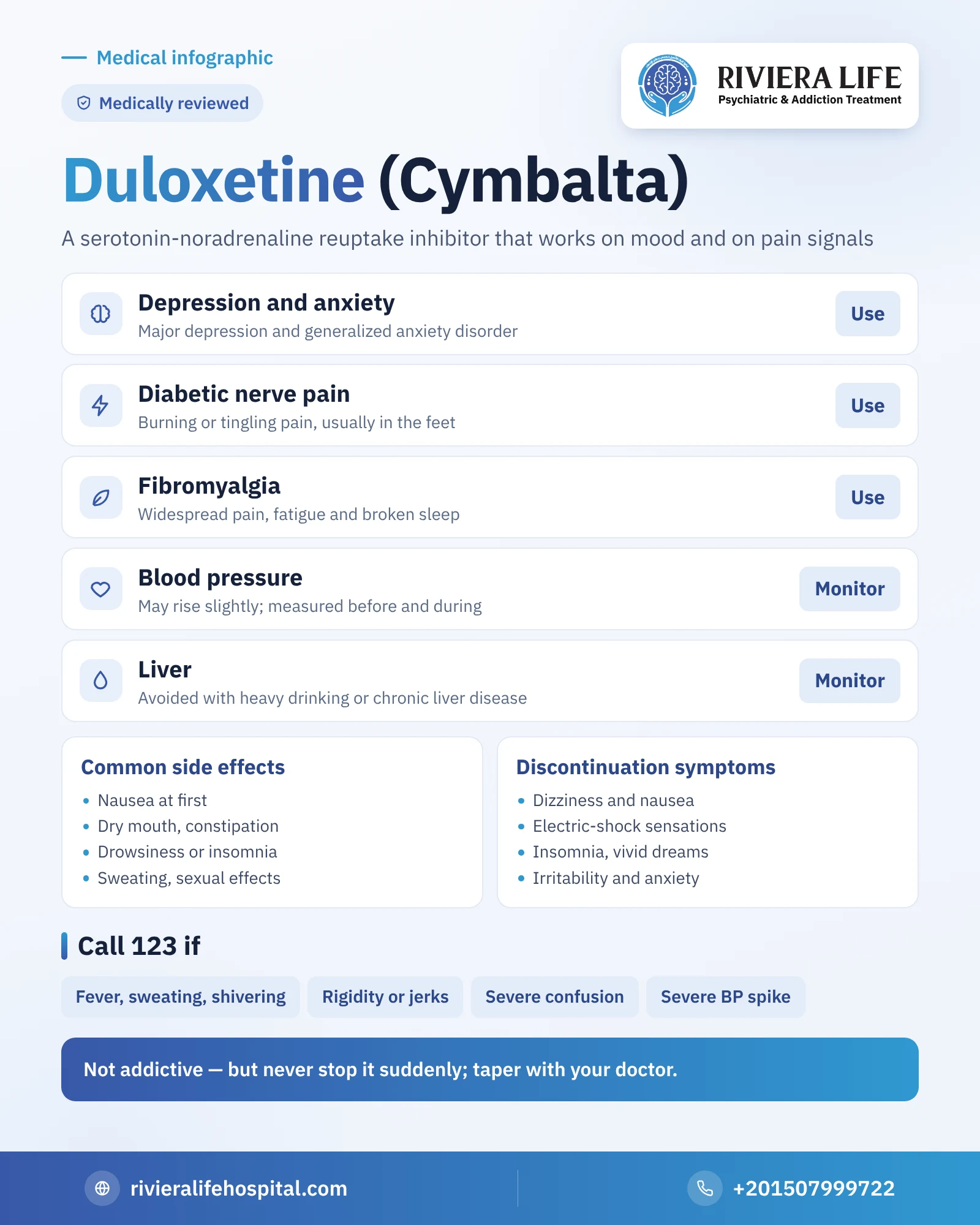
It is used to treat episodes of depression, and generalized anxiety disorder, which lasts months and extends into every part of life. It is sometimes preferred when depression comes with fatigue and slowness, or when a medicine from the serotonin class alone isn’t enough. The general framework is in depression treatment and anxiety treatment.
Diabetic nerve pain and fibromyalgia
Many regulatory bodies have approved it for peripheral nerve pain in diabetic patients, that burning or tingling pain usually in the feet. They have also approved it for fibromyalgia: widespread pain, fatigue and broken sleep. The medicine reduces pain in some patients, not all, and usually doesn’t remove it completely. Treating and controlling the diabetes itself remains the foundation.
Chronic muscle and bone pain
It is also used in some types of chronic lower back pain and chronic knee osteoarthritis pain, and the doctor decides after assessing the pain and its causes. In other countries it has been used for stress urinary incontinence in women, a use that isn’t always available.
The patient with depression and pain: why does treating both matter?
Many complain of pain in the back, limbs or head for months without a clear physical cause, and then it turns out depression lies behind it. The reverse is also true: chronic pain drains mood and sleep and pushes toward depression. When the two cycles become entangled, treating one without the other can seem incomplete. This is where an assessment covering both sides with a psychiatrist and a pain or internal medicine doctor comes in, so the physical examination isn’t neglected and the psychological state isn’t forgotten. And the medicine helping with pain doesn’t mean the pain is “psychological” in the sense of made up; the pain is real, and the brain is part of the mechanism of feeling it.
When does it start working?
In some patients improvement in pain may come before improvement in mood, and in others the reverse. The effect usually appears within a few weeks, but an accurate judgment needs longer, set by the doctor. In the first days, side effects may bother you before you feel any benefit, so don’t judge the medicine early, and don’t endure a severe effect in silence.
Common side effects
- Nausea, the most common at first.
- Dry mouth, constipation and loss of appetite.
- Drowsiness or insomnia, dizziness and headache.
- Excessive sweating.
- A slight rise in blood pressure and pulse in some patients.
- Weak sexual desire, delayed ejaculation or difficulty reaching orgasm.
Most effects recede within a few weeks. If the rise in blood pressure persists or other symptoms appear, the doctor decides whether to continue monitoring or switch the medicine.
Blood pressure and the liver: what the doctor monitors
Duloxetine raises blood pressure in some people, so the doctor measures it before starting and during treatment, especially in those with existing high blood pressure. It passes through the liver, and may raise its enzymes in a few cases. So doctors usually avoid prescribing it for someone who drinks alcohol heavily or has chronic liver disease. And if yellowing of the eyes or skin, dark urine or upper abdominal pain appears, contact the doctor immediately.
Other warnings
- Young people: an official warning for antidepressants about increased suicidal thoughts in those under roughly twenty-four. If a worrying change appears, contact the doctor, the mental health hotline on 16328 or an ambulance on 123. For more: suicidal thoughts.
- Narrow-angle glaucoma: needs an eye assessment before starting.
- Bipolar disorder: it may uncover a manic episode in someone predisposed.
- Bleeding: increases with blood thinners, aspirin and anti-inflammatory painkillers.
- Low sodium: more evident in older people.
- Severe kidney disease and epilepsy: need special caution.
- Pregnancy and breastfeeding: an individual decision with the doctor after weighing benefit and risk.
What should you tell your doctor before starting?
Mention high blood pressure if present, any liver or kidney disease, drinking habits, eye problems, and all the medicines and painkillers you take, especially strong painkillers. And mention if you are pregnant or planning a pregnancy. If the reason for the medicine is diabetic nerve pain, bring your latest sugar readings, because the pain plan depends on them.
Interactions your doctor must know about
Duloxetine is broken down in the liver through two main enzymes, and its level is affected by medicines that block them. Examples include fluvoxamine and some antibiotics from the quinolone class, with which its level may rise. The risk of serotonin syndrome also increases with tramadol, other antidepressants, triptans and St John’s wort, and it isn’t combined with monoamine oxidase inhibitors. You will find the details in serotonin syndrome.
Call an ambulance on 123 immediately if you see
After taking an excessive amount of duloxetine, or when combining it with a medicine that raises serotonin:
- A high temperature with heavy sweating and shivering
- Muscle rigidity or repeated involuntary jerks
- Agitation, severe confusion or hallucinations
- Seizures or loss of consciousness
- Severe palpitations or a sudden violent headache with a very high blood pressure
Duloxetine, alcohol and drugs
Alcohol with duloxetine strains the liver, increases drowsiness and dizziness and weakens the treatment’s effect, which is why combining them is usually prohibited. Tramadol adds the risk of serotonin syndrome and seizures. And some patients with chronic pain turn to opioid painkillers, a dangerous gateway to dependence; someone suffering from chronic pain, depression and dependence together needs an integrated plan, as in the dual diagnosis program.
Discontinuation symptoms: why is duloxetine reduced gradually?
Duloxetine doesn’t cause addiction: no high, no craving and no need to raise the amount. But it is one of the medicines from which stopping can be unpleasant, especially if it is stopped suddenly or after repeatedly forgetting doses. Some patients complain of:
- Dizziness, nausea and headache.
- A tingling or electric-shock sensation in the head and limbs.
- Insomnia and vivid dreams.
- Irritability, mood swings and anxiety.
- Sweating and fatigue.
That is why the doctor reduces it gradually over weeks or months. To tell discontinuation symptoms apart from the illness returning, read antidepressant withdrawal symptoms. And if you forget a tablet, don’t double the next one; ask the doctor or pharmacist what is best.
If you are taking duloxetine and feel no difference in mood or pain, or suffer side effects, or are planning to stop, book your free first consultation with a consultant psychiatrist at Riviera Life, and we will review the whole plan in complete confidentiality.
More from our psychiatric medicines guide
- Psychiatric medicines: their types and what each family treats
- Antidepressants: their types and how they work
- Anxiety treatment: psychotherapy and medicines
- Antidepressant withdrawal symptoms
- Venlafaxine (Effexor): uses, blood pressure and strong discontinuation symptoms
Questions many people ask
It isn't an instant painkiller, but an antidepressant that eases some types of chronic pain, such as diabetic nerve pain and fibromyalgia, after weeks of regular use.
It may raise it slightly in some patients, so the doctor measures it before starting and during treatment, and takes more care in those with existing high blood pressure.
It is better avoided, as alcohol strains the liver and increases drowsiness and dizziness, and the doctor may not prescribe it for someone who drinks heavily or has liver disease.
Because stopping it suddenly may cause dizziness, nausea, electric-shock sensations in the head, insomnia and irritability. The doctor reduces it slowly to ease this effect.
It doesn't cause addiction, as there is no high or craving. But discontinuation symptoms can be unpleasant, so it is only stopped with the doctor's plan.