The social stigma of addiction is the view that reduces the whole person to the word “addict”, seeing them as weak-willed, of bad character or a danger to those around them. This view doesn’t stay in words; it closes the doors of work, marriage and friendship, and pushes the patient and family into silence and hiding, which delays treatment for years. Here we understand the types of stigma and their health effect, how the language we use can change, and what the patient, the family and society can do to ease it.
The social stigma of addiction: three faces of one thing
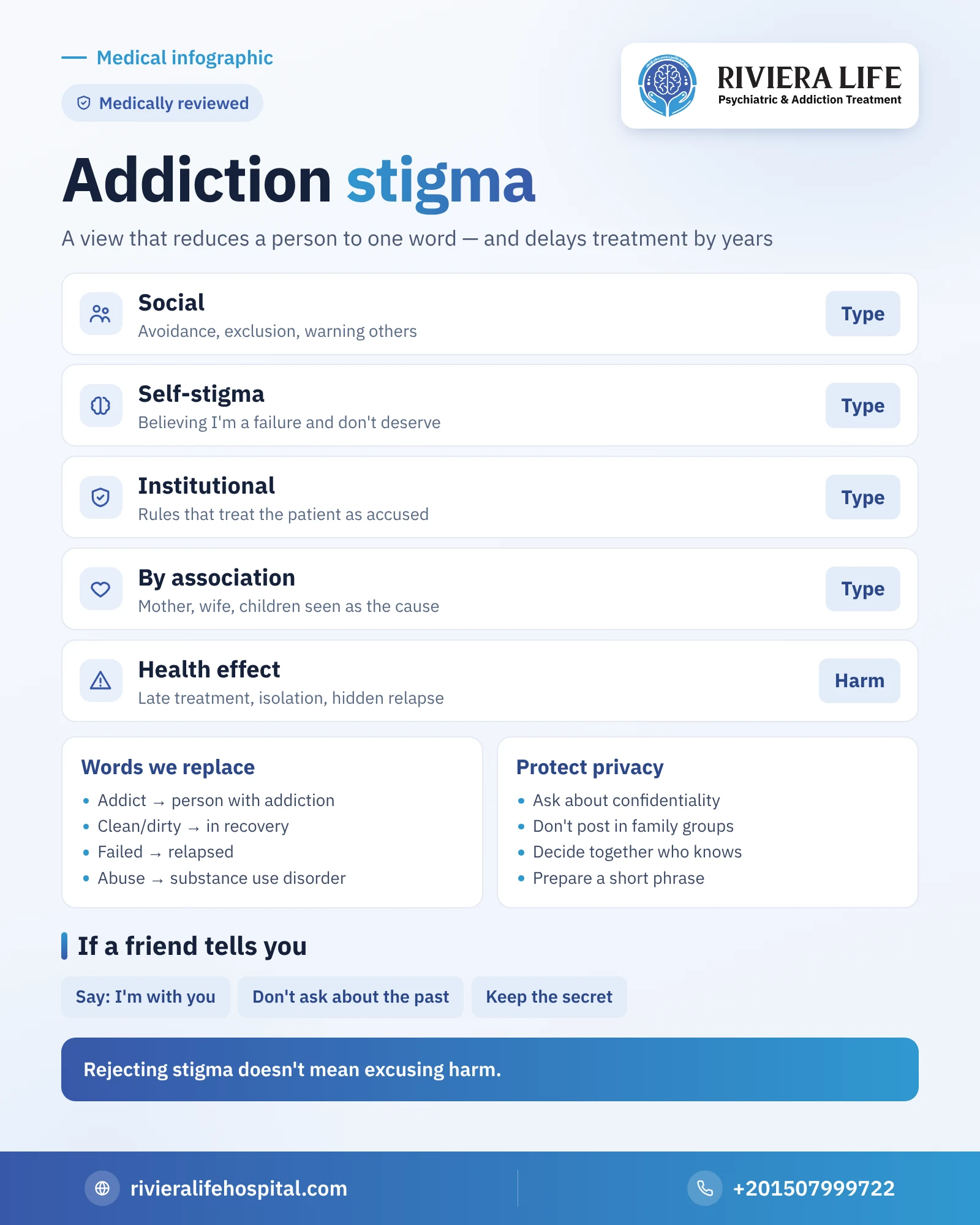
- Social stigma: people’s judgments and treatment: keeping away from the patient, excluding them from occasions, and warning others about them.
- Self-stigma: the patient believing what is said about them, so they tell themselves “I’m a failure and don’t deserve anything”. This kills the drive to recover from within.
- Institutional stigma: rules or practices that treat the patient as an accused person, or deny them a job opportunity or service because of their history.
Added to these is what researchers call stigma by association: what the mother, father, wife and children carry when they are seen as the cause of the problem or partners in it.
Why is addiction stigmatized more than other illnesses?
Because people see the behavior before they see the illness. Someone who sees a person lying, stealing from their home and being late for work judges them morally, and doesn’t see that a disturbance in the brain’s circuits is pushing them to it. The picture gets worse when use conflicts with religious and social values, so the moral judgment turns into estrangement. Also, addiction usually begins with a choice, which makes some think it remains a choice all along, while things change after repetition.
Other chronic illnesses such as diabetes and high blood pressure are also affected by behavior, but we don’t hold their patients to account with the same harshness. This disparity is the heart of the problem.
How does stigma look in the Egyptian home?
It appears in familiar everyday phrases: “you’ve disgraced us”, “what will people say?”, “so-and-so’s daughter won’t marry because her brother is like that”. It appears in the family hiding the problem from relatives, and in some households rushing the young man into early marriage “so he’ll settle down”, a decision that harms the wife and doesn’t treat the illness. And at work, the employee fears disclosing their treatment and losing a promotion or their job.
Its effect on women is no less: a woman is judged more harshly, and avoids admitting it for fear for her reputation and children, which we cover in addiction in women.
Is addiction weak willpower?
This question is the heart of stigma. Many imagine that if the addicted person wanted to, they would stop. But willpower relies on the brain areas responsible for inhibition and decision-making, which are the very areas affected by repeated use. A patient who says “I’ll stop tomorrow” means it sincerely, then stands before a craving beyond their capacity. This doesn’t mean an absence of responsibility: the patient is responsible for seeking treatment and sticking to it, but judging them as “weak” doesn’t help them get up; rather, it fills them with shame that sends them back to the substance.
What does stigma do to health?
- Delayed treatment: many prefer hiding the problem to asking for help, so they arrive late.
- Isolation: it cuts off healthy friends and brings closer those who use like them, so the risk grows.
- Shame that feeds use: many go back to the substance to escape the feeling of shame itself.
- Professionals’ hesitation: some service providers may treat the patient with prejudice, so they lose trust in the health system.
- Hiding relapse: someone who fears being judged doesn’t tell anyone about their slip, so it gets more complicated.
This is what makes stigma a real health factor, not just an unpleasant feeling, as it delays the stage we explained in the importance of early addiction treatment.
Language shapes attitude: words we replace
| Instead of saying | We can say | Why |
|---|---|---|
| Addict, user, junkie | A person with a substance use disorder or who suffers from addiction | Puts the person before the illness |
| Got clean, clean / dirty | In recovery, or not currently using | The person wasn’t “dirty” to be cleaned |
| Fell or failed | Relapsed | Relapse is a known part of a chronic illness |
| Abuse | Substance use disorder | Medical language is less accusatory |
Well-known research bodies such as the US National Institute on Drug Abuse (NIDA) encourage this kind of language, because the choice of words may affect how professionals and society see the patient and the patient’s readiness to seek treatment. Even in everyday conversation, one word changes the tone of the discussion.
The stigma of treatment itself
Stigma doesn’t stop at the substance, but extends to going to a psychiatrist or hospital. Some families say “we’re not crazy”, so they delay seeing the doctor for months. The truth is that psychiatry is a branch like any other, and that addiction is an illness treated by specialist doctors in the way any chronic illness is treated: assessment, a plan and follow-up. It is better to present the visit to the patient as an ordinary medical check-up, not a punishment.
If you are the one suffering from stigma
- Separate what you did from your worth as a person. The illness is behavior, not identity.
- Choose one safe person to tell, a brother, friend or doctor. Not everyone needs to know.
- Look for a treatment provider committed to confidentiality, as medical confidentiality is your right.
- Remember that thousands of patients have recovered and live ordinary lives without people knowing.
How do you protect your privacy in practice?
- Ask about the confidentiality policy before disclosing details to any treatment provider.
- Don’t post the problem in relatives’ groups or on social media, as what is posted can’t be withdrawn.
- Decide with the patient who knows and why, and don’t make the decision a secret one of you carries alone.
- Prepare a short sentence for awkward situations, such as “he’s going through a health matter and is being followed by a doctor”, which is honest and doesn’t open the door to questions.
If you are from the patient’s family
You can’t change the whole of society’s view, but you control three things: what you yourself say, who you tell, and how you receive the patient. Don’t use disgrace as a pressure tool, and don’t present the patient to relatives as a burden. Talk about the illness in the tone you use for any chronic illness, and ask for support for yourself too, as families get tired. The guidance on dealing with someone in recovery can help you after treatment.
The role of society and the workplace
Everyone can reduce stigma: the media that avoids mocking images, the school that teaches prevention without intimidation (see drug prevention), and the employer that lets an employee ask for treatment without fear of immediate punishment. If a friend tells you they are in treatment, the best response is simple: “I’m with you”, then keep the secret. For the general framework protecting those who seek treatment voluntarily, read the law and people with addiction in Egypt.
Does easing stigma mean being lenient with harm?
No. Rejecting stigma doesn’t mean justifying lying, violence or theft, nor that the person doesn’t bear responsibility for their actions. The difference is that we hold the behavior to account and protect the person, and ask for change while opening the way to it. A family that sets clear limits and supports treatment at the same time is doing exactly that.
In short, stigma recedes when people talk about addiction as they talk about any illness, accept one another, and people in recovery appear as living examples that change is possible. Every sentence you say precisely, and every time you keep a secret, opens a door for someone else who is hesitating to ask for treatment.
How can Riviera Life help you?
At Riviera Life we treat the patient as someone with an illness to be treated, not someone with a sin to be judged. Confidentiality is complete, the first consultation is free, and a team of consultants in psychiatry and addiction treatment involves the family in a plan that eases their burden and teaches them the language of support. Call +201507999722 at any hour; we are in Sheikh Zayed, Giza.
Read also
- Myths about mental illness: 9 common ideas and what the facts say
- Free addiction treatment in Egypt: the 16023 hotline
- How to deal with an addicted husband: a guide for wives
- Drug addiction: causes, symptoms and treatment
- My father is addicted to drugs, what do I do? A guide for children on protection and support
- Are drugs forbidden? Religious families’ questions about addiction
Questions many people ask
It is a negative view that reduces the person to their illness, seeing them as weak or bad, which pushes them to hide and isolate and delays their asking for help.
Social stigma is people's judgments and treatment of the patient, and self-stigma is when the patient believes these judgments about themselves and loses the drive to recover.
The family may feel ashamed, so they hide the problem, isolate themselves and delay treatment, and the psychological burden falls especially on the mother and wife.
Licensed hospitals are bound by medical confidentiality, and you have the right to ask about the confidentiality policy before you start.
Use language that puts the person before the illness, don't ask them about details of the past, tell them you are with them, and then keep their secret.