Fluoxetine is an antidepressant from the selective serotonin reuptake inhibitor (SSRI) class, best known worldwide as Prozac. A psychiatrist prescribes it for depression, OCD and bulimia nervosa, and sometimes for panic attacks. What sets it apart from the rest of its class is that it stays in the body much longer, which means that an occasional forgotten tablet doesn’t ruin the plan, and that discontinuation symptoms are usually milder, but also that its drug interactions continue for weeks after the last tablet. This article explains the whole picture without doses; starting, adjusting and stopping the medicine is the psychiatrist’s decision alone.
What is fluoxetine?
Fluoxetine is one of the oldest and most studied modern antidepressants. It appeared in the late 1980s and changed the way depression is treated, because it is less dangerous if misused than the older tricyclic medicines. It works by slowing the return of serotonin into the nerve cell, so it stays available between cells for longer. Our article on antidepressants explains where it sits among the other families. In Egypt the original name Prozac is available along with local equivalents under different names; the pharmacist will tell you what is currently available, and the active substance written on the box is the reference, not the name.
What is fluoxetine used for?
Depression
This is its main use, for adults and, in some countries, for adolescents under close supervision. It is usually combined with psychotherapy; you’ll find the full framework in our article on depression treatment.
OCD
OCD usually needs higher amounts than depression and longer patience before judging, which is in the doctor’s hands. The medicine gives the best result when combined with exposure and response prevention therapy, as in OCD treatment.
Bulimia nervosa
Fluoxetine is the only antidepressant officially approved in a number of countries for bulimia nervosa, meaning episodes of binge eating followed by compensation such as vomiting. The medicine reduces how often episodes occur, but doesn’t on its own treat the patient’s view of their body, so it is part of a plan including psychotherapy and nutritional follow-up. An overview of these disorders is in our guide to eating disorders.
Panic and other uses
Doctors also prescribe it for panic disorder and, in some countries, for a severe mood disorder that precedes the menstrual period. Any use outside these guidelines is decided by the doctor according to your situation.
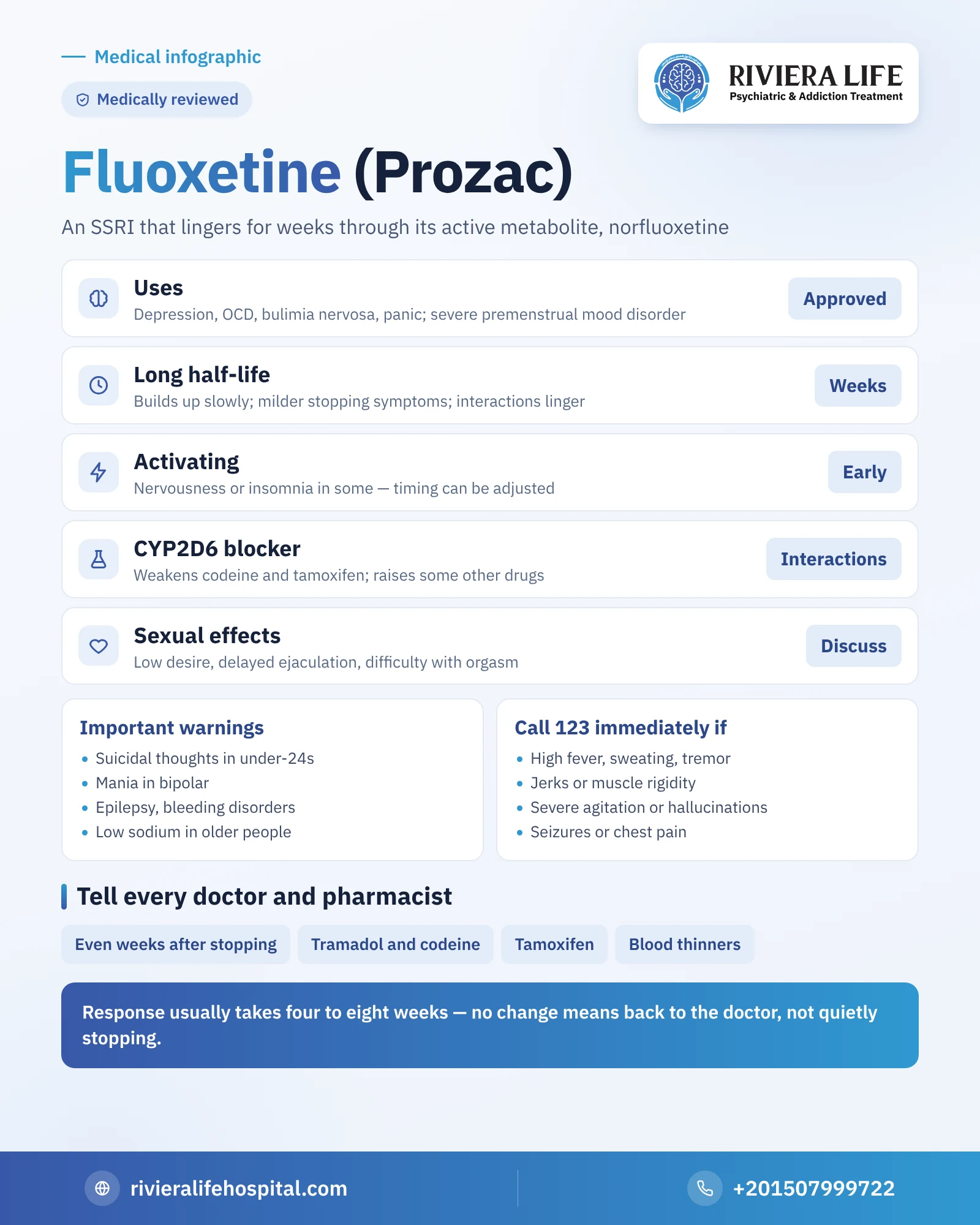
A long life in the body: a plus and a burden
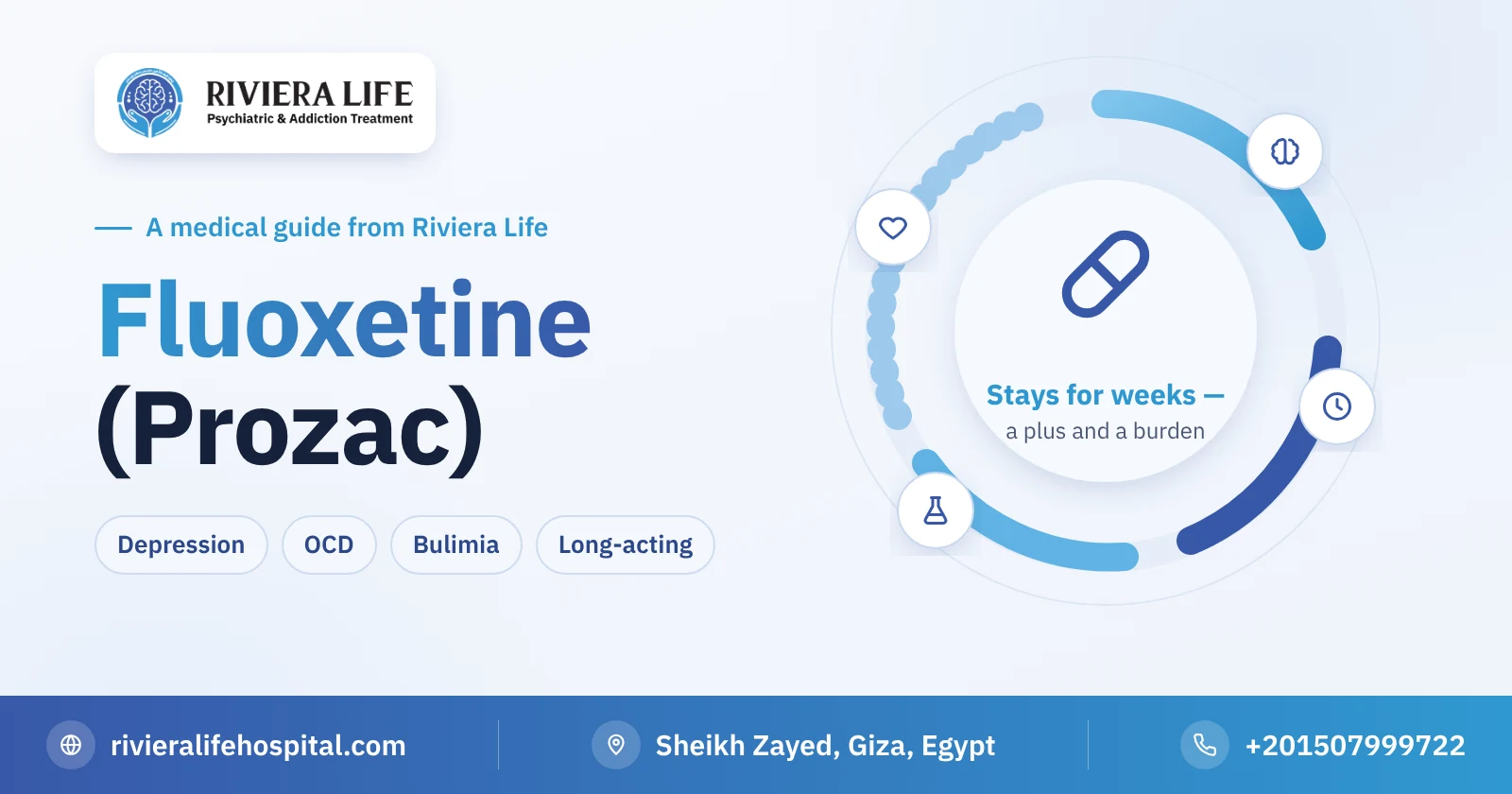
Fluoxetine is converted in the liver into another active substance called norfluoxetine, which stays even longer. While most antidepressants disappear from the blood within a day or two, complete clearance of fluoxetine and its derivative may take weeks. What does this mean in practice?
- The effect builds up slowly: it may take time before its level in the blood stabilizes, so it isn’t judged before several weeks.
- Discontinuation symptoms are usually milder: because the medicine withdraws from the body gradually on its own, which softens the shock experienced by someone stopping a short-lived medicine. But they can appear, especially on stopping suddenly, which is why ending it still follows the doctor’s plan.
- Interactions remain after stopping: if the doctor decides to replace fluoxetine with another medicine, they may wait weeks before starting some medicines, especially the monoamine oxidase inhibitor class.
Common side effects
- Nervousness and tension, or insomnia, which is clearer in some patients compared with others in its class.
- Nausea and loss of appetite at first.
- Headache, dizziness and mild tremor.
- Diarrhea, or dry mouth and sweating.
- Weak sexual desire, delayed ejaculation or difficulty reaching orgasm.
Most physical complaints ease within a few weeks. If insomnia is troublesome, the doctor discusses with the patient the time of day the medicine is taken, not stopping it. As for sexual effects, don’t stay silent; there are options for dealing with them, and you can read more in our article on paroxetine, which addresses the issue from the side of a medicine with a stronger effect on it.
Fluoxetine and other medicines: why does the pharmacist care about your list?
Fluoxetine strongly blocks an important liver enzyme called CYP2D6, which processes a large number of medicines. This gives rise to interactions worth mentioning:
- Codeine and tramadol: codeine needs this enzyme to turn into its painkilling form, so its effect weakens. Tramadol combined with fluoxetine carries the risk of serotonin syndrome and seizures.
- Tamoxifen, used to treat breast cancer: its conversion to its active form may be reduced, so the doctor treating the tumor must know.
- Some antipsychotics and other antidepressants: their levels may rise, increasing side effects.
- Blood thinners, aspirin and anti-inflammatory painkillers: the likelihood of bleeding increases with them.
- St John’s wort, other antidepressants and monoamine oxidase inhibitors: increase the risk of serotonin syndrome.
The practical bottom line: tell every doctor and pharmacist that you take fluoxetine, even weeks after you have stopped it.
Important warnings
- Young people: an official warning covers antidepressants for those under about twenty-four, especially at the start or when changing the amount; if thoughts of self-harm appear, call the doctor immediately, the mental health hotline on 16328, or an ambulance on 123. For more: suicidal thoughts.
- Bipolar disorder: the medicine may reveal a manic episode in those predisposed, so the doctor asks about any previous episodes of excessive energy.
- Epilepsy and blood disorders: need assessment before starting.
- Low sodium: more common in older people; its signs are tiredness, confusion and headache.
- Pregnancy and breastfeeding: the decision is individual; the doctor weighs the risk of untreated illness against the risk of the medicine, and don’t stop it suddenly if you discover you are pregnant.
Serotonin syndrome and overdose
Serotonin syndrome happens when serotonin activity rises too much, usually when fluoxetine is combined with another medicine that raises it. An overdose of fluoxetine is usually milder than with older medicines, but it can cause seizures and heart disturbances, and the danger increases with alcohol and other medicines. The details are in our article on serotonin syndrome.
Call an ambulance on 123 immediately if you see
After taking too much fluoxetine, or when combining it with another medicine that raises serotonin:
- A high temperature with heavy sweating and tremor
- Repeated jerks, muscle rigidity or involuntary shaking
- Severe agitation, confusion or hallucinations
- Seizures or loss of consciousness
- Severe palpitations or chest pain
Is fluoxetine addictive?
No. It gives no high, doesn’t drive increasing the amount, and has no effect that is sought for its own sake. However, some people mix fluoxetine with drugs because both “affect mood”, which is a dangerous mix: alcohol weakens the effect of treatment, and tramadol and stimulants multiply the risks. For someone with depression and substance use, there is a plan that treats both together, as in our dual diagnosis program.
When does it start working, and when should you judge it?
A clear response is usually delayed by about four to eight weeks, and sleep and energy may improve before mood. If you notice no difference after a sufficient period, or symptoms worsen, the key is to go back to the doctor to adjust the plan, not to stop quietly. And if you are comparing it with sertraline, our article on sertraline sets out the practical differences from the other side.
Stopping fluoxetine
Because the medicine leaves the body slowly, some patients think stopping immediately is harmless. The truth is that symptoms are milder on average, but relapse may return if the medicine is stopped before the illness has stabilized, and dizziness, insomnia and irritability may appear. The doctor decides how long to continue after improvement, usually six months or more, then plans the ending. Compare discontinuation symptoms with the illness returning in our article on antidepressant withdrawal symptoms.
If you are taking fluoxetine without seeing a difference, worried about an interaction with another medicine, or thinking of stopping, book your free first consultation with a consultant psychiatrist at Riviera Life, and we will review your plan with you in complete confidentiality.
More from our psychiatric medicines guide
- Psychiatric medicines: the types and what each family treats
- Antidepressants: the types and how they work
- Antidepressant withdrawal symptoms
- OCD treatment
Questions many people ask
Because it is converted into an active substance called norfluoxetine that leaves the body slowly, and complete clearance may take weeks. So discontinuation symptoms are usually milder, but drug interactions continue after the last tablet.
Yes. It is one of the antidepressants used in OCD, works better with exposure and response prevention therapy, and needs longer before its effect can be judged.
This may happen in some patients at first because of its activating effect. If it continues, the doctor may change the timing or the plan, rather than you stopping it yourself.
Only on the doctor's decision. Fluoxetine weakens codeine's conversion to its painkilling form, and with tramadol it raises the risk of serotonin syndrome and seizures.
No. It gives no high and doesn't drive increasing the amount. But stopping it suddenly may cause discontinuation symptoms, so it is reduced gradually with the psychiatrist.