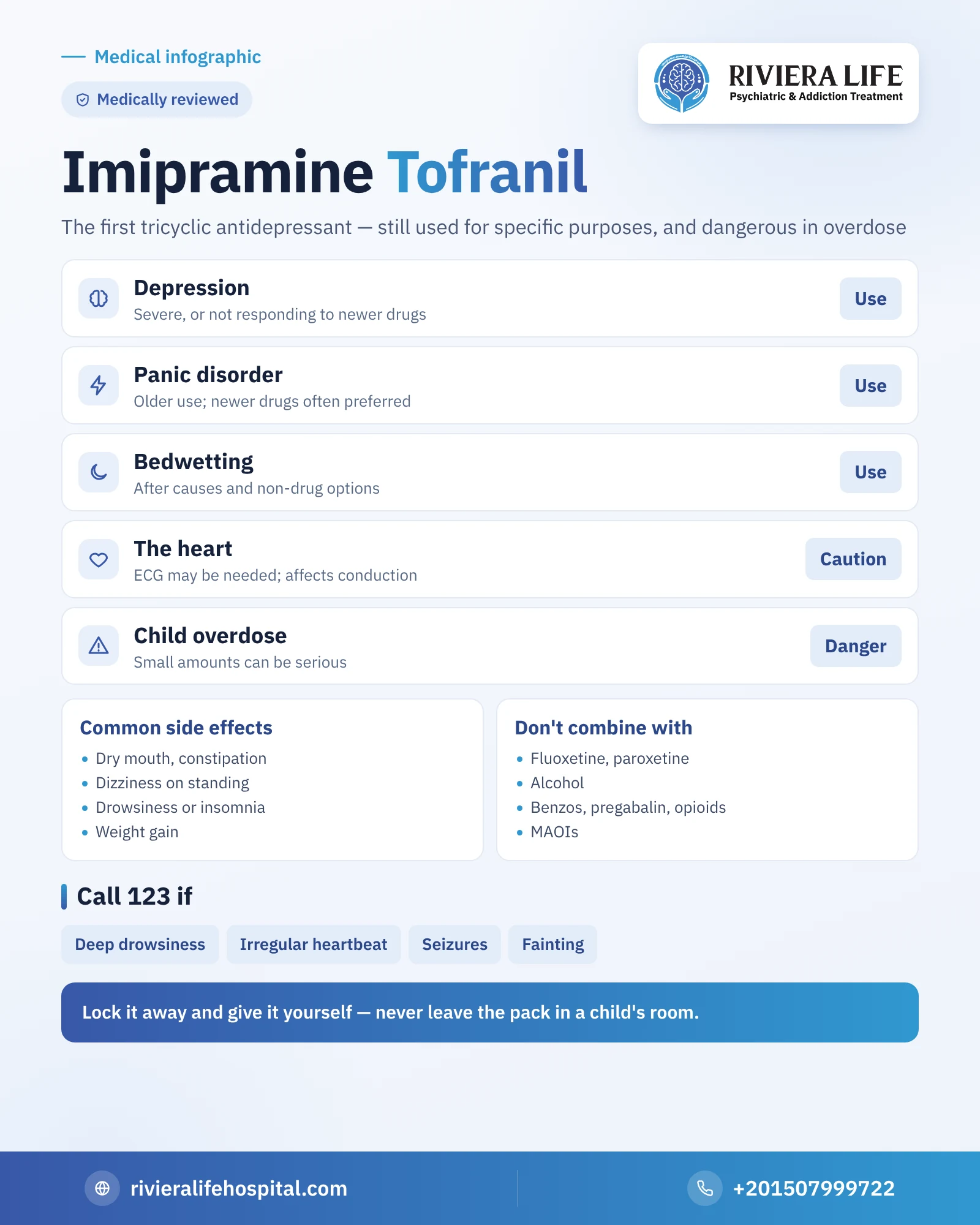
Imipramine, known by its brand name Tofranil, is the first tricyclic antidepressant to enter medicine, and is still prescribed today for specific purposes: depression, panic attacks in some cases, and children’s bedwetting after its other causes have been ruled out. Its age and pedigree don’t mean it is risk-free; its side effects are many, and it is dangerous in overdose, especially if it reaches a child’s hands. Here we explain its uses, the limits of each, and what parents need to know. No doses here; starting, adjusting and stopping are the doctor’s decision alone.
What is imipramine?
It was discovered by chance in the 1950s during the search for a medicine for psychosis, when it turned out to lift the mood of depressed people. It works by blocking the reuptake of noradrenaline and serotonin, but it also blocks receptors that explain most of its side effects. It is the forefather of a family that includes Tryptizol and others, and you will find the full picture of the classes of these medicines in the article on antidepressants.
Tofranil and brand names in Egypt
The well-known brand name in Egypt is Tofranil, which contains the same substance. Other names may exist depending on what is available on the market, and it is best to confirm the active ingredient with the pharmacist before changing any name. Don’t combine two packs containing the same substance, and don’t keep an old pack within children’s reach.
What is imipramine used for?
- Depression: especially severe types or those that haven’t responded to newer medicines.
- Panic disorder: it reduces the frequency of attacks in some patients; this is an older use, and the doctor may prefer newer medicines. For details see panic attacks.
- Children’s bedwetting: a limited use in children above a certain age, after ruling out causes and trying non-drug measures.
- Other conditions by specialist decision: such as some nerve pain or chronic anxiety.
Bedwetting in children: what parents need to know
This is the use that raises the most questions. First, night-time wetting is common in early childhood and goes away on its own in most children as they grow; it isn’t a shame or a matter for punishment. Second, the doctor doesn’t start the medicine until after checking causes such as urinary infection, diabetes, constipation, sleep disorders and psychological stress. Third, other measures are usually tried first, such as a tracking chart, a wetness alarm and regulating fluids in the evening. The medicine eases the problem temporarily in many children, and it may return after stopping. It is given only on a prescription from a pediatrician or child psychiatrist.
Most important is the child’s safety: imipramine is one of the medicines that cause serious poisoning in children at an amount that may not seem large, so it must be kept in a locked place, and given by the parents, not left in the child’s hands.
Common side effects
- Dry mouth, constipation, blurred vision and urinary retention.
- Dizziness, a drop in blood pressure on standing, and a fast heartbeat.
- Drowsiness, or on the contrary tension and insomnia in some.
- Sweating and a slight tremor.
- Weight gain and increased appetite.
- Sexual weakness or delayed ejaculation.
In children, insomnia, irritability and changes in mood and behavior may appear, and they need close follow-up by a specialist doctor.
The heart and seizures
Like other tricyclics, imipramine affects the heart’s electrical conduction, so the doctor may request an ECG before or after starting, especially in children, older people and those with heart disease. It also lowers the seizure threshold, so it needs caution in epilepsy patients. And it raises the risk of mood switching to mania in bipolar disorder.
Call an ambulance on 123 immediately if you see
After taking an excess amount of imipramine, especially if a child swallowed it, or when it is mixed with sedatives or alcohol:
- Deep drowsiness or difficulty waking
- A very fast or irregular heartbeat
- Seizures
- Slow or difficult breathing
- A severe drop in blood pressure or fainting
- Hallucinations or severe agitation
When the medicine is prescribed for a child: rules for parents
If the doctor prescribes imipramine for a child, there are habits that protect. Keep the medicine in a locked place, give it yourself, and don’t leave the pack in the child’s room. Don’t give an extra amount if a dose is missed. Watch sleep, mood and behavior, and tell the doctor about any insomnia, irritability or heart complaint such as palpitations or fainting. Don’t compare the child with their siblings or punish them for wetting, as punishment increases tension and worsens the problem. And if the child refuses the medicine or troublesome effects appear, don’t stop it suddenly without consulting the doctor.
Who isn’t the medicine suitable for?
The doctor avoids it or takes precautions in cases including: a recent heart attack or a heart conduction disorder, narrow-angle glaucoma, an enlarged prostate with urinary retention, epilepsy, liver disease, and unstable bipolar disorder. Combining it with monoamine oxidase inhibitors is prohibited, and a gap after stopping them, set by the doctor, is needed.
Interactions: what shouldn’t be combined with it?
Many medicines change its blood level, most notably antidepressants such as fluoxetine and paroxetine, which raise its concentration and increase its danger. Alcohol doubles its drowsiness and blood-pressure lowering. Combining it with benzodiazepines, pregabalin, opioids and tramadol increases the risk of sedation, slow breathing and seizures, and may cause serotonin syndrome. The same applies to stimulant medicines and some asthma and cold medicines, so ask before adding anything. For those who use substances alongside depression, see the dual diagnosis program.
Suicidal thoughts and the special warning for young people
The medicine carries the general warning for antidepressants: suicidal thoughts may increase in children, teenagers and young people up to about their mid-twenties in the first weeks. Close follow-up and telling the doctor about any worrying change are the solution. If severe hopelessness or a wish to harm oneself appears, call the mental health hotline 16328 or the ambulance on 123, and there is more information in suicidal thoughts.
Pregnancy and breastfeeding
The decision is individual: the doctor weighs the risk of leaving depression or panic untreated against what is known about the medicine. Some studies point to temporary symptoms in newborns if the medicine continues to the end of pregnancy, which is why the medical team is informed. Don’t stop the medicine suddenly, and discuss the matter with your doctor.
When does it start working, and how is it stopped?
Improvement in mood usually takes weeks, while side effects appear early, which is what pushes some patients to stop before they see the benefit. Consult your doctor before deciding. When stopping after long use, it must be reduced gradually to avoid symptoms such as headache, nausea, insomnia and irritability; for more read antidepressant withdrawal symptoms.
Is imipramine addictive?
It isn’t considered a drug of abuse and doesn’t give a high, but it causes discontinuation symptoms if stopped suddenly. This is physical dependence, not addiction in the usual sense, as explained in are psychiatric medicines addictive?
Questions before you start
Ask the doctor why they chose imipramine specifically, what the newer alternatives are, whether an ECG is needed before starting, when the benefit will be assessed, and which symptoms call for contacting them immediately. Tell them about every medicine or herb the patient takes, and about any fainting or heart disease in the family. If the patient is a child, ask for a clear plan for stopping the medicine and the date of the review.
If you or your child are taking imipramine and need the plan reviewed, or you suffer from depression or panic, book your free first consultation at Riviera Life, Sheikh Zayed, Giza, with a consultant psychiatrist, in complete confidentiality.
More from the psychiatric medications guide
- Psychiatric medications: the complete guide
- Tryptizol (amitriptyline): uses and side effects
- Antidepressants: their types and how they work
- Depression treatment: psychotherapy and medication
Questions many people ask
Yes, Tofranil is a well-known brand name for imipramine. Check the active ingredient on the pack and don't combine two packs.
No. The doctor starts by checking the causes and non-drug measures, and medicine is a limited option after that.
Because a small amount can cause serious poisoning of the heart and nervous system, so it must be kept locked away.
It may reduce their frequency in some patients, but doctors often prefer newer medicines.
It doesn't give a high, but stopping it suddenly may cause symptoms, so gradual reduction with the doctor is needed.