Nortriptyline is a tricyclic antidepressant, and it is originally the active product formed in the body from amitriptyline, but it is given as a separate medicine because it causes less drowsiness and dry mouth in many people. It is prescribed for depression, and medical departments also use it off-label for some nerve pain and migraine prevention. In Egypt its name overlaps with a medicine known as Motival, and this is where confusion happens: what is in the pack may not be nortriptyline alone. We clarify all of this here. No doses; starting, adjusting and stopping are the doctor’s decision only.
What is nortriptyline?
It belongs to the tricyclics, which mainly block the reuptake of noradrenaline, and to a lesser degree serotonin. It is of the type called secondary amines, and this class tends to have less severe side effects than the tertiary amines such as amitriptyline, so dizziness and drowsiness are relatively less with it, without disappearing. For comparison with a medicine closer to it read Tryptizol (amitriptyline), and for the general framework antidepressants.
Motival: pay attention to the composition
The name Motival is in circulation in Egypt, and according to available information it combines nortriptyline with fluphenazine, an old antipsychotic at a small dose. Compositions may differ between markets and products, so read the enclosed leaflet and ask the pharmacist or doctor about the exact ingredients of the pack you have. This matters because fluphenazine adds the possibility of movement effects such as stiffness, tremor and inability to stay still, and may raise the risk in older people, so Motival and single nortriptyline can’t be considered one medicine. Swapping one for the other is the doctor’s decision.
What is it used for?
- Depression: this is the official use, often when newer medicines don’t suit the patient or he hasn’t responded to them.
- Nerve pain: such as pain after shingles or diabetic neuropathy, a common off-label use at amounts different from depression.
- Migraine prevention: by the neurologist’s decision in some cases.
- Quitting smoking: a second-line option some doctors use when the first options aren’t available.
Its use for pain doesn’t mean it is a painkiller; it adjusts nerve pain signals slowly, and may need weeks. To learn about the treatment of depression in general, see depression treatment.
How does it work?
By raising noradrenaline, activity and mood improve and the pain pathways in the spinal cord are adjusted. Its partial blocking of histamine, acetylcholine and alpha receptors explains the drowsiness, dry mouth and dizziness. The doctor may sometimes need to measure its blood level to adjust treatment, because bodies’ response to it varies greatly according to the activity of a liver enzyme.
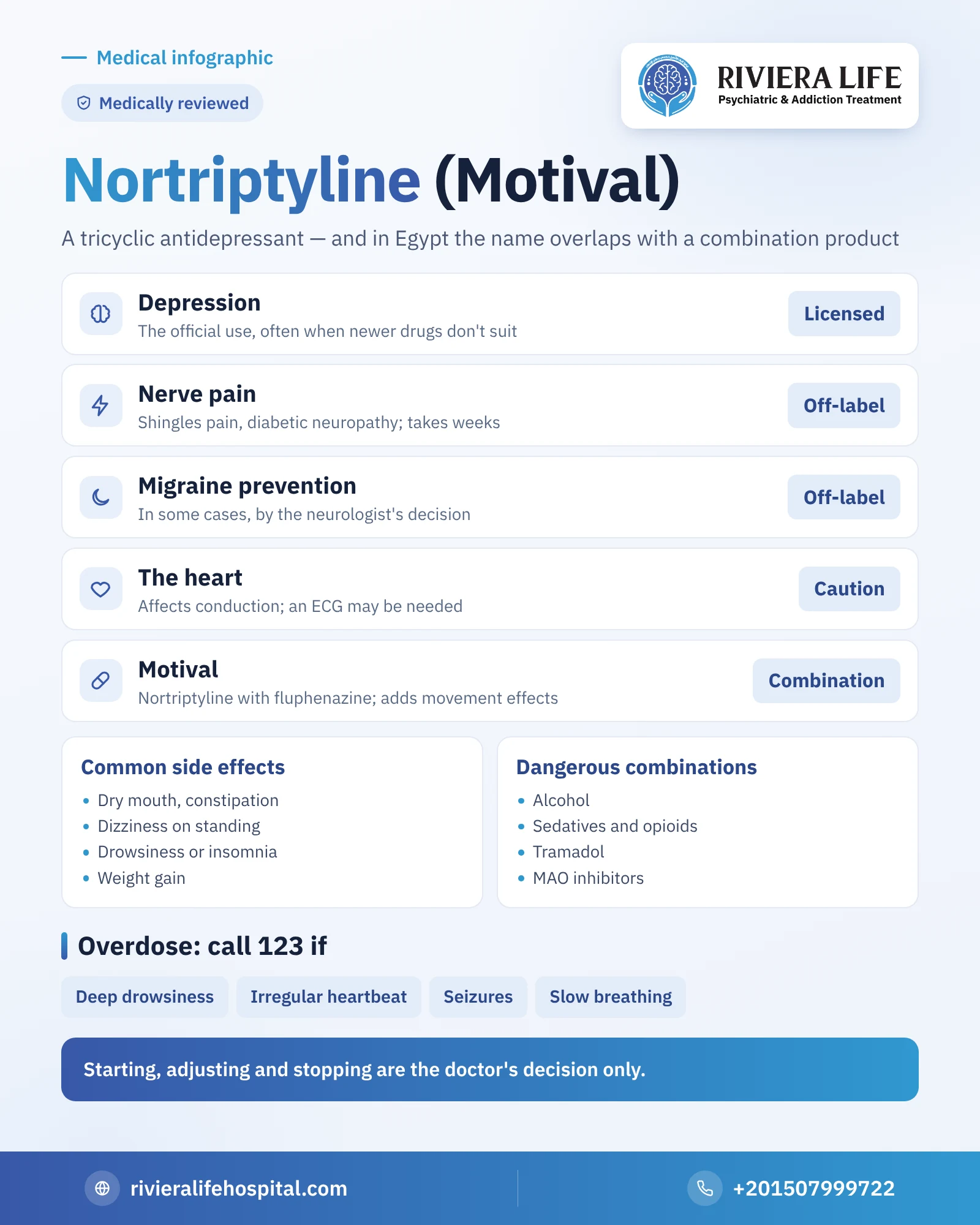
Common side effects
- Dry mouth, constipation, urinary retention and blurred vision.
- Dizziness, a drop in blood pressure on standing and a fast heart.
- Drowsiness or insomnia and strange dreams.
- Increased weight and appetite.
- Sweating and a slight tremor.
- Sexual weakness in some people.
If the treatment is combined with fluphenazine, movement symptoms may be added: tremor, stiffness and a restlessness that doesn’t settle. Tell the doctor as soon as they appear, and don’t ignore them or stop on your own.
The heart: why does the doctor ask for an ECG?
Nortriptyline affects the electrical conduction of the heart, and may raise the pulse and lower blood pressure. That is why the doctor asks about heart disease and any history of fainting, and may request an ECG before starting or when changing the amount, especially after the age of forty or when there are risk factors. An overdose of it, like the rest of the class, is dangerous and may be life-threatening.
Call an ambulance on 123 immediately if you see
After taking an excess amount of nortriptyline or Motival, or when mixing it with sedatives or alcohol:
- Deep drowsiness or difficulty waking
- A very fast or irregular heartbeat, or fainting
- Seizures
- Slow or difficult breathing
- Severe muscle stiffness with a high temperature
- Hallucinations or severe agitation
How do you know the medicine is working and how do you monitor yourself?
Depression doesn’t improve overnight. The patient usually notices that sleep and appetite improve first, then energy and interest follow, and finally mood. Write simple weekly notes about sleep, appetite, energy and your wish to go out, and take them with you to the appointment. In nerve pain you may need weeks before you feel a difference, so don’t judge it after days. And if severe dizziness, palpitations, urinary retention or confusion appear, don’t wait for the appointment.
Psychotherapy is a complement, not a replacement, and for details about talking therapy and medicine together read depression treatment without medication and when it is enough.
Who needs caution?
The doctor takes care with someone who has narrow-angle glaucoma, an enlarged prostate with urinary retention, epilepsy, a heart conduction disorder or a recent heart attack, liver disease, or bipolar disorder. Combining it with monoamine oxidase inhibitors is forbidden. Older people are more prone to confusion, falls and low blood pressure, so they need smaller amounts and closer follow-up.
Interactions: alcohol, sedatives and tramadol
Alcohol doubles drowsiness, dizziness and the drop in blood pressure. Combining it with benzodiazepines, pregabalin or opioids increases the depression of breathing. Tramadol raises the risk of seizures and serotonin syndrome. And some antidepressants such as paroxetine and fluoxetine raise the blood level of nortriptyline, increasing its danger. If you use substances or alcohol, be frank with your doctor so the plan is built on reality, and in cases of multiple problems see our dual diagnosis program.
Suicidal thoughts and the warning for young people
The medicine carries the antidepressant warning: a risk of increased suicidal thoughts in children, adolescents and young adults up to about the mid-twenties, especially in the first weeks. Follow-up protects. If despair or a wish to harm oneself appears, call the mental health hotline on 16328 or an ambulance on 123, and for more read suicidal thoughts.
Pregnancy and breastfeeding
The decision is individual between the doctor and the patient, comparing the risk of leaving depression or pain untreated with what is known about the medicine. If pregnancy occurs during treatment, don’t stop it suddenly, but discuss the matter with the doctor.
Stopping and addiction
Stopping suddenly after continuous use may cause headache, nausea, insomnia, irritability and flu-like symptoms, so the doctor sets a gradual reduction plan, as in antidepressant withdrawal symptoms. Nortriptyline isn’t a drug of abuse and gives no high, but physical dependence is possible, and it is different from addiction, as in Are psychiatric medicines addictive?
Questions before you start
Ask the doctor whether he means nortriptyline alone or a combination with another medicine, and for what exact purpose: depression, pain or headache. Ask about the ECG and blood tests, what to avoid in medicines and alcohol, when you will assess the result together, and what to do if you miss a dose. And if you take more than one medicine that affects the nerves or heart, carry a written list of them all to every appointment, and tell the pharmacist that you take a tricyclic before any new medicine is dispensed, even a painkiller or a cold remedy, as some of them interact with it significantly.
If you have a pack of Motival or nortriptyline and aren’t sure what you are taking or why, book your free first consultation at Riviera Life, Sheikh Zayed, Giza, with a consultant psychiatrist, in complete confidentiality, and we will review all your medicines with you.
More from our psychiatric medicines guide
- Psychiatric medicines: the complete guide
- Tryptizol (amitriptyline): uses and side effects
- Antidepressants: their types and how they work
- Depression treatment: therapy and medicines
Questions many people ask
According to available information, in Egypt it contains nortriptyline with fluphenazine, so read the leaflet and ask the pharmacist about your pack's composition.
It is used off-label for some nerve pain, and needs weeks; it isn't an instant painkiller.
It is the active product formed from it, and tends to cause less drowsiness, dry mouth and dizziness in many people, without these disappearing.
Because this class affects the electrical conduction of the heart, especially after forty or with heart disease.
It isn't a drug of abuse and gives no high, but stopping suddenly may cause symptoms and a gradual reduction is needed.