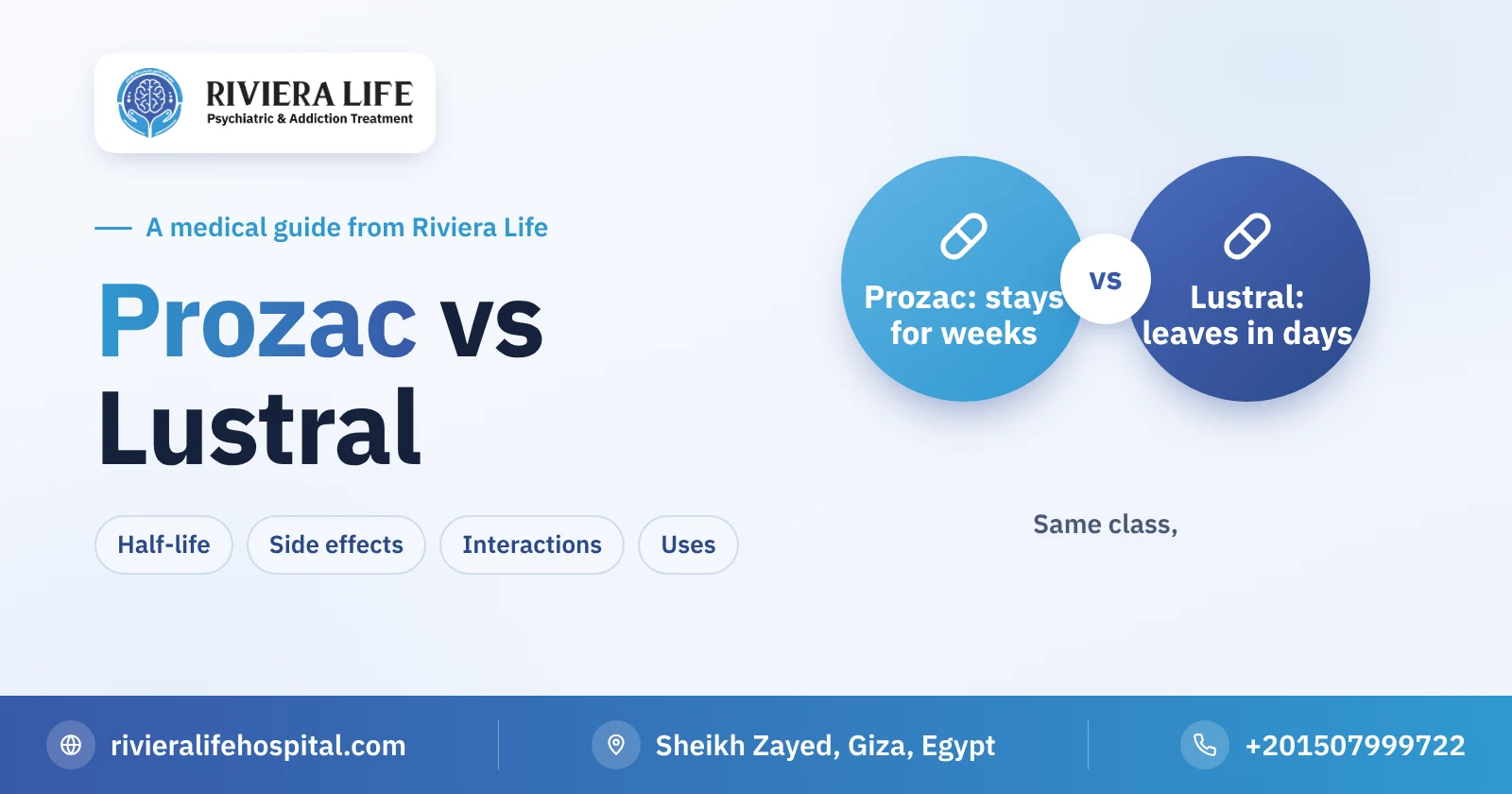
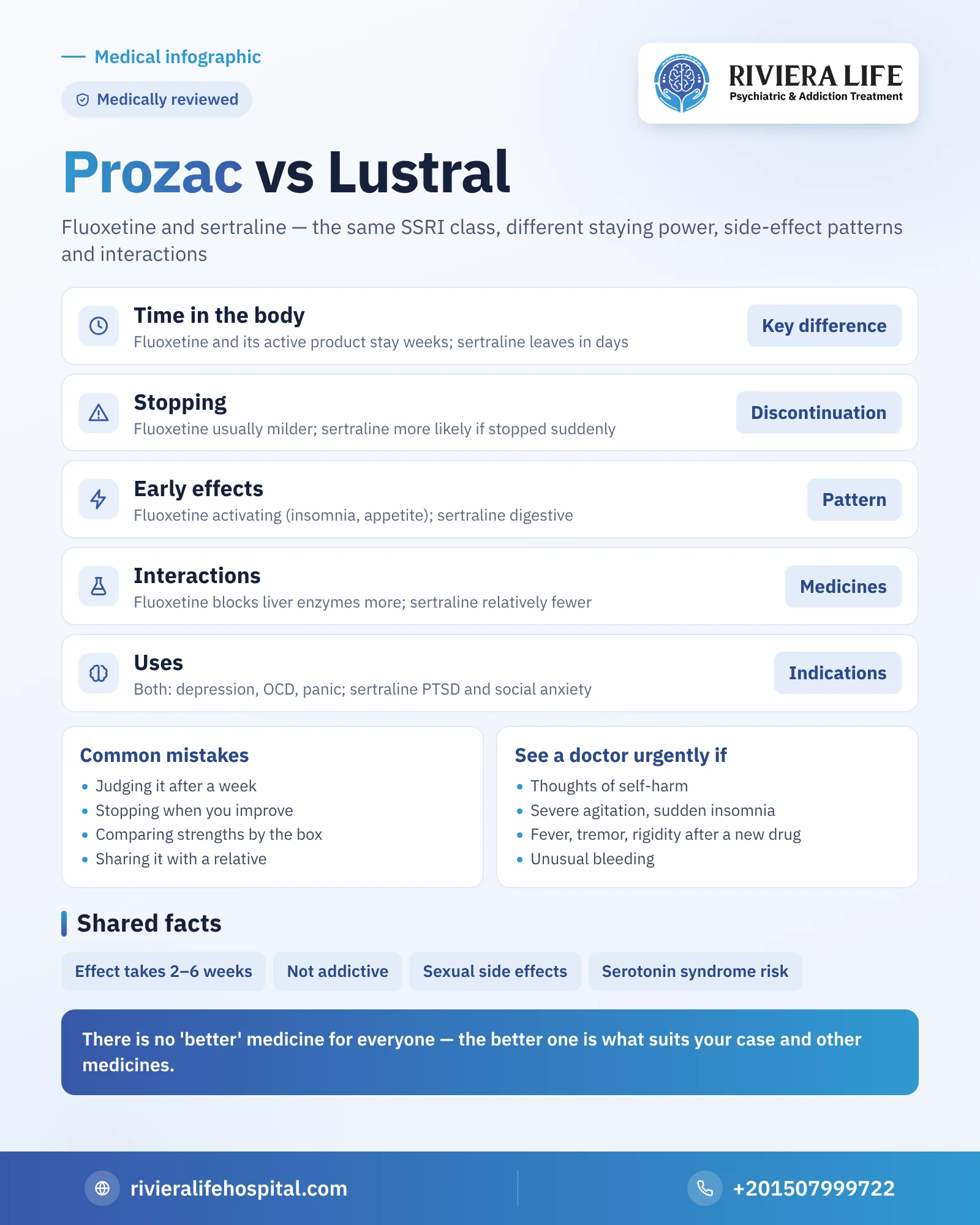
The difference between Prozac and Lustral lies less in strength than in how long each stays in the body, their patterns of side effects and their interactions. Prozac (fluoxetine) and Lustral (sertraline) belong to the same class, selective serotonin reuptake inhibitors, and work by the same mechanism, which is why many people are surprised when the doctor chooses one rather than the other. There is no “better” medicine for everyone; the better one is what suits your condition, your body and your other medicines. This comparison explains the differences and leaves the choice to your psychiatrist.
The difference between Prozac and Lustral in brief
| Comparison | Prozac (fluoxetine) | Lustral (sertraline) |
|---|---|---|
| Class | Selective serotonin reuptake inhibitor | Selective serotonin reuptake inhibitor |
| Time in the body | Very long, with an active product that stays for weeks | Moderate, leaves within days |
| Discontinuation symptoms | Usually milder because of slow elimination | More likely if the patient stops suddenly |
| Most common effect at first | Activation, anxiety, insomnia and loss of appetite | Digestive upset and diarrhea |
| Drug interactions | More, because it blocks liver enzymes | Relatively fewer |
| Known uses | Depression, OCD, bulimia nervosa, panic | Depression, OCD, panic, social anxiety, PTSD |
| Use in teenagers | One of the studied and approved medicines for depression in them | Used for OCD in young people under supervision |
The table is for general information only. The details of use, adjustment and stopping are the doctor’s responsibility.
What do they have in common?
Both raise the amount of serotonin available between nerve cells by blocking its reuptake, then the brain adapts gradually over weeks, which is why the antidepressant effect doesn’t appear before about two to six weeks. Neither causes addiction in the known sense of drugs: they give no high and the craving for them doesn’t escalate. Both may cause discontinuation symptoms if stopped suddenly, may affect sexual desire, and carry a warning of increased suicidal thoughts in some young people at the start of treatment. To learn about the whole class, see antidepressants.
Time in the body: the most important difference
Here the two medicines differ genuinely. Sertraline leaves the body within a few days, while fluoxetine’s active substance and its active product stay for weeks. This has two practical consequences:
- When forgetting a tablet or stopping: the longer-lasting medicine softens the effect of the interruption, so discontinuation symptoms are less noticeable. With the shorter one, the patient may feel dizziness, headache, irritability and disturbing dreams after missing days.
- When switching medicine: the longer-lasting one needs a longer wait before starting some other medicines, to avoid build-up or interaction, a calculation the doctor takes care of.
Even so, longer isn’t always better: someone who wants to adjust treatment quickly may prefer a medicine that leaves faster. You will find the details of discontinuation symptoms in antidepressant withdrawal symptoms.
Side effects: two different patterns
Most people starting any selective inhibitor have nausea, headache or passing anxiety in the first weeks, and these effects usually ease. Each medicine tends toward a clearer pattern:
- Fluoxetine: closer to “activation”, meaning insomnia, nervousness and loss of appetite at first, which is why doctors usually recommend taking it in the morning; it may suit someone with lethargy alongside depression more than someone with severe insomnia and anxiety.
- Sertraline: closer to digestive upset, with diarrhea, nausea and cramps, and it may cause sleepiness or insomnia in some people.
Sexual side effects, including weak desire and delayed orgasm and ejaculation, occur with both medicines, and their details are in our article on antidepressants and sex. Note that effects vary between people, so someone who struggled with one medicine may be comfortable with the other.
Drug interactions: why does the doctor care about your medicine list?
Fluoxetine blocks a liver enzyme that breaks down many medicines, so it may raise the blood level of some or change the effect of others, including heart medicines, some antipsychotics and some painkillers. Sertraline’s effect on these enzymes is smaller, which is why doctors sometimes prefer it for someone taking several medicines. Both share a basic rule: combining them with other antidepressants, some opioid painkillers such as tramadol, or serotonin medicines may cause serotonin syndrome. Tell your doctor and pharmacist everything you take, even herbal supplements.
Which suits which condition?
The uses are similar, but doctors sometimes lean one way depending on the picture:
- Depression: both medicines are used a lot, chosen according to the symptoms (activation versus calming) and previous side effects.
- OCD: both are known for it, and it usually takes longer to judge the effect.
- PTSD and social anxiety: sertraline has a clear record in both.
- Bulimia nervosa: fluoxetine has an approved role in it, within psychological and nutritional treatment.
- Teenagers: doctors are stricter in assessment, and the medicine starts under close supervision.
- Pregnancy and breastfeeding: the decision is shared between doctor and patient after weighing benefit and risk; don’t stop on your own.
For a broader comparison of medicines read the best medicine for depression and anxiety, and for details on the second medicine, sertraline.
Can you switch between them?
Yes, it happens in clinics, but it is a calculated procedure: when the first is reduced, how the second starts, and whether there is an overlap or a waiting period. It isn’t right to start one immediately after stopping the other based on information from the internet, because a timing mistake may cause discontinuation symptoms or an unpleasant build-up. If the patient isn’t comfortable with a medicine, the right path is to see the doctor; changing after weeks of follow-up is common and acceptable.
Common mistakes
- Judging the medicine after a week: the benefit takes weeks, and side effects come first.
- Stopping on improvement: the usual practice is to continue for several months after improving, then reduce with a plan.
- Measuring strength by the numbers on the box: the numbers don’t compare two different medicines.
- Sharing the medicine with a relative: what suited one person may not suit another.
- Believing it is “addictive”: excessive fear keeps people from effective treatment.
For more on this point read are psychiatric medicines addictive?
When should you see your doctor quickly?
See the doctor or the nearest emergency department immediately if thoughts of self-harm or a sharp deterioration in mood appear, severe agitation and sudden insomnia, fever with tremor, sweating and rigidity after adding a new medicine, or unusual bleeding. In a crisis you can call an ambulance on 123 or the mental health line on 16328, and don’t wait for your follow-up appointment.
How long does it take to judge the medicine?
The agreed rule is to give the medicine enough weeks before judging it. In the first two weeks side effects may appear before any benefit. Between the second and sixth weeks many patients start to notice improvement in sleep and energy, then mood. If there isn’t enough improvement after this period, the doctor reviews the plan: they may adjust or switch the medicine or add psychotherapy. OCD usually gets a longer allowance. This rhythm is the same for both medicines; the name of the medicine doesn’t change the expected time to respond.
Questions to ask your doctor
- Why did you choose this medicine for my case and not the other?
- When should I take it, and what effects should I expect in the first weeks?
- Does it interact with my other medicines, or with pregnancy or breastfeeding?
- When do we assess the response, and when do we change the plan if I don’t improve?
- What should I do if I forget a tablet or unpleasant effects appear?
How can Riviera Life help you?
At Riviera Life, licensed by the Ministry of Health, consultant psychiatrists follow the treatment of depression, anxiety and OCD in complete confidentiality, and choose the right medicine after a full assessment, with a family program and follow-up after discharge. The first consultation is free on +201507999722.
More from our psychiatric medicines guide
- Psychiatric medicines: their types and what each family treats
- Escitalopram (Cipralex)
- Paroxetine (Seroxat)
- Depression treatment
Questions many people ask
No. The first is fluoxetine and the second sertraline; both are selective serotonin reuptake inhibitors, but they differ in how long they stay in the body, their side effects and their interactions.
Neither is absolutely stronger: overall effectiveness is similar, and the choice depends on the symptoms, previous side effects and other medicines.
Fluoxetine is usually milder because it leaves the body very slowly, but stopping either suddenly without a doctor remains unacceptable.
They don't cause addiction in the sense of drugs, but stopping them suddenly may cause unpleasant discontinuation symptoms, which is why the medicine is reduced gradually.
No. Switching needs carefully calculated timing to avoid discontinuation symptoms or build-up and interactions; the decision belongs to the psychiatrist.