The short answer
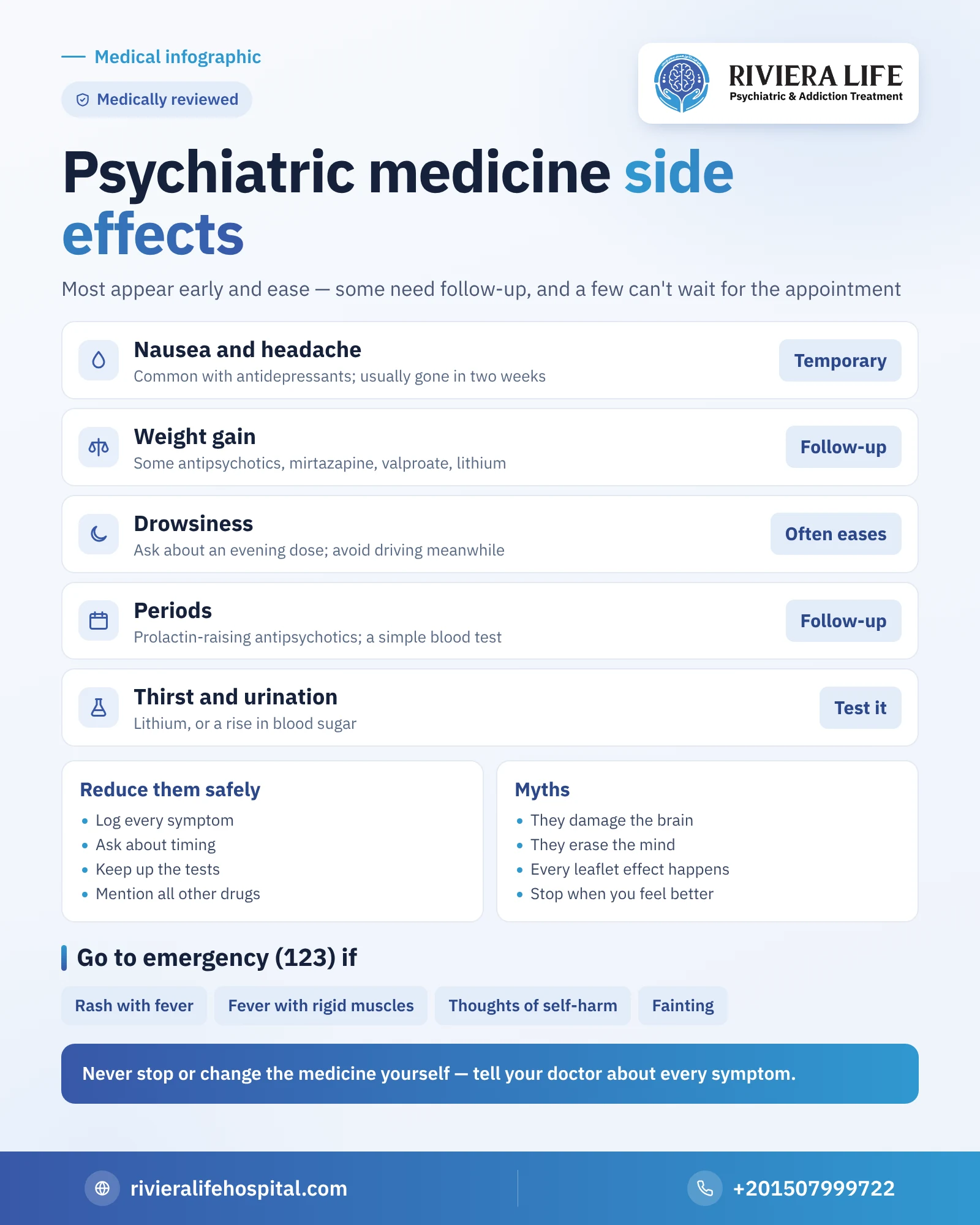
Most side effects of psychiatric medicines appear in the first weeks and then ease as the body gets used to them, such as nausea, headache and drowsiness. Some need longer follow-up, most importantly weight gain with some antipsychotics, mood stabilizers and some antidepressants, menstrual disturbance when the hormone prolactin rises, and thirst and frequent urination with lithium. These medicines don’t damage the brain or take away the mind, as is rumored. The golden rule: don’t stop or change the medicine yourself, but tell your doctor about every symptom, as there is often a solution by adjusting the timing, the dose or the alternative.
- When do they appear?Usually in the first weeks, then they ease
- What worries patients mostWeight, drowsiness, periods and sexual effects
- The ruleNo sudden stopping; see the doctor instead
“I read the leaflet and got scared” is a sentence psychiatrists hear every day. A medicine leaflet lists every symptom recorded even once in thousands of patients, so the reader comes away thinking all of it will happen to him. Then come relatives’ stories about “the medicine that turns the patient into a body without a soul” to complete the picture. The result is that many leave treatment in its first week, before it has even started to work. This article puts side effects at their real size: which are common and temporary, which need follow-up, and which are danger signs that don’t wait for the appointment.
Why do the side effects of psychiatric medicines appear?
The medicine targets chemical messengers such as serotonin, dopamine and noradrenaline, but these messengers aren’t found in the mood centers alone. Serotonin, for example, is abundant in the gut, which is why nausea is among the first things noticed by someone starting antidepressants. And some medicines touch other receptors that weren’t the target, such as the histamine receptors responsible for appetite and wakefulness, so drowsiness and increased eating come. The body adapts to most of these effects within two to four weeks, while the psychological improvement itself needs a similar time or longer, and this is what makes the beginning the hardest stage.
Do psychiatric medicines cause weight gain?
Some do, some have almost no effect, and a few may reduce appetite. The difference between one medicine and another is large even within the same family:
- Among antipsychotics: olanzapine and clozapine are linked to the greatest weight gain, with a possible rise in sugar and fats, while the effect of other medicines in the same family is much less.
- Among antidepressants: mirtazapine clearly increases appetite, serotonin reuptake inhibitors vary from one patient to another, and their effect on weight may appear with long use.
- Among mood stabilizers: valproate and lithium are linked to weight gain in a proportion of patients.
The cause is usually increased appetite and craving for sweets, with sluggishness that reduces movement, and with some medicines a change in how the body handles sugar. The gain isn’t an inevitable fate; a good doctor weighs the patient and measures the waist before starting, and requests sugar and fat tests periodically with the medicines that have more effect. If weight starts rising quickly in the first months, that is the time to talk, not after a year. The options then are many: a supervised diet, physical activity, adjusting the timing, or moving to a lighter alternative if the condition allows. Details of the families are in our guide to antipsychotics and our guide to antidepressants.
Drowsiness, sluggishness and slowed thinking
Common with some antipsychotics, some antidepressants and sedatives. Patients describe it as feeling switched off or having heavy heads in the morning. It eases for many after weeks, and can often be reduced by moving the medicine to the evening by the doctor’s decision. Until the medicine’s effect on you is clear, avoid driving a car or operating machines if you feel drowsy, and don’t combine the medicine with alcohol or sleeping pills from the pharmacy.
As for the feeling of dulled emotions, as if sadness and joy have both become faded, it happens with some antidepressants in a portion of patients. Don’t stay silent about it; it is a common reason for leaving treatment, and it often improves by adjusting the plan.
Do psychiatric medicines affect the menstrual cycle?
They may, and the best-known mechanism is the hormone prolactin. Some antipsychotics raise its level because they block dopamine, which restrains its secretion, so periods are delayed or stop, a discharge from the breast may appear, and sexual desire decreases in both sexes. This effect is known and measured by a simple blood test, and it has solutions, including choosing a medicine that doesn’t raise prolactin to the same degree. Some mood stabilizers may also be linked to menstrual disturbance in some women. And if the patient is planning a pregnancy, this is a conversation that must come before the pregnancy; because some mood stabilizers need special arrangement, and because stopping suddenly on discovering the pregnancy may bring the illness back strongly. None of this has anything to do with permanent infertility; the effect usually goes when its cause goes.
Thirst and frequent urination
This symptom is linked most to lithium, as it affects the kidneys’ ability to concentrate urine, so the patient drinks and urinates more. That is why someone taking lithium needs periodic tests of its blood level and of kidney and thyroid function, and to avoid severe dehydration. And there is another cause that must not be forgotten: if severe thirst, frequent urination and tiredness appear with a medicine that raises weight, sugar may have risen, and this calls for a test, not a guess.
Sexual effects
Weak desire, delayed ejaculation or difficulty reaching orgasm are among the things patients are most embarrassed to mention, and among the most common reasons for leaving treatment secretly. They happen with serotonin reuptake inhibitors specifically, and with medicines that raise prolactin. What matters is that depression itself weakens desire, so the medicine isn’t always the culprit. Details of this point and its solutions are in antidepressants and sex.
Do psychiatric medicines affect the mind and nerves?
There is no evidence that psychiatric medicines used under medical supervision damage brain cells or weaken intelligence. On the contrary, leaving severe depression or psychosis untreated is what is linked to a decline in concentration and memory. But there are real neurological effects that should be known:
- A slight tremor in the hands: with lithium, valproate and some antidepressants.
- Restlessness and inability to sit still: happens with some antipsychotics, and is sometimes mistaken for anxiety or relapse.
- Stiffness and slow movement: more with older antipsychotics.
- Involuntary movements of the mouth and tongue with long use: relatively rare with modern medicines, which is why the doctor examines the patient periodically.
All these symptoms are well known to the psychiatrist, and have treatments and alternatives; what matters is that they are mentioned at the visit.
Stomach, headache and insomnia at the start
Nausea, an upset stomach, headache, and sometimes insomnia or extra anxiety in the first days are very common with antidepressants, and mostly temporary. Taking the medicine after food if the doctor allows, drinking water and two weeks of patience help. And if anxiety intensifies at the start, some doctors begin with a lower dose and then raise it gradually.
Quick table: the symptom, what it is linked to and what to do
| Symptom | Most linked to | What to do? |
|---|---|---|
| Nausea and headache at the start | Antidepressants | Usually goes within two weeks; tell the doctor if it persists |
| Weight gain | Some antipsychotics, mirtazapine, valproate, lithium | Monitor weight, sugar and fats, and discuss alternatives early |
| Drowsiness and sluggishness | Some antipsychotics, antidepressants and sedatives | Ask the doctor about moving the dose to the evening, and avoid driving |
| Menstrual disturbance and breast discharge | Antipsychotics that raise prolactin | A prolactin test and discussing an alternative medicine |
| Thirst and frequent urination | Lithium, or raised blood sugar | Test lithium level, kidney function and sugar |
| Sexual weakness | Serotonin reuptake inhibitors | A frank discussion with the doctor, as there are many solutions |
| Tremor or restlessness | Lithium, some antipsychotics | A neurological examination and adjusting the plan |
Signs that don’t wait for the follow-up appointment
They are rare, but knowing them saves lives. Call the doctor immediately, go to the emergency department or call an ambulance on 123 if any of these appear:
- A widespread skin rash with fever or mouth ulcers, especially with lamotrigine.
- A high temperature with severe muscle stiffness and confusion, with antipsychotics.
- Severe tremor, sweating, diarrhea, a racing heart and disturbed consciousness after adding a new medicine, which are signs of excess serotonin.
- Vomiting, diarrhea, coarse tremor and unsteadiness with lithium, which are signs of a high level in the blood.
- Fever and a sore throat with clozapine, because it may affect the white blood cells.
- New or increasing thoughts of self-harm in the first weeks, especially in young people.
- Fainting, severe palpitations or shortness of breath.
How do you reduce side effects safely?
- Write down every symptom, the date it appeared and its severity, and take the paper to the visit.
- Ask about the best time to take the medicine, morning or evening, before or after food.
- Keep to the periodic tests the doctor requests, as they aren’t routine.
- Tell the doctor about every other medicine, supplement or herb you take.
- Keep up daily movement, regular sleep and less sugar.
- Don’t combine the psychiatric medicine with alcohol or sedatives without a prescription.
Why must the medicine not be stopped suddenly?
Stopping suddenly causes two problems. The first is unpleasant withdrawal symptoms with some medicines, such as dizziness, flu-like symptoms and a sensation of electric zaps, with details in antidepressant withdrawal symptoms. The second, which is more dangerous, is the return of the illness itself, sometimes in a more severe form. This doesn’t mean these medicines cause addiction; that is a different subject explained in our article Are psychiatric medicines addictive?. Stopping is possible, but it is done gradually and with a plan the doctor sets.
How can Riviera Life help you?
Riviera Life’s doctors choose the medicine based on the diagnosis, the patient’s health history and what matters to him, whether weight, sleep or planning a pregnancy, and they follow up side effects with tests and visits, adjusting the plan rather than leaving the patient to abandon the medicine alone. The first consultation is free and confidential on +201507999722.
More from our psychiatric medicines guide
- Psychiatric medicines: their types and what each family treats
- How long psychiatric medicines take to leave the body
- Sertraline: uses and side effects
- Depression treatment: therapy and medicines
Questions many people ask
Many of them, such as nausea, headache and drowsiness, ease within a few weeks as the body adapts. Weight gain and sexual effects may persist, and they have solutions through adjusting the plan with the doctor.
It often decreases gradually after a planned stop with diet and physical activity, but it is better to act early at the first rapid gain rather than wait to stop the medicine.
No. Switching or stopping without supervision may cause withdrawal symptoms or relapse. Tell the doctor about the symptom, as there is often an alternative or an adjustment in timing or dose.
There is no evidence that they damage memory. Drowsiness or slowed thinking may cause a temporary weakness in concentration, while untreated illness itself is linked to a clearer decline in memory.
In many cases yes, but it must be planned with the doctor before pregnancy; some medicines need changing in advance, and stopping suddenly on discovering the pregnancy may bring the illness back strongly.