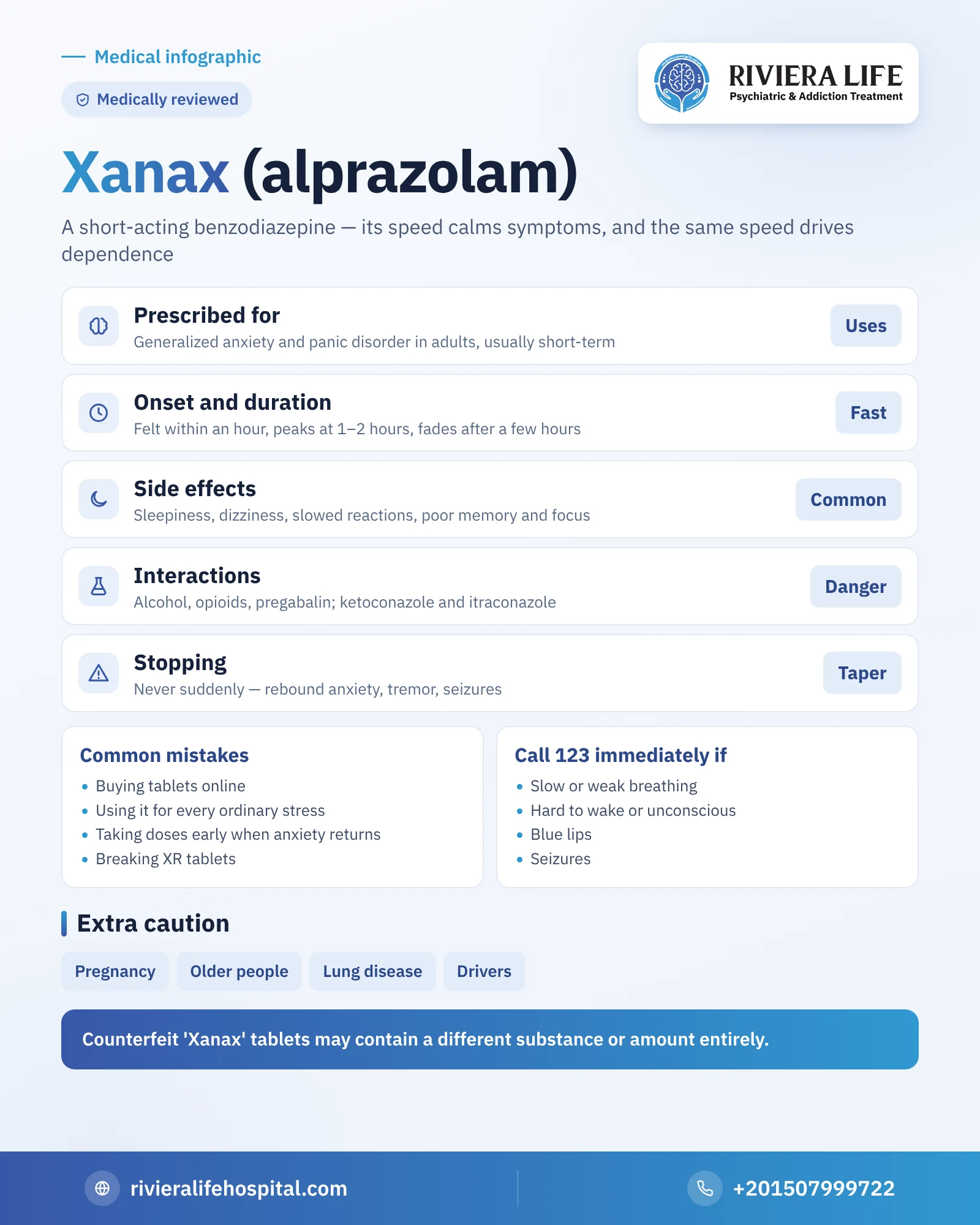
Xanax is the brand name of the medicine alprazolam, a sedative from the benzodiazepine group prescribed to treat generalized anxiety disorder and panic disorder in adults. It is distinguished by fast absorption, reaching its highest blood concentration within one to two hours of taking a regular tablet, but it is relatively short-acting, with an average half-life of about eleven hours in healthy adults. This speed is what makes it effective at calming symptoms, and it is the same thing that makes dependence on it faster than many people expect. Among its most common side effects are sleepiness and dizziness, and the most dangerous is suppressed breathing when combined with alcohol or opioids.
What is Xanax?
Alprazolam is a member of the benzodiazepine family, which also includes clonazepam, diazepam and lorazepam. It is available in several forms: regular fast-acting tablets, extended-release tablets known as Xanax XR that release the substance slowly through the day, orally disintegrating tablets, and an oral solution in some countries. It is dispensed on prescription, and in many countries is under special control because of the potential for misuse.
Why is Xanax prescribed?
- Generalized anxiety disorder: when anxiety is constant and exhausting and disrupts work and sleep; it is usually used for a short period alongside a broader treatment plan.
- Panic disorder: to reduce the frequency and intensity of attacks of sudden fear, whether or not they are accompanied by avoiding crowded places. Learn what an attack looks like and how to tell it apart from a heart attack in our article on panic attacks. To distinguish between panic and constant anxiety, see our article on the types of anxiety.
Xanax isn’t considered a long-term treatment for anxiety in most guidelines. Psychotherapy and serotonin-class antidepressants are usually the foundation, as we explain in our article on anxiety treatment.
How does alprazolam work?
Alprazolam binds to the benzodiazepine site on GABA-A receptors in the brain, strengthening the effect of GABA, the neurotransmitter that restrains the activity of nerve cells. The result is a reduction in the overexcitation responsible for the feeling of tension, racing thoughts and the physical symptoms of anxiety such as palpitations and tremor. This effect doesn’t treat the cause of the anxiety, but it eases its intensity temporarily. That is why symptoms may return as they were if the medicine isn’t accompanied by psychotherapy in which the patient learns how to deal with their thoughts and fears, and how to face the situations they avoid instead of escaping them.
When does Xanax start working, and how long does it last?
Many patients start to feel calm within the first hour of taking a regular tablet, and the medicine peaks in the blood after one to two hours. After a few hours the effect starts to fade, which explains a phenomenon some patients notice: anxiety returning before the next tablet is due or early in the morning. This rebound anxiety may push the person to take the dose earlier or increase it, a common beginning of the dependence cycle. Extended-release tablets release the medicine slowly, so its level in the blood is more stable. Alprazolam stays in the body longer in older people and in patients with liver disease.
The side effects of Xanax
- Sleepiness, fatigue and dizziness.
- Headache and dry mouth.
- Irritability or quick temper.
- Nausea, constipation, and changes in appetite and weight.
- Slowed reactions, and weak concentration and short-term memory.
See a doctor quickly if clear confusion, slurred speech or loss of balance appears, or yellowing of the skin and eyes, new depression, or agitation and unusual behavior.
Call an ambulance on 123 immediately
If someone who has taken Xanax shows any of these signs:
- Slow or weak breathing, or severe shortness of breath
- Difficulty waking them, or loss of consciousness
- Blue lips
- Seizures
- Swelling of the face or throat with difficulty breathing or swallowing
Warnings for groups that need particular caution
- Pregnant women: taking it in the last months may cause lethargy and withdrawal symptoms in the newborn after birth, so tell your doctor as soon as you know you are pregnant; you will find wider details in our article on drugs and pregnancy.
- Breastfeeding women: discuss it with the doctor before use, because the medicine may increase the baby’s sleepiness.
- Older people: the medicine stays in their bodies longer and affects them more, so the risk of confusion and falls rises.
- Lung patients: serious breathing complications have been recorded in patients with severe lung disease, so they need assessment and close follow-up.
- Drivers: don’t drive or operate dangerous machinery until you know how the medicine affects your concentration.
- Anyone with glaucoma, liver or kidney disease, or a history of depression or substance use: the doctor must know this before prescribing.
Dangerous drug interactions
Combining Xanax with alcohol or opioids such as tramadol, codeine and morphine may cause deep sleepiness, suppressed breathing and coma, and may end in death. The same warning applies to pregabalin, gabapentin, sleeping pills and drowsy antihistamines; we explained the danger of these combinations in our article on mixing drugs. There is another kind of interaction specific to alprazolam: it is broken down in the liver by an enzyme called CYP3A4, and some medicines that inhibit this enzyme raise its blood level sharply, including the antifungals ketoconazole and itraconazole, which must not be combined with it, as well as fluvoxamine and cimetidine. On the other hand, St John’s wort may weaken its effect. Ask your doctor about grapefruit too.
Is Xanax addictive?
Physical dependence on any benzodiazepine can develop after days to weeks of regular use, even at prescribed doses. Many doctors consider alprazolam one of the fastest in this, because its effect comes quickly and leaves quickly, so relief becomes linked directly to the tablet. This may develop into use without a prescription or in larger amounts. We covered these aspects in detail in our article on Xanax addiction.
Why must it not be stopped suddenly?
A brain that has become used to alprazolam reduces the efficiency of its own natural braking system. If the medicine stops suddenly or the amount is reduced quickly, anxiety more severe than before may appear, along with insomnia, tremor and sensitivity to light and sound, and life-threatening seizures may occur. Because the medicine is short-acting, these symptoms begin early, within hours to a day or two. The reduction is set by the doctor for each case, and the details of this stage are in our article on Xanax withdrawal symptoms.
Common mistakes with Xanax
- Buying tablets online or outside a pharmacy: counterfeit tablets circulating under the name Xanax may contain another substance or a completely different amount from what is written.
- Using it whenever ordinary tension appears, until it becomes the only way of dealing with stress.
- Taking the tablet early or doubling it when anxiety returns without telling the doctor.
- Taking it to sleep after a night with alcohol.
- Breaking or chewing extended-release tablets, so the medicine is released all at once.
- Stopping it suddenly after weeks of use.
Questions to ask your doctor
- Would a longer-acting medicine or a treatment that doesn’t cause dependence suit me?
- How long do you expect I will need it?
- What should I do if the anxiety returns before the tablet is due?
- Does it interact with my current medicines, or with antifungals and antibiotics?
- Do I need psychotherapy alongside it?
How can Riviera Life help you?
If you find yourself needing Xanax more than you used to, or you are afraid of the symptoms of stopping it, don’t try to stop it alone. At Riviera Life, consultants in psychiatry and addiction treatment assess your condition and set a withdrawal plan under round-the-clock medical supervision, with treatment for the anxiety the medicine was started for. The hospital is licensed by the Ministry of Health, has fourteen years of experience, and is located in Sheikh Zayed, Giza. The first consultation is free and confidential, and can be online: +201507999722.
More from our benzodiazepine guide
- Lorazepam (Ativan)
- Diazepam (Valium)
- Benzodiazepine addiction treatment
- How long benzodiazepines stay in the body
- Buspirone: an anti-anxiety medicine without addiction
Questions many people ask
Xanax is the brand name of alprazolam, a sedative from the benzodiazepine group prescribed for generalized anxiety and panic disorder in adults.
Many people feel its effect within the first hour; it peaks in the blood one to two hours after a regular tablet, then its effect fades after a few hours.
Yes. Physical dependence may develop after days to weeks of regular use, and its fast onset and fast offset make dependence quicker for many people.
No. Combining them may cause deep sleepiness, suppressed breathing and coma, and the same applies to combining it with opioids and pregabalin.
The regular tablet is fast-acting and short-lived, while Xanax XR releases the medicine slowly through the day and must not be broken or chewed.