The causes of mental illness are neither a mysterious secret nor a punishment, but an interaction between factors medicine knows well: a genetic predisposition, a brain with its own chemistry and circuits, childhood experiences and trauma, life stress, drugs, physical illnesses and social circumstances. A single factor is rarely enough to cause illness, and several factors often combine in the same person until they exceed their capacity to cope. In this article we explain the model doctors use to understand these causes, detail each factor, talk respectfully and frankly about common explanations such as weak faith, envy and magic, and finish with protective factors and when to ask for help.
Causes of mental illness: not one cause but a biopsychosocial model
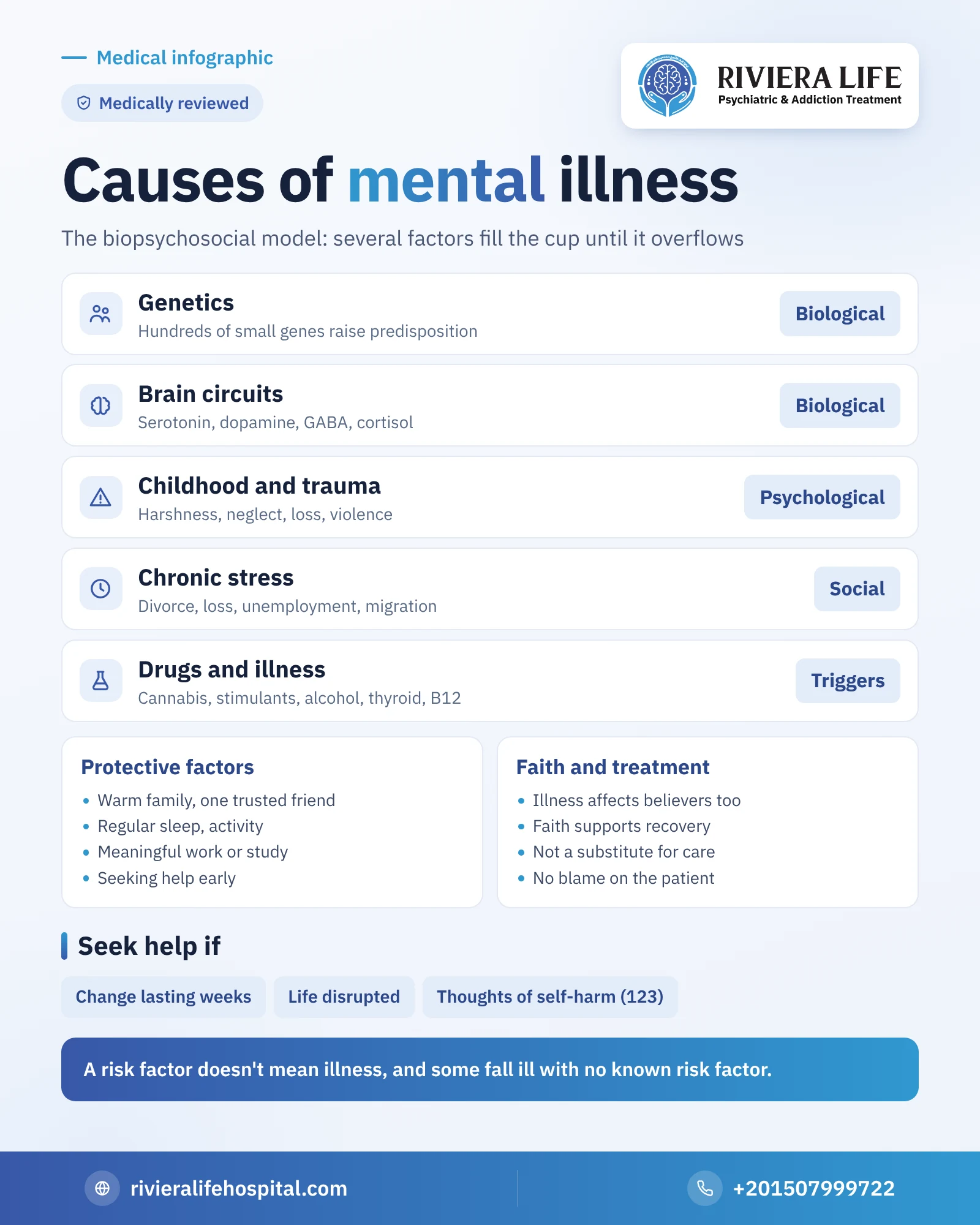
Modern psychiatry understands mental illness through three overlapping circles: a biological circle that includes genetics, the brain and the body; a psychological circle that includes ways of thinking, temperament and childhood experiences; and a social circle that includes family, work, money and society. No circle works alone.
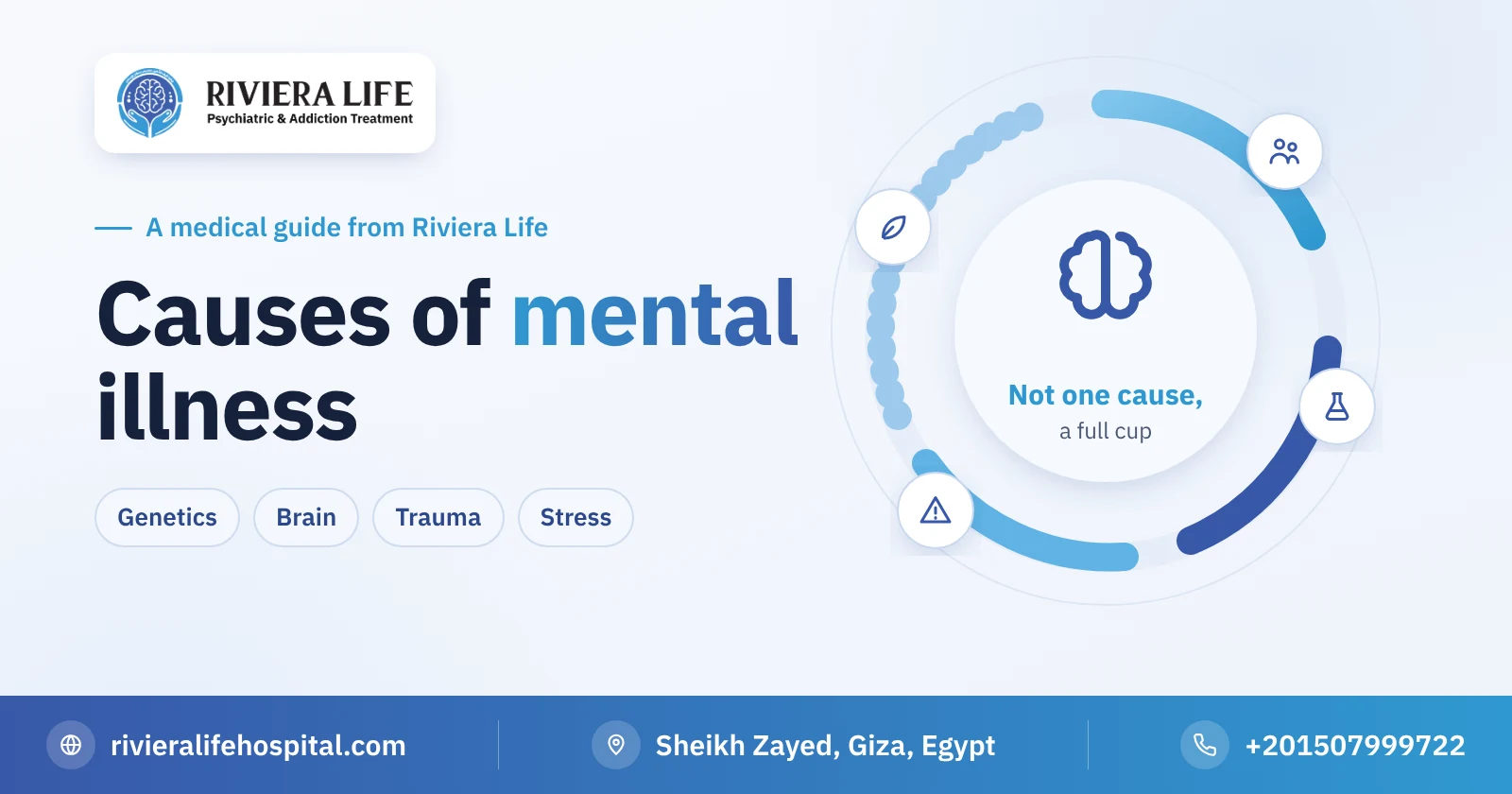
Imagine a cup filling with water. Some people are born with more water in their cup because of genetics or temperament, then experiences, stress and substances add new water, until a final drop comes, such as a death, divorce or job loss, and the cup overflows. The final drop isn’t the only cause, but it is what people see. This analogy also explains why two people go through the same circumstance and one falls ill while the other doesn’t.
Genetics: a predisposition, not an inevitable fate
Some disorders run in particular families more than others, and twin and family studies confirm that genetics has a clear role, stronger in schizophrenia and bipolar disorder and moderate in depression and anxiety. But genetics here doesn’t mean a single gene that is passed on and decides the fate, but hundreds of small genes that raise predisposition to varying degrees.
So having an affected relative doesn’t mean you will fall ill; it means that early attention to risk factors, such as drugs, lack of sleep and prolonged stress, has greater value in your case.
Brain chemistry and circuits
The brain communicates through chemical messengers, each with a role in mood, attention, sleep and motivation. Disrupted regulation of these messengers is linked to different illnesses:
- Serotonin: linked to mood and anxiety, and many antidepressants act on it.
- Dopamine: the axis of motivation and reward, and its disturbance is linked to psychosis and addiction.
- GABA: the brain’s brakes that calm nervous activity, linked to anxiety.
- Noradrenaline: manages alertness and attention, linked to stress and depression.
- Cortisol: the stress hormone whose chronic elevation affects mood and memory.
It is important not to simplify the matter to just “a lack of a substance”; the phrase “chemical imbalance” is a useful but incomplete simplification. It is more accurate to say that neural circuits become disturbed in how they work and communicate, affected by genetics, experiences and stress together, and this explains why psychotherapy helps change brain function just as medicines do.
Childhood and trauma
What a person lives through in their early years leaves a long mark. The World Health Organization points out that harsh parenting, physical punishment and bullying are among the most important risk factors for mental disorders. Difficult childhood experiences also include neglect, loss of a parent, living with an addicted or untreated ill parent, and domestic violence.
These experiences don’t condemn the child to illness, but they make their alarm system more sensitive and affect their self-image and trust in others. Major trauma at any age, such as accidents, violence and wars, may cause post-traumatic stress disorder or pave the way for depression and addiction.
Chronic stress and life events
Passing stress is part of life, but prolonged stress without periods of recovery drains the brain’s capacity for regulation and raises the risk of anxiety and depression in those predisposed. Major events, such as divorce, loss, unemployment and migration, come as the drop that makes the cup overflow. We explained the signs of this shift and ways of dealing with it in our article on psychological stress.
Drugs and alcohol
The relationship between substances and mental illness runs in both directions. Some substances may reveal or hasten a latent illness: cannabis is linked to an increased risk of psychosis, especially when started in adolescence, with high-potency types, and in those with a family history; stimulants such as ice (crystal meth) and Captagon may cause psychosis and anxiety attacks; and alcohol deepens depression. In the other direction, many people with mental illness turn to substances to calm their symptoms, and addiction begins. That is why those who have both need integrated treatment such as the dual diagnosis program.
Medical and organic causes
Some psychiatric symptoms are in fact a manifestation of a physical illness, which is why a psychiatrist sometimes requests tests before diagnosis. Examples include:
- Thyroid disorders, which may cause anxiety or depression.
- Vitamin B12 deficiency and severe anemia.
- Epilepsy, head injuries and strokes.
- Dementia in older people, which may begin with personality changes.
- Hormonal changes after childbirth.
- Some medicines, such as high-dose cortisone, and other medicines the doctor reviews.
Social factors
People don’t live in a vacuum. Poverty, unemployment and debt, isolation and loneliness, discrimination, and living in conflict zones all raise the risk of mental disorders and make access to treatment harder. The US Centers for Disease Control and Prevention stresses that exposure to a risk factor doesn’t necessarily mean illness, and that some people fall ill without a known risk factor, which reminds us that causes are accumulating probabilities, not a fixed equation.
Each disorder has a different map of causes
The weights of the factors differ from one disorder to another. To go deeper into a particular disorder, see the specialized articles:
- The causes of depression
- The causes of anxiety
- The causes of schizophrenia
- The causes of bipolar disorder
- The causes of obsessive-compulsive disorder
- The causes of post-traumatic stress disorder
Weak faith, envy and magic: what does medicine say?
In our communities many ask: is mental illness caused by weak faith, the evil eye and envy, or magic? We respect these questions because they stem from a deep culture and faith, but the medical answer is clear: mental illnesses have biological, psychological and social causes that can be assessed and treated, and they affect the faithful and pious as they affect others, just as diabetes and blood pressure affect them.
Faith can in fact be a source of strength and great support on the journey of recovery, and there is no conflict between prayer and supplication and visiting a psychiatrist and taking treatment. The problem begins when treatment is replaced by moving between those who claim to treat with ruqyah or to undo magic for money, so months or years are lost in which the illness worsens, and the patient may be exposed to physical or psychological harm. Labeling the patient as weak in faith also adds to their pain a sense of guilt that makes depression worse.
Protective factors: what reduces the risk?
Just as there are factors that raise risk, there are factors that build psychological immunity and help recovery:
- Warm family relationships and at least one friend who can be relied on.
- Skills for dealing with emotions and stress, which can be learned at any age.
- Regular sleep, physical activity and staying away from drugs.
- Work or study that gives a sense of meaning and achievement.
- Belonging to a supportive community, religious or social.
- Seeking help early when the first signs appear.
When should you ask for help?
Knowing the causes doesn’t replace assessment. If you notice a change in mood, thinking or behavior that lasts weeks and disrupts life, or thoughts of self-harm appear, seek specialist help, and in urgent cases call an ambulance on 123. You can learn about the symptoms, types and treatments in general on the mental illness page.
At Riviera Life, assessment begins with the full story: family history, childhood, stress, substances and physical health, because understanding the causes determines the treatment plan. This is carried out by psychiatric consultants in complete confidentiality, and the first consultation is free.
Read also
- Mental illnesses: symptoms, types and treatment
- The behavior of a person with a psychiatric illness
- The causes of depression
- The dual diagnosis program
- Hereditary mental illness: is it passed to children, and what about marriage?
- Myths about mental illness: 9 common ideas and what the facts say
- Psychosomatic disorders: when the body speaks the language of anxiety and stress
Questions many people ask
Genetics plays a role that raises predisposition, more clearly in schizophrenia and bipolar disorder. But having an affected relative doesn't make illness inevitable, as environment, experiences and lifestyle share in the outcome.
It may seem so, but often there are factors that accumulated silently and then a final event revealed them. Sometimes no clear cause is known, and this doesn't prevent effective treatment.
Cannabis is linked to an increased risk of psychosis, especially with early starting, high-potency types and a family history. It may also increase anxiety and depression in some users.
No, mental illnesses affect believers as they affect others and have medical causes. Faith can be a support in recovery alongside treatment, not a substitute for it.
Not every case can be prevented, but strengthening protective factors such as supportive relationships, sleep, avoiding drugs and seeking help early reduces the risk and eases severity.