The short answer
Addiction treatment medications don't erase the illness with a single pill, but they ease withdrawal, reduce craving, block the substance's effect or make using it unpleasant, and treat accompanying depression or anxiety. There are approved medicines for opioids, alcohol and nicotine, while there is still no approved medicine for cocaine, ice or hash. The medicine is chosen, started and stopped under a doctor's supervision, because starting it wrongly may cause sudden withdrawal or dangerous suppression of breathing.
- Opioids and alcoholHave the most studied approved medicines
- Stimulants and hashTreatment of symptoms only, no approved medicine
- Medicine is part of the planIt works better with psychotherapy and follow-up
Addiction treatment medications are one of the topics families ask us about most, usually in a single form: "Is there a medicine that will make him hate drugs?" On this page we set out what is scientifically known: how these medicines work, which are approved for each substance, what is used during withdrawal and what is used to prevent relapse, how the choices differ with pregnancy, adolescence and older age, why using them without a doctor is a real danger, and how long they usually last. You won't find doses here; the doctor determines those for each patient after examining them.
Are there addiction medications that cure for good?
There is no medicine that is given for a week and the brain returns to how it was. Addiction changes the circuits of reward, control and memory, and repairing that needs time, training and a change of lifestyle. But this does not reduce the value of medicine. With opioids in particular, ongoing medication treatment is linked to a clear reduction in death from overdose and in the transmission of infection through injection, which is what led the World Health Organization to include methadone and buprenorphine in its list of essential medicines.
The realistic picture, then, is that addiction medications buy the patient calm and time, so craving doesn't chase them every hour and withdrawal doesn't push them to the substance. During this time, psychological sessions and the family work on the rest. You can find where medicine fits within the full plan in the addiction treatment guide, and the psychological side in psychotherapy.
How do addiction medications work in the brain?
Despite the many brand names, most addiction medications work in one of five ways:
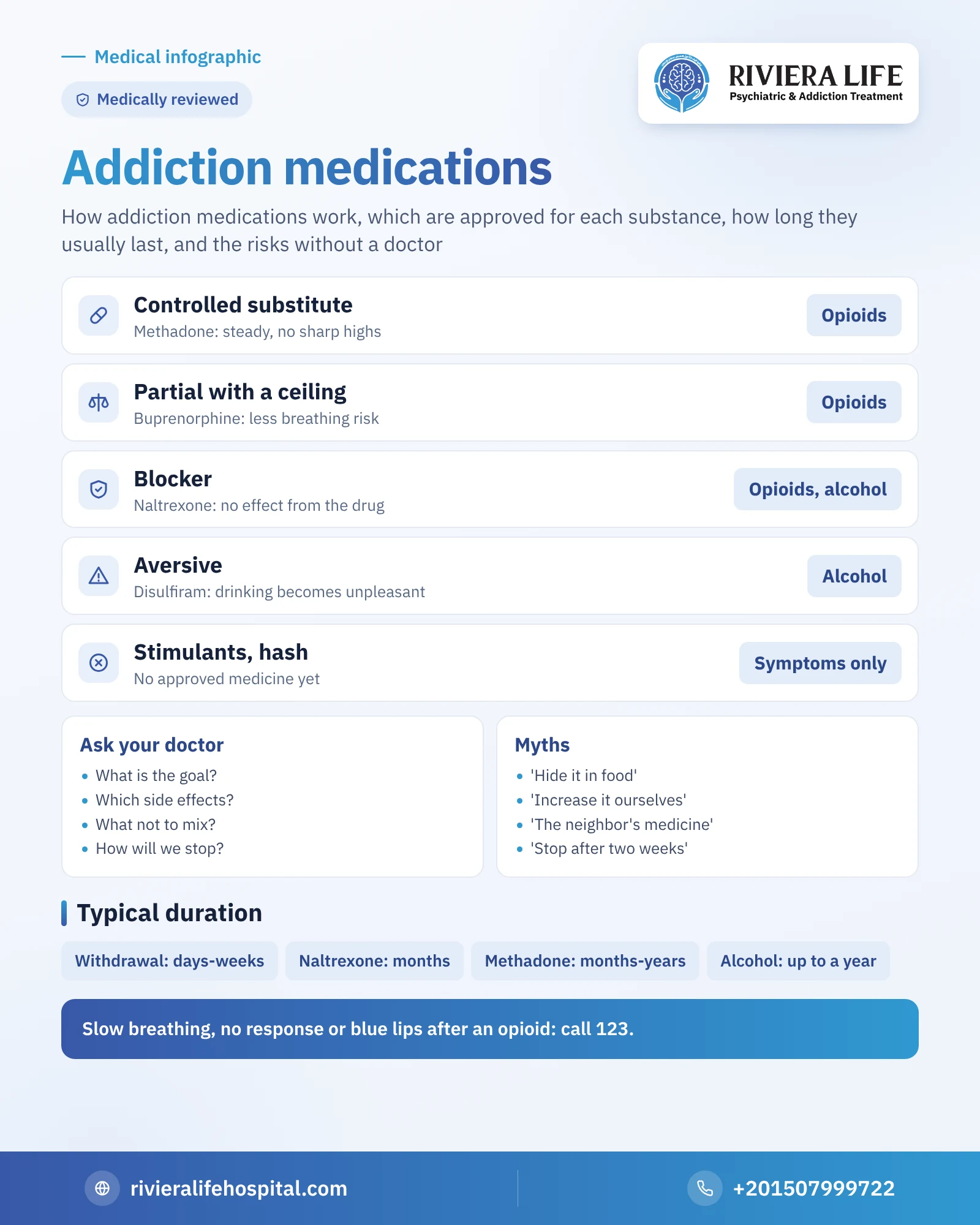
- A controlled substitute: a medicine that activates the same receptors the substance activates, but steadily and without sharp rises and falls, such as methadone.
- A partial substitute with a ceiling: it partly activates the receptor, easing craving and withdrawal with an upper limit to its effect, such as buprenorphine.
- A blocker: it sits on the receptor and stops the substance reaching it, so the patient doesn't feel its effect, such as naltrexone.
- An aversive: it makes using the substance a physically unpleasant experience, such as disulfiram with alcohol.
- A balance restorer: it calms the nervous system that is overexcited after stopping, such as acamprosate for alcohol, or clonidine, which eases sweating and anxiety in opioid withdrawal.
Knowing how addiction medications work explains many mistakes we see in homes. A blocker given while the substance is still in the body pushes it off the receptors suddenly, so the patient goes into acute withdrawal within minutes.
The map of medicines by type of substance
This is a summary of the addiction treatment medicines that are approved or commonly used under medical supervision for each substance. Availability differs from country to country, and some medicines are subject to strict regulatory restrictions:
| Substance | Relapse-prevention or maintenance medicines | Note |
|---|---|---|
| Heroin, opioids and tramadol | Methadone, buprenorphine, naltrexone | Naloxone for overdose rescue |
| Alcohol | Naltrexone, acamprosate, disulfiram | Thiamine is essential to protect the brain |
| Nicotine | Nicotine replacement, bupropion, varenicline | The most available and relatively safest |
| Sedatives and benzodiazepines | No "antidote" medicine exists | Gradual tapering is the main treatment |
| Cocaine, ice and captagon | No approved medicine | Treating insomnia, depression and psychosis when they appear |
| Hash and synthetic drugs | No approved medicine | Treatment of symptoms with behavioral rehabilitation |
Withdrawal-stage medicines: calming symptoms, not treating addiction
In the first days after stopping, the doctor uses medicines aimed at getting through withdrawal safely: sedatives given in hospital to prevent alcohol seizures, medicines that ease the diarrhea, cramps and muscle aches of opioid withdrawal, short-term sleeping medicines, and fluids and vitamins. These medicines are temporary, and end when acute withdrawal ends.
The common mistake is for the family to treat this stage's medicines as all there is to addiction medication, so they stop when the patient leaves, even though the most important part of medication treatment comes after withdrawal, not during it. As for the timeline of the symptoms themselves, day by day and for each substance, its place is the drug withdrawal symptoms guide, especially opioid withdrawal and alcohol withdrawal.
Opioid medicines: methadone, buprenorphine and naltrexone
Methadone
A long-acting opioid usually given once a day in organized programs, preventing withdrawal and easing craving without the fluctuating high. Its main danger is that it builds up in the body and suppresses breathing if mixed with alcohol or sedatives, which is why it is dispensed in licensed places and under follow-up. Details are in the article Methadone.
Buprenorphine
A partial agonist of the receptors, with a ceiling that makes the risk of breathing suppression lower than methadone when used alone. It is sometimes combined with naloxone to reduce misuse by injection. It must start after clear withdrawal symptoms appear, otherwise it triggers sudden withdrawal. Read Buprenorphine: benefits and risks.
Naltrexone
A blocker that causes no high and no dependence, suited to someone who has finished withdrawal and wants protection from going back. In some countries it is available as a long-acting monthly injection. It needs follow-up of liver function, and the patient must know that their tolerance to opioids falls, so trying to "break through" the block with a large amount can be fatal. Details of the medicine are in Naltrexone, and how to build a plan around it in The naltrexone program.
Tramadol is a special case
Tramadol is a weak opioid, but it also raises serotonin, and may cause seizures when the amount increases or when mixed with certain antidepressants. So the doctor chooses addiction medications for its users with caution, watches for seizure risk during stopping, and treats the original pain if use began because of it. Details are in Tramadol addiction medications.
Naloxone: a rescue medicine, not a treatment medicine
Naloxone pushes opioids off their receptors within minutes, restoring breathing to someone who has overdosed. But it is relatively short-acting, and its effect may end before the opioid leaves the body, so the danger returns. That is why the World Health Organization recommends making it available to people likely to witness an overdose, with the need to call the ambulance in every case.
A possible overdose?
Call the ambulance on 123 immediately if you notice:
- Very slow breathing, strange snoring, or breathing stopping
- No response to being called or shaken
- Bluish lips or nails and very small pupils
- Suicidal thoughts in the patient; you can also call the mental health hotline on 16328
We have explained what to do until the ambulance arrives in How to save someone from an overdose and the article Drug overdose.
Alcohol medicines
Three approved medicines work in different ways. Acamprosate calms the nervous disturbance that remains after stopping, easing insomnia, tension and craving, and needs caution with kidney disease. Naltrexone reduces the "pleasure" of drinking, so the amount falls. Disulfiram, however, causes flushing, palpitations and severe nausea if the patient drinks, which is why it is never given without their knowledge and consent, and is forbidden with certain heart diseases. Everyone who has drunk for a long time needs thiamine, a vitamin that protects against a dangerous brain disorder. The full picture is in Alcohol addiction medications.
Stimulants, hash and nicotine: what is available?
Cocaine, ice and captagon
Many medicines have been tried in research, and none of them has yet been approved for stimulant addiction. The doctor prescribes medicines for the insomnia and depression that follow stopping, and antipsychotics when hallucinations or severe suspicion appear, while most of the treatment rests on behavioral rehabilitation, as in Cocaine addiction treatment.
Hash and synthetic drugs
The situation is similar: no approved medicine, but treating insomnia, anxiety and irritability makes the first weeks much easier. With strox and spice, the patient may need medical sedation for agitation in hospital. See What the doctor prescribes for hash addiction.
Sedatives and pregabalin
Among addiction treatment medications there is no medicine that "cancels out" benzodiazepines or pregabalin. The main treatment is gradual tapering over weeks or months, and the doctor may switch the patient to a longer-acting medicine so the decrease is smoother. At the same time, the patient needs treatment for the anxiety or insomnia that drove them to the sedative in the first place, otherwise they will go back to it. Stopping suddenly here may cause seizures.
Nicotine
Here the options are wider: nicotine patches and gum, bupropion and varenicline, all of which clearly raise the chances of quitting compared with willpower alone, on condition that the doctor chooses them. You can find the details in Quitting smoking.
Medicines for co-occurring mental disorders
Depression, anxiety, bipolar disorder, psychosis and ADHD often appear with addiction, and treating them is part of preventing relapse. The patient may need antidepressants, mood stabilizers or antipsychotics. The rule is that the doctor chooses medicines that carry no risk of misuse as far as possible, and reviews interactions with the addiction medicines themselves. Some patients fear these medicines will turn into a new addiction, and we have answered that in Are psychiatric medications addictive?
Pregnancy, adolescence and older age
Studies of addiction treatment medications are usually designed on healthy adults, so some groups need more precise decisions:
Pregnancy: stopping opioids suddenly during pregnancy may harm the fetus, and World Health Organization guidelines recommend continuing substitute treatment under medical supervision instead of rapid withdrawal. Any medicine at this stage is decided in coordination between the addiction doctor and the obstetrician, as we explain in Drugs and pregnancy.
Adolescents: some medicines have not been studied well under a certain age, so the doctor relies more on psychological and family therapy, and uses medicine when its benefit is clear.
Older people: the breakdown of medicines in the liver and kidneys slows, the risk of falls with sedatives increases, and other interacting medicines are more common, so a cautious start and closer review are needed.
The danger of addiction medications without medical supervision
Recipes and names bought without a doctor spread online. These are the best-known ideas and what corresponds to them:
Widespread ideas
- An addiction medicine can be put in food without the patient knowing
- If the medicine doesn't help, we increase the amount ourselves
- The neighbor's son's medicine will suit our son
- After two weeks of improvement, we stop the medicine
The medical truth
- Giving a medicine secretly may cause a violent reaction or sudden withdrawal
- Mixing methadone with sedatives or alcohol may stop breathing
- The choice depends on the liver, the heart, the substance and other medicines
- Stopping is planned with the doctor to avoid relapse
No less important, addiction treatment medications need follow-up with tests: liver function with naltrexone and disulfiram, kidney function with acamprosate, and sometimes an ECG with methadone because it may affect the heart's electrical activity. A doctor who prescribes the medicine and then disappears is not real follow-up.
The danger increases when more than one suppressant medicine is mixed, as we explain in The dangers of mixing drugs. Even alternative painkillers need a medical choice, as you can see in the article Tramadol alternatives by type of pain.
How long do addiction medications last?
There is no single duration, but this is a relative estimate of the usual length of use:
Methadone and buprenorphineMonths to years
NaltrexoneUsually months
Alcohol medicinesMonths, may extend to a year
Medicines for the co-occurring conditionDepending on the disorder
Withdrawal medicinesDays to weeks
Before the patient starts any addiction treatment medication, they and their family have the right to ask the doctor:
- What exactly is the goal of this medicine: withdrawal, craving or a co-occurring condition?
- What side effects are expected, and what calls for getting in touch immediately?
- Which medicines or substances must not be mixed with it?
- Which tests are needed before starting and during it?
- How and when will we decide to stop it?
Stopping early is one of the best-known causes of relapse, and stopping some medicines suddenly may bring back withdrawal. The doctor decides with the patient when to start tapering and at what speed, with more sessions during this period. This stage fits together with addiction treatment programs such as aftercare.
How Riviera Life meets these standards in medication-assisted addiction treatment
- Official licensing: a hospital licensed by the Egyptian Ministry of Health in Sheikh Zayed.
- Consultants: in psychiatry and addiction treatment who prescribe the medicine and follow it up themselves.
- Constant supervision: round-the-clock medical and nursing follow-up during the stay.
- Fourteen years: of experience, with complete confidentiality, aftercare and a free first consultation.
The addiction medications article guide: from rescue to relapse prevention
We have gathered the addiction medication articles by substance and by the medicine's role, so you can reach what concerns your situation directly.
Opioid and overdose medicines
5 articlesSubstitutes, blockers and breathing rescue
- Methadone substitution treatment: its role, its risks, and why it is dispensed under control.
- Buprenorphine: uses and contraindications.
- Naltrexone, the opioid blocker: benefits and warnings.
- Naloxone for overdose rescue: how it works and when it is used.
- Clonidine in withdrawal: which symptoms it eases and its risks.
Alcohol medicines
3 articlesReducing craving, deterrence and protecting the brain
- A map of alcohol medication treatment: withdrawal, relapse prevention and thiamine.
- Acamprosate after stopping drinking: how it eases craving and insomnia.
- Disulfiram and its reaction with alcohol: how it works and when it is not given.
Medicines by substance
3 articlesTramadol, hash and strox
- What the doctor prescribes for tramadol addiction: from withdrawal to preventing a return.
- Medication treatment for hash: what is prescribed and why, and the truth about an approved medicine.
- Strox recovery medicines: safe sedation and the steps of treatment.
Questions about specific medicines
2 articlesDependence on the medicine itself, and alternative painkillers
- Is Revia addictive?: the medical truth and safe use.
- Alternative painkillers to tramadol: choosing by type of pain.
When should you seek help?
If the patient is taking a medicine and you don't know who prescribed it, or you bought a medicine online hoping it will "make him hate" the substance, or they stopped their medicine suddenly and the craving came back, this is the time to see the doctor, not to experiment. Our first consultation is free and confidential, and you can show us the names of the current medicines so we review them with you on +201507999722.
Medical sources and referencesThe information in this article is based on reliable scientific sources
1SAMHSA — Medications used to treat substance use disorderssamhsa.gov2NIDA — Medications to treat opioid addiction: overviewnida.nih.gov3MedlinePlus — Opioid misuse and addiction treatmentmedlineplus.gov4MedlinePlus — Alcohol use disordermedlineplus.gov5NIDA — What treatments are effective for people who misuse methamphetaminenida.nih.gov